14 IKEA Kids Furniture Designs for Every Home
IKEA kids furniture designs combine the brand’s accessible pricing, modular flexibility, and Scandinavian design sensibility with the specific functional requirements of children’s rooms — safety certification, scale-appropriate proportions, growth adaptability, and the organizational demands of toy storage, homework, sleep, and play within a single room — producing furniture systems that serve children from infancy through adolescence while remaining visually appropriate for the domestic interiors they inhabit. This article gives you exactly 14 ideas spanning sleeping, storage, study, play, and room organization so every age, every room size, and every household finds an IKEA kids furniture approach that genuinely works.
IKEA’s specific contribution to children’s room design is the furniture that grows — the crib that converts to a toddler bed, the KALLAX unit that shifts from toy storage to book and display storage as the child’s material culture changes, the TROFAST tray system that holds LEGOs at seven and craft supplies at twelve and stationery at sixteen. The investment made at three continues serving at thirteen if the furniture is chosen with that trajectory in mind. Here are 14 ideas worth considering — and building.
Why IKEA Kids Furniture Designs Work for Every Home
The design challenge of the children’s room is categorically different from any other room in the house because it is the room that must change most rapidly and most completely over the shortest period of time. An infant’s room serves a sleeping and feeding function; a toddler’s room adds a play function; a school-age child’s room adds a homework function and a social-identity-display function (the posters, the collections, the personalized arrangements that communicate who the child is becoming); and a teenager’s room becomes essentially a small apartment with all of those functions plus increasing privacy and independence requirements. A furniture system that addresses one stage well but requires complete replacement at the next stage creates both financial burden and environmental waste.
IKEA’s children’s furniture range addresses this challenge through a consistent design philosophy of modular adaptability — products that are designed to grow, expand, or repurpose as the child’s needs change. The KURA reversible bed (which can be flipped from a low bed configuration to a loft bed configuration), the TROFAST tray system (which accepts the same standard trays regardless of whether the frame is small or large), the KALLAX (which uses identical insert products whether it is serving as a toddler toy storage unit or a teenager’s display shelf), and the FLEXA-compatible or VITVAL loft bed system (which provides a study desk and storage beneath the sleeping area) all share this growth-adaptability design principle.
The safety framework that IKEA applies to its children’s furniture is extensive — all IKEA children’s furniture meets EN71 (European toy safety standard), ASTM F1233 (North American furniture stability standard), and IKEA’s own IWAY standard for chemical content and material safety. The anti-tip provision (every IKEA shelving unit, wardrobe, and tall furniture piece comes with wall-fixing hardware and must be fixed to the wall when used in a child’s room) is a non-negotiable safety requirement that every parent or caregiver assembling IKEA children’s furniture must complete before placing the furniture in a child’s room. IKEA’s recall history and safety response record is public and documented — the 2016 MALM dresser recall and subsequent anti-tip anchor initiative resulted in the most comprehensive children’s furniture tip-over safety campaign in residential furniture history.
The visual design of IKEA children’s furniture ranges from the simple, natural-material Scandinavian aesthetic (birch veneer, natural pine, white painted finishes) through the more colorful and character-driven products (the BUSUNGE bedroom series, the AFTONSPARV bedding collaborations) to the fully modular and neutral systems (KALLAX, TROFAST, ALEX) that read as domestic furniture rather than specifically children’s furniture — an important quality for rooms that must visually coexist with the rest of the home’s interior design.
Style at a Glance
| Element | Children’s Room Function | IKEA Design Edge |
|---|---|---|
| Philosophy | Furniture that grows with the child | Modular, adaptable, safety-certified |
| Materials | Birch veneer, pine, powder-coat, durable laminate | White, natural, bold accents |
| Growth Range | Birth through mid-adolescence |
14 IKEA Kids Furniture Designs for Every Home
1. SNIGLAR Crib to Toddler Bed — The First Growth Transition
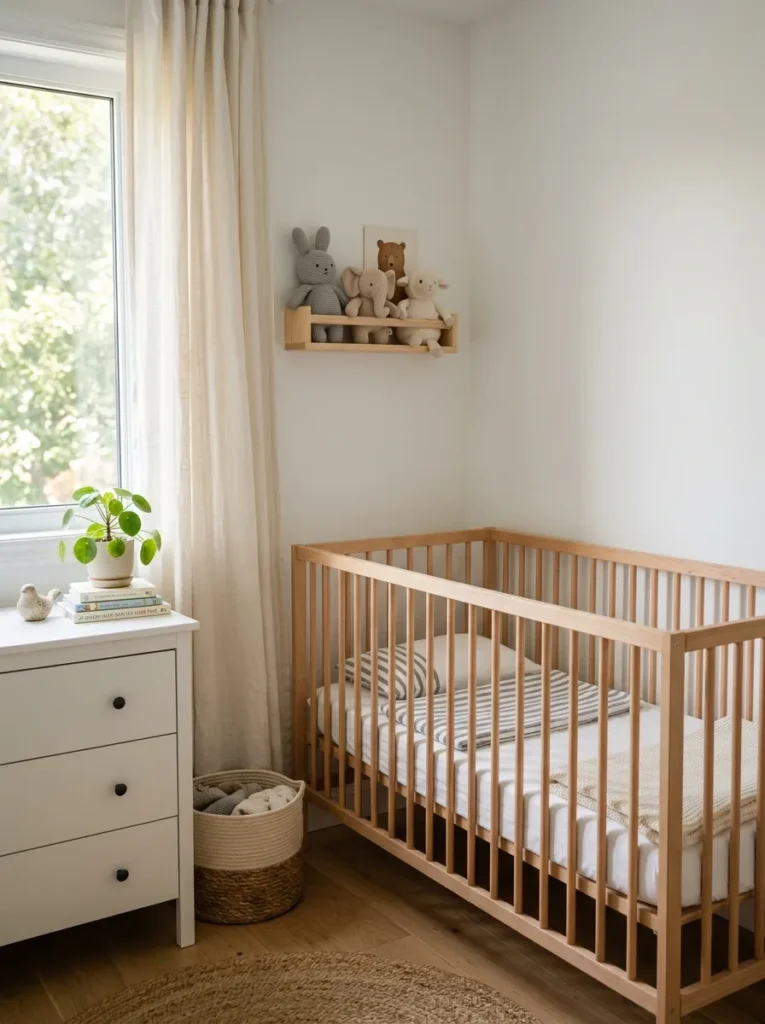
Vibe: The SNIGLAR nursery feels like the most resolved version of a Scandinavian nursery — the natural beech, the white bedding, and the calm light doing everything that an infant room needs to do.
Why it works: The SNIGLAR crib applies the essential material principle — solid beech (not veneer over particleboard, which is the material of most IKEA furniture) is specified for the SNIGLAR precisely because it is the furniture piece that a child’s sleeping face will be pressed against for years, and natural solid wood with no lacquer or melamine finish is the appropriate specification for this specific use. The SNIGLAR converts to a toddler bed by removing the highest side rail, extending the usable life from birth to approximately four years. The simple, undecorated design means the crib is appropriate in a contemporary, Scandinavian, or traditionally-styled nursery without aesthetic compromise.
Safety note: All IKEA cribs meet ASTM F1169 (US) and EN 716 (EU) infant sleep safety standards. The mattress must fit with no more than 25mm gap on any side — measure before ordering the VYSSA or PLUTTEN mattress to ensure compatibility.
Growth path: SNIGLAR (0–3 years) → side rail removed, toddler bed configuration (3–4 years) → KURA or VITVAL low bed (4+ years).
Quick Win: The SNIGLAR crib ($89–129 depending on market) is among the most affordable solid beech baby furniture available globally — the natural material quality significantly exceeds its price category in the children’s furniture market.
Shop The Look
| Product |
|---|
| IKEA SNIGLAR crib natural beech |
| IKEA VYSSA mattress crib size |
| White stripe crib bedding set |
| IKEA HEMNES dresser white nursery |
| White linen nursery curtain |
Also view: 15 Modern KALLAX Sideboard Hacks for Stylish Homes
2. KURA Reversible Bed — The Most Versatile Kids Bed
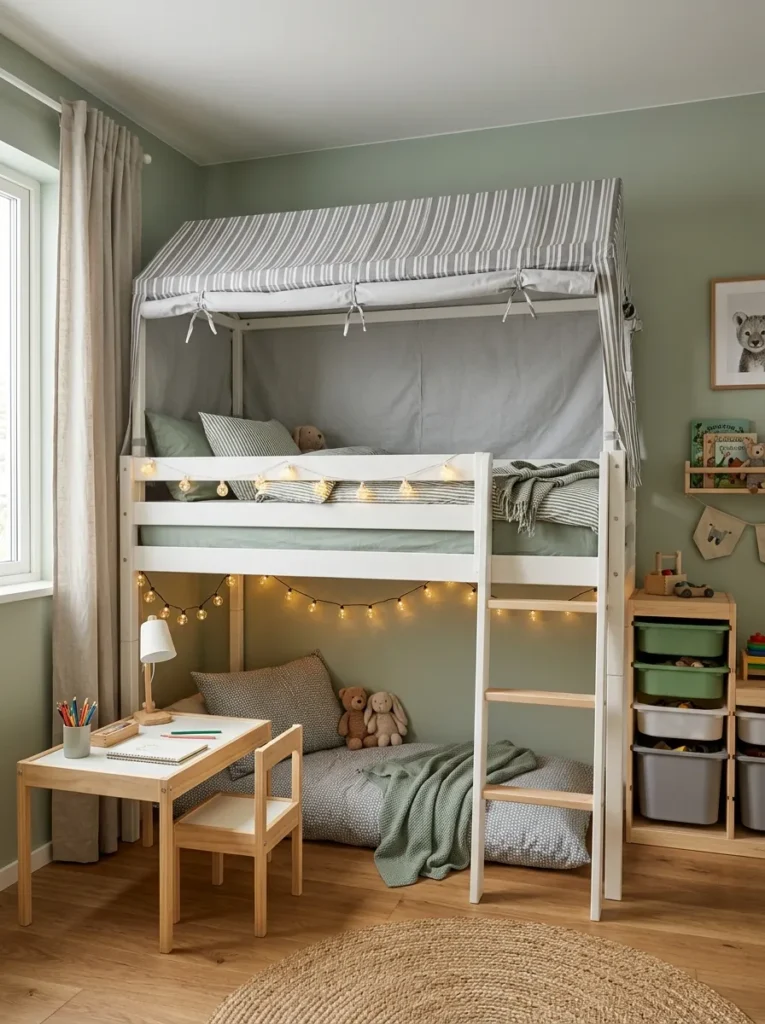
Vibe: The KURA loft bed feels like the room gained a floor — the vertical use of space converting a small room into a complete two-level environment.
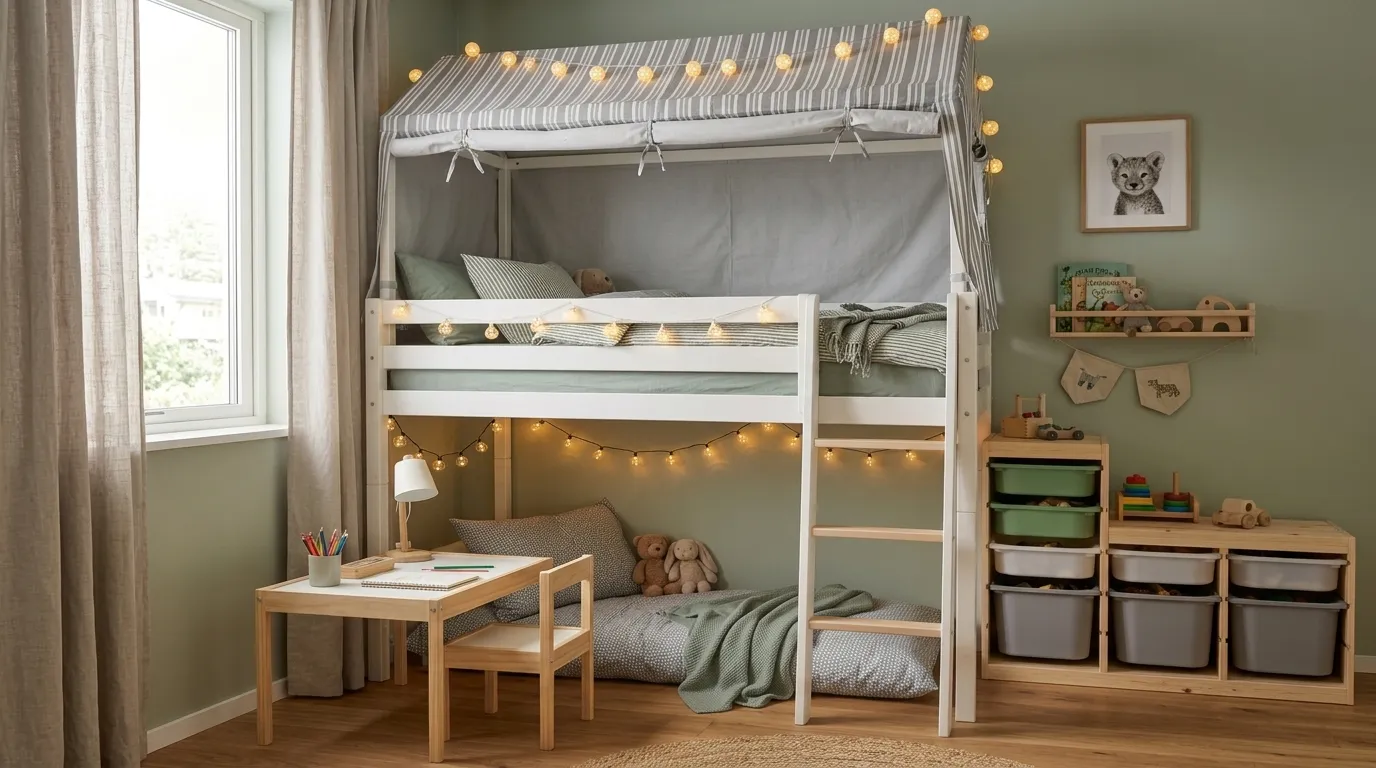
Why it works: The KURA reversible bed applies the space multiplication principle — flipped to its loft configuration, the KURA raises the sleeping surface to 1.6 metres, creating a complete under-bed zone that can be furnished as a play den, a reading corner, a homework space, or a social space as the child’s development and interests evolve. This transformation of vertical space is the highest-impact spatial intervention available in a small children’s room, converting what would otherwise be a floor plan constraint into a layered environment. The KURA’s reversibility (it can be returned to its low bed configuration if the loft setup is not appropriate for a specific child or room) reduces the commitment risk of the investment.
Age range: The KURA loft configuration is appropriate from approximately 6 years (when a child has the motor development to safely climb and descend the ladder) to approximately 12–14 years depending on the child’s height. The low bed configuration suits 4–8 years.
Under-bed furnishing: An IKEA MICKE desk (55×50cm, the compact format that fits within the KURA’s footprint) with a ÖRFJÄLL desk chair creates a complete homework station under the bed. Alternatively, a foam play mat, a cushion, and the FLISAT children’s table create a play den within the same space.
Shop The Look
| Product |
|---|
| IKEA KURA reversible bed white |
| KURA tent canopy accessory |
| IKEA MICKE desk compact 55cm |
| Warm fairy light string bedroom |
| Floor cushion reading nook |
Also view: 13 Beautiful Craft Room Ideas for Creative Spaces
3. TROFAST Storage System — The Toy Organization Solution
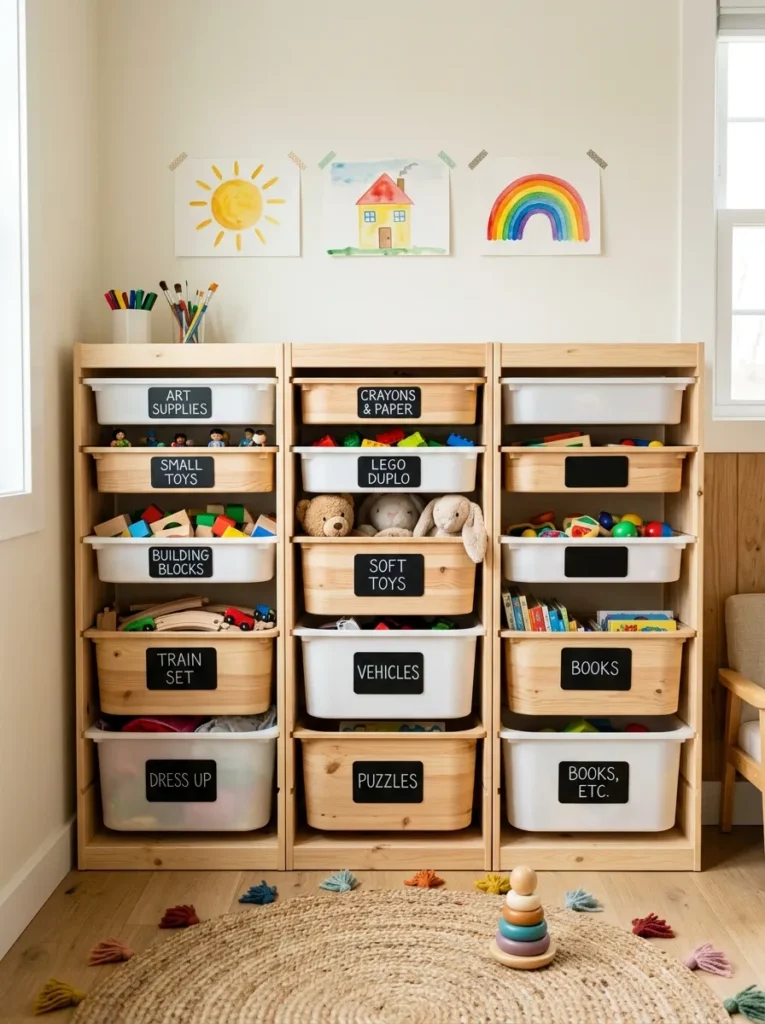
Vibe: The TROFAST unit feels like the moment toy chaos became a system — the labeled trays converting accumulation into organization that a child can actually maintain.
Why it works: The TROFAST storage system applies the categorical accessibility principle — children’s toy storage that requires a child to remove and replace objects from a closed bin or cabinet with a lid creates a retrieval and return barrier that consistently results in toys on the floor rather than in storage. The TROFAST’s open, pull-out tray format allows one-motion retrieval (pull the tray out) and one-motion return (push the tray in) without any lid management, making it the children’s storage system with the lowest friction for both the child using it and the parent organizing it. The trays’ varied depth options (the same frame accepts shallow 10cm trays, standard 20cm trays, and deep 30cm trays) allow categorical matching — shallow trays for flat puzzles and art supplies, standard trays for building toys and small figures, deep trays for large stuffed animals and sports equipment.
Age evolution: 0–4 years: toy storage in deep trays, parent-maintained. 4–8 years: labeled trays, child-maintained with visual category labels. 8–12 years: trays repurposed for LEGO organization (one set per tray), craft supplies, sports accessories. 12+ years: tray contents shift to stationery, electronics accessories, sports gear.
Shop The Look
| Product |
|---|
| IKEA TROFAST frame pine storage |
| TROFAST tray set white varied depth |
| TROFAST tray set natural pine |
| Chalkboard label set adhesive |
| Small rug playroom front |
4. KALLAX as Kids Room Shelf — The Long-Term Investment
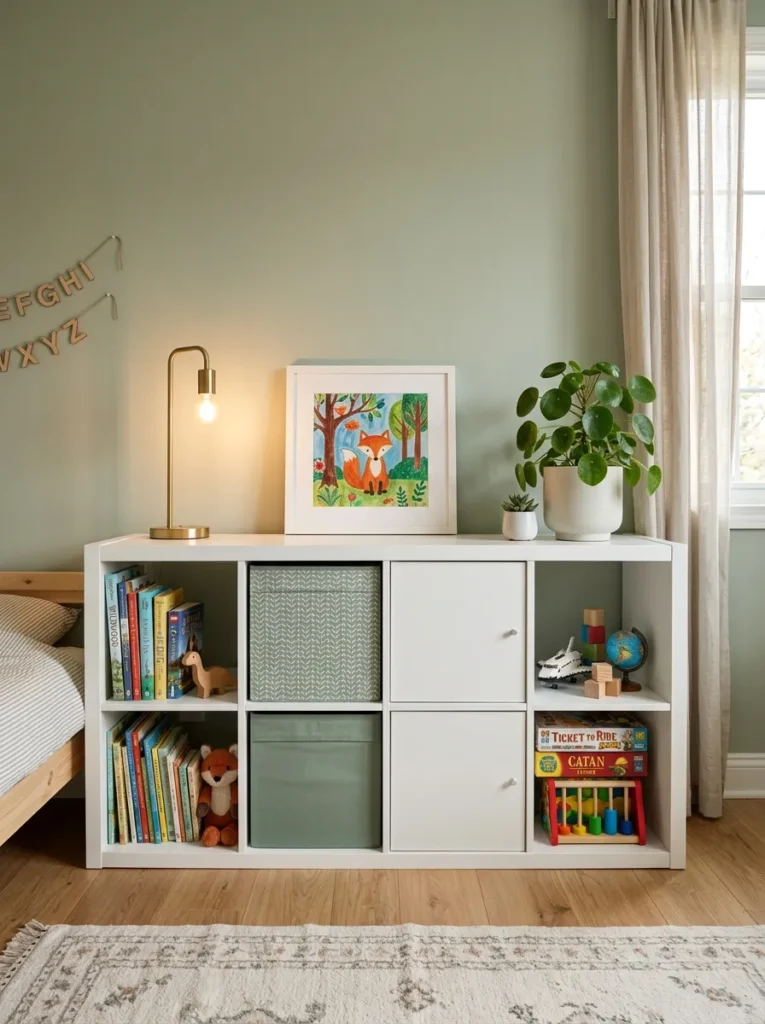
Vibe: The KALLAX in a child’s room feels like furniture that doesn’t condescend to childhood — the same unit used by adults throughout the home, adapted with age-appropriate contents rather than a child-specific form.
Why it works: The KALLAX in a children’s room applies the age-agnostic design principle — the KALLAX is purchased once and serves across the child’s entire room occupancy because it is not specifically a children’s furniture product. It serves toy storage at three with colorful fabric bins, book and display storage at eight with a mix of open and closed cubbies, creative material storage at twelve with categorized open cubbies, and bedroom display and storage at sixteen with a mature arrangement of books, objects, and personal items. The furniture investment is made once and amortized over a fifteen-year room occupancy, making it among the most cost-effective children’s room storage products available regardless of the initial $60–220 unit price.
Safety note: All KALLAX units in children’s rooms must be fixed to the wall using the supplied anti-tip fittings before any child has access to the room. The anti-tip fittings are included with the KALLAX and require two wall fixings into studs or masonry — this is not optional.
Shop The Look
| Product |
|---|
| IKEA KALLAX 2×4 white horizontal |
| KALLAX fabric bin sage green |
| KALLAX door insert white |
| Small ceramic plant pot white |
| Clip-on reading light warm |
5. VITVAL Loft Bed with Under-Bed Storage and Desk
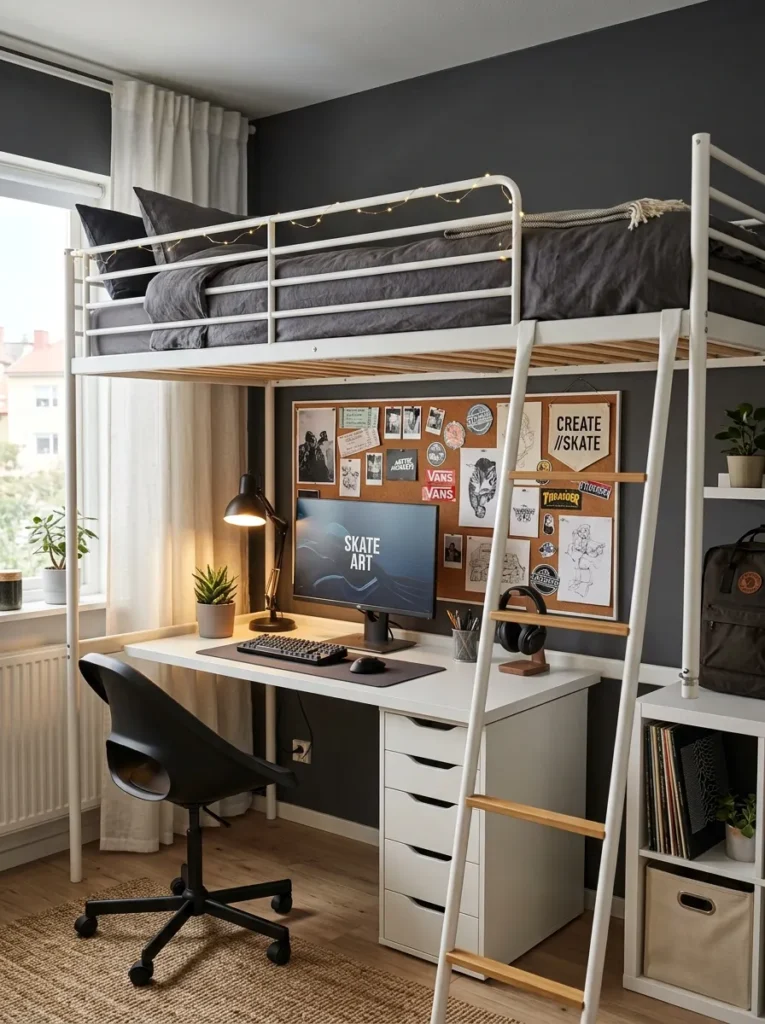
Vibe: The VITVAL teen room feels like a room that takes the person in it seriously — the desk position, the pinboard, and the drawer configuration acknowledging that a teenager’s work and personal space is genuine adult-adjacent activity.
Why it works: The VITVAL loft bed applies the teenager-specific spatial logic — a teenager’s room must simultaneously accommodate sleeping, studying, social relaxation, and personal privacy within a typically small room, usually without the luxury of a separate study space. The loft bed’s desk position under the sleeping area concentrates all primary functions in the minimum floor footprint while maintaining each function’s spatial integrity. The VITVAL specifically (in contrast to the KURA) is the higher-weight-rated, adult-scale loft bed appropriate for older teenagers — specified at the 200cm standard adult bed length rather than the KURA’s shorter children’s bed length.
Age range: VITVAL is appropriate from approximately 10 years (height and weight requirements) through adult occupancy — the product is not marketed as specifically a children’s product and its maximum weight capacity and adult bed length make it appropriate for rooms that may eventually serve adult guests.
Under-bed configuration: The VITVAL’s open under-bed structure accepts the ALEX drawer unit as a free-standing configuration (not attached to the loft frame — it simply sits beneath the bed and provides the lateral stability of a corner desk). A 60cm deep MICKE or LINNMON desk board can rest between the ALEX unit and the adjacent wall to create a full-width desk surface.
Shop The Look
| Product |
|---|
| IKEA VITVAL loft bed white bamboo |
| IKEA ALEX drawer unit white |
| Cork pinboard large teen room |
| Dark linen duvet cover teen |
| Desk lamp LED warm teen study |
6. FLISAT Children’s Table and ÖRFJÄLL Chair — The Activity Center
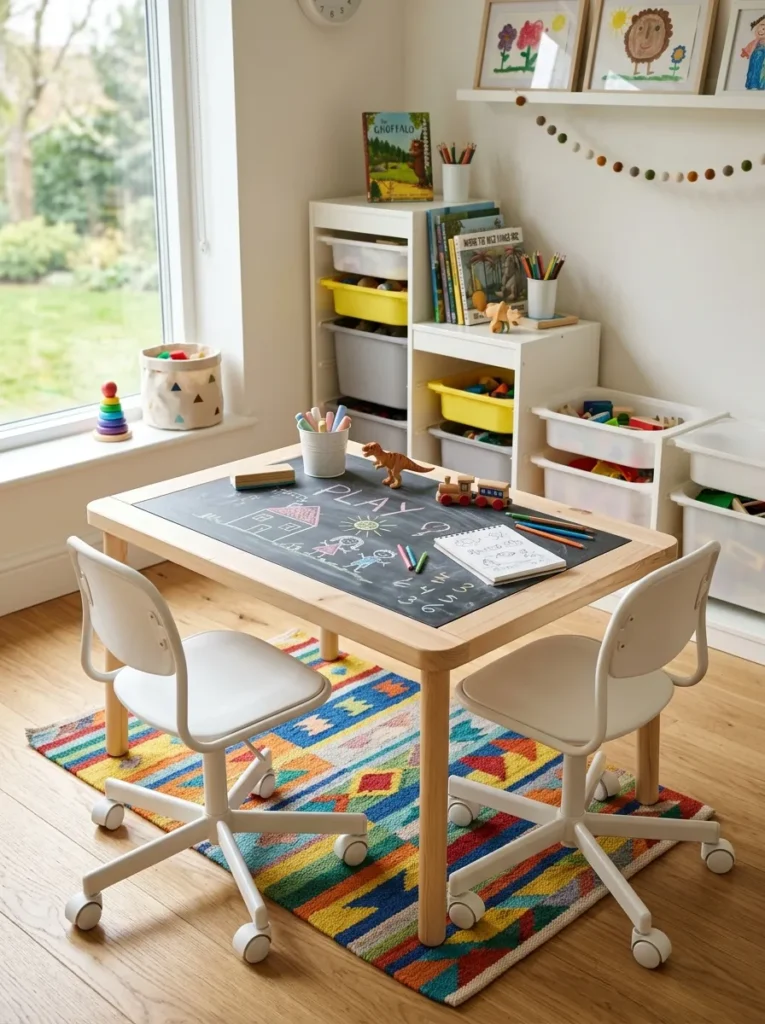
Vibe: The FLISAT activity table feels like it was designed by someone who had actually watched children use a table — the chalk surface and the storage integration solving the specific problems that a children’s activity table encounters daily.
Why it works: The FLISAT children’s table applies the dual-surface design principle — the FLISAT’s reversible tabletop provides a wooden surface (for building, eating, and play) on one side and a chalk surface (for drawing and writing) on the other, converting the table from an activity surface to a creative surface with a single flip. The table’s central circular cutout accepts a standard TROFAST tray, converting the table itself into a storage location for art supplies that can be accessed from the seated position without leaving the table. These two features (reversible top, integrated tray storage) solve the two most common children’s activity table problems (the need for a drawing surface and the need for accessible small-item storage) in a single product.
Age range: FLISAT is appropriate from approximately 18 months (standing height suits toddlers) through approximately 8 years. The height-adjustable legs allow the table to grow from a toddler’s reaching height to a child’s seated working height across this range.
Shop The Look
| Product |
|---|
| IKEA FLISAT children’s table pine |
| IKEA ÖRFJÄLL children’s swivel chair |
| TROFAST tray for FLISAT table |
| Chalk art supply set children’s |
| Small bright playroom rug |
7. HEMNES Dresser for the Nursery and Beyond
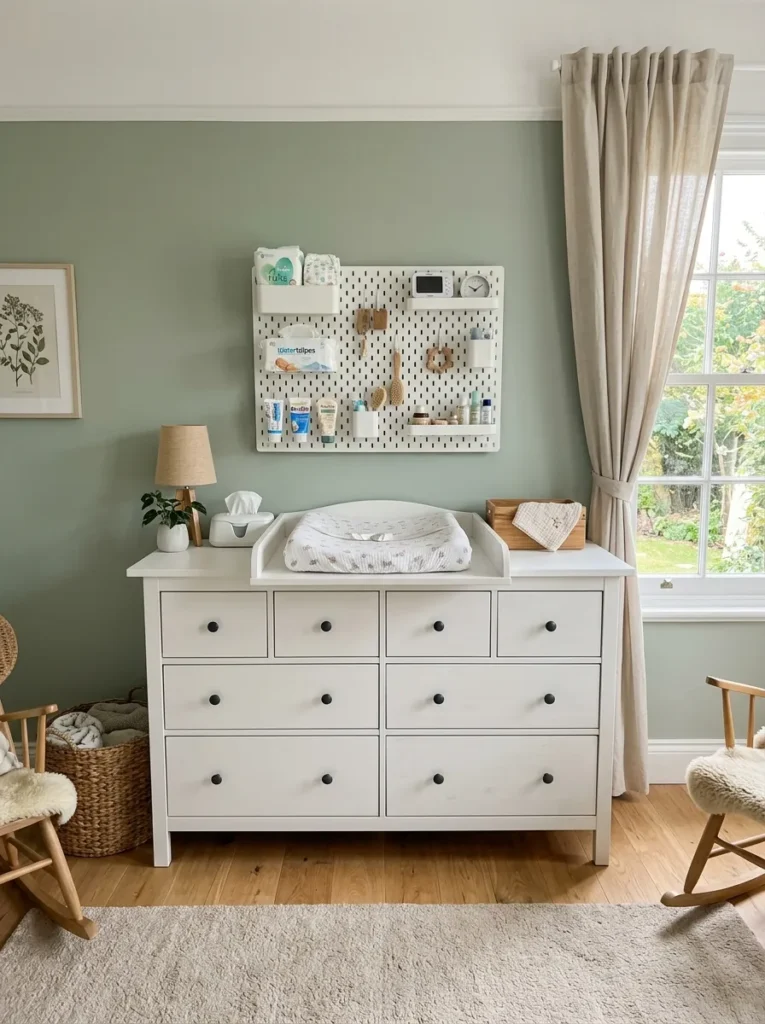
Vibe: The HEMNES nursery dresser feels like the most organized version of a changing station — every supply within reach, the pegboard system making the chaos of baby care genuinely manageable.
Why it works: The HEMNES dresser as a nursery changing station applies the multi-decade furniture investment principle — the HEMNES dresser is a solid wood (pine) piece of furniture designed for adult bedrooms, not specifically for nurseries. Its value in a nursery is precisely this: it serves as a changing table for the first two years (with a removable changing pad on the top surface), transitions to a clothes and accessory storage dresser for the toddler and school-age years, and remains as a bedroom storage dresser through adolescence and into adult life. The initial nursery purchase therefore becomes the child’s dresser for their entire childhood without replacement or upgrade.
Changing station setup: Place a SULTAN FORVIKA or equivalent changing mat on the HEMNES top surface and secure using a non-slip mat underneath. Install a SKÅDIS pegboard above the dresser (at parent-accessible height, above the child’s reach) to organize all changing supplies within parent arm’s reach. Never leave a child unattended on a changing surface.
Shop The Look
| Product |
|---|
| IKEA HEMNES 8-drawer dresser white |
| Changing mat compatible size |
| IKEA SKÅDIS pegboard above dresser |
| SKÅDIS holder set baby supplies |
| Non-slip mat dresser surface |
8. MICKE Desk System for the School-Age Study Corner
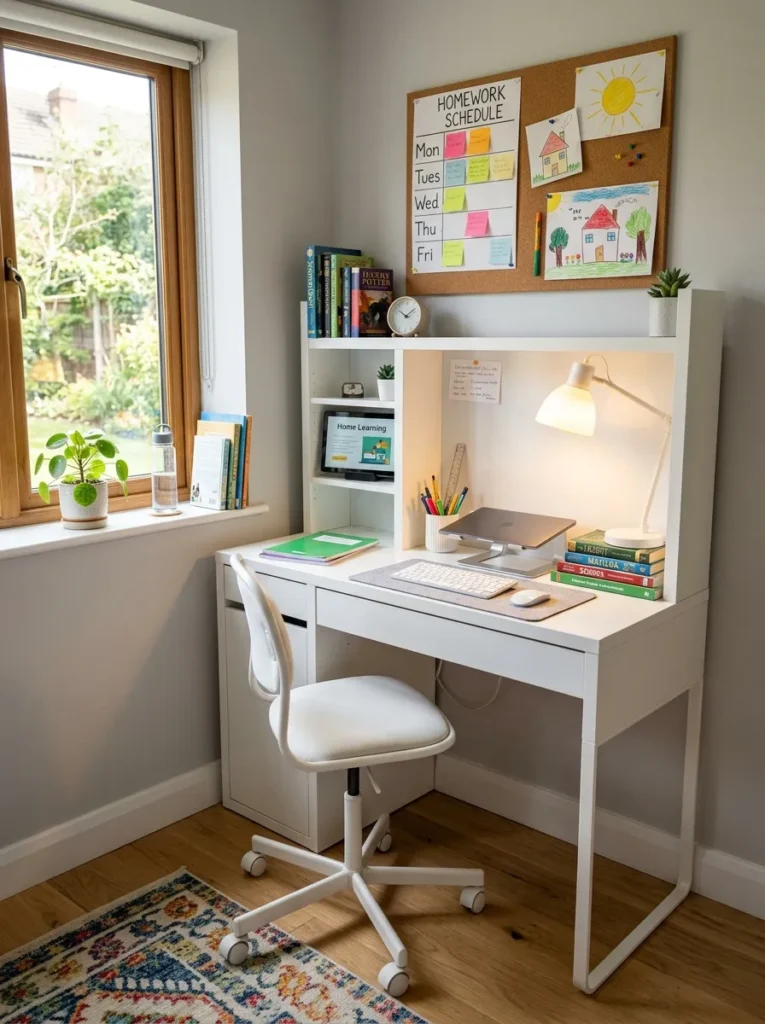
Vibe: The MICKE study corner feels like a workspace that communicates that homework matters — the organized surface, the good lighting, and the pinboard creating an environment that supports rather than frustrates study habits.
Why it works: The MICKE desk applies the study environment quality principle — research in educational psychology documents that the physical quality of a child’s study environment significantly affects the depth and duration of productive study time. A dedicated, organized desk with adequate surface area (the MICKE’s 105cm width provides sufficient space for a book, a notebook, and a lamp simultaneously), good task lighting (the desk lamp positions the light source at the correct angle to prevent eye strain), and vertical organization (the add-on upper unit positions frequently accessed supplies above the work surface without occupying the work surface itself) creates the study environment conditions that support learning. The MICKE is also an adult-proportioned desk whose specification does not require replacement when the child grows — it transitions from a child’s homework desk to a teenager’s study and computer desk without any change beyond the chair height adjustment.
Age range: MICKE suits ages 6 and above for homework use; the height-adjustable ÖRFJÄLL chair ($60–80) ensures the desk remains ergonomically appropriate as the child grows. The desk should be positioned so the child’s feet are flat on the floor with the chair at its correct height — adjust the chair first, then assess whether a footrest is needed.
Shop The Look
| Product |
|---|
| IKEA MICKE desk white 105cm |
| MICKE add-on unit white |
| IKEA ÖRFJÄLL desk chair height adjust |
| LED desk lamp warm white |
| Cork pinboard above desk |
9. BUSUNGE Bedroom Series for the Young Child
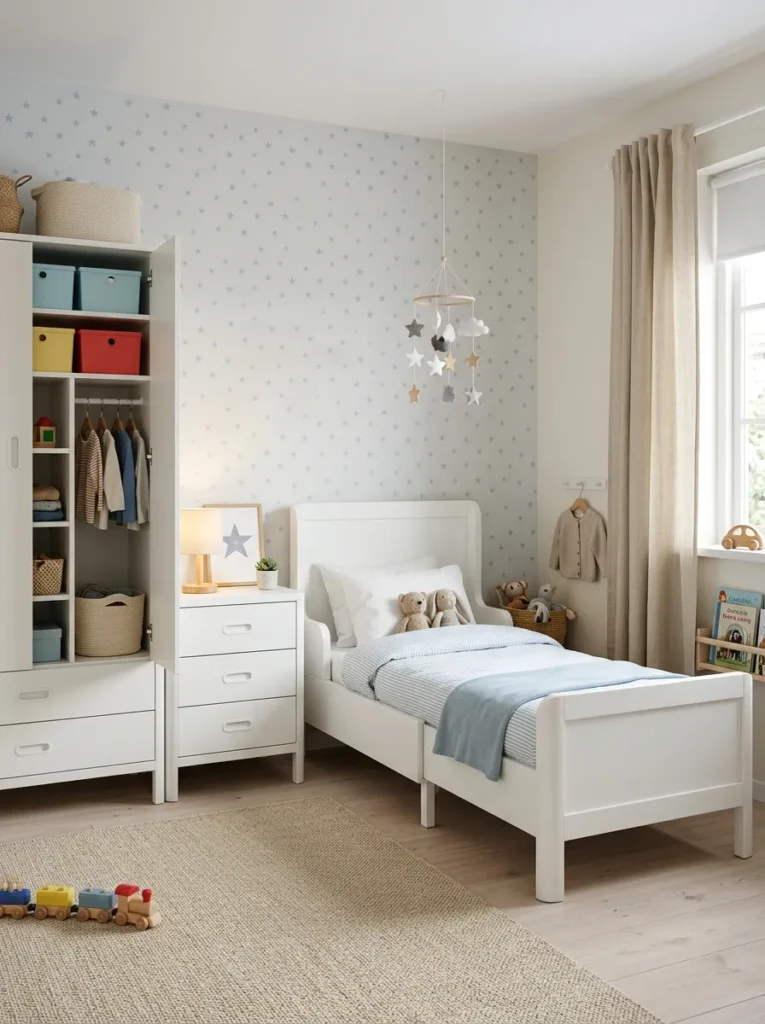
Vibe: The BUSUNGE bedroom feels like furniture that respects a child’s scale without being condescending about their age — the clean white forms and growth-adaptable design treating the young child’s room as seriously as any other room in the house.
Why it works: The BUSUNGE bedroom series applies the coordinated growth system principle — the BUSUNGE bed extends from 80×160cm to 80×200cm as the child grows (using an extender kit purchased separately), the wardrobe is scaled for young children’s clothing organization with lower hanging rails and accessible shelves, and the drawer unit provides the low-access storage appropriate for a child who is developing independent dressing skills. The series’ coordinated design ensures visual coherence across all pieces while allowing individual pieces to be added or substituted as the child’s needs evolve.
Extension range: The BUSUNGE bed extends in two stages — the initial configuration suits approximately 3–6 years; the first extension suits 6–10 years; the full extension suits approximately 10–14 years, making one bed purchase the primary sleep furniture investment for a decade of childhood.
Shop The Look
| Product |
|---|
| IKEA BUSUNGE extendable bed white |
| BUSUNGE extender kit |
| BUSUNGE wardrobe white |
| Natural linen curtain children’s room |
| Oat rug small bedroom |
10. MÖJLIGHET Crib and Nursery Storage
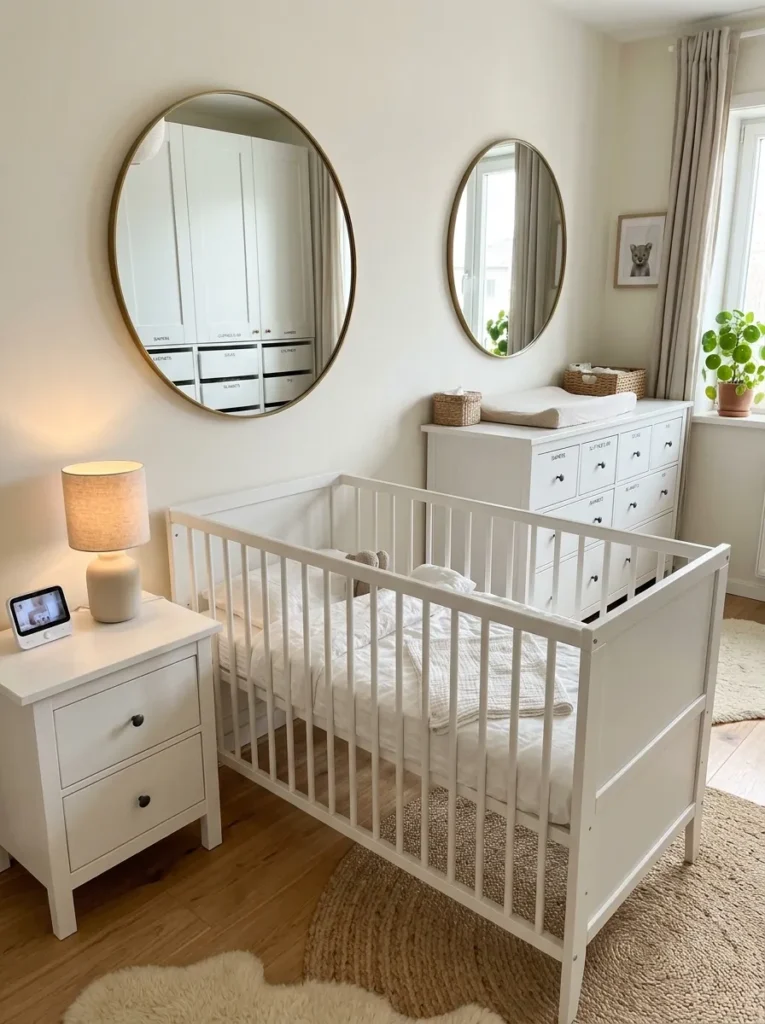
Vibe: The MÖJLIGHET nursery feels like the most resolved version of a contemporary nursery — every element white, natural, and appropriate, the room communicating calm before the child has learned to perceive calm.
Why it works: The MÖJLIGHET crib applies the adjustable-height mattress principle — the three mattress height positions within the MÖJLIGHET frame allow the mattress to be positioned at the highest setting when the infant cannot yet pull to standing (allowing easy parent lift-in and lift-out without excessive bending), the middle setting when the infant is beginning to push up on arms, and the lowest setting when the child is pulling to standing and would otherwise be at risk of climbing out. This adjustable height is a genuine safety feature that extends the safe use of the crib by approximately six months compared to a fixed-height crib, and it is the single most important practical feature in a crib for first-time parents who are unfamiliar with the developmental stages that require each height adjustment.
Shop The Look
| Product |
|---|
| IKEA MÖJLIGHET crib white |
| VYSSA mattress compatible crib |
| White linen crib bedding set |
| HEMNES two-drawer side table |
| Baby monitor beside table |
11. STUVA Storage System for the Playroom
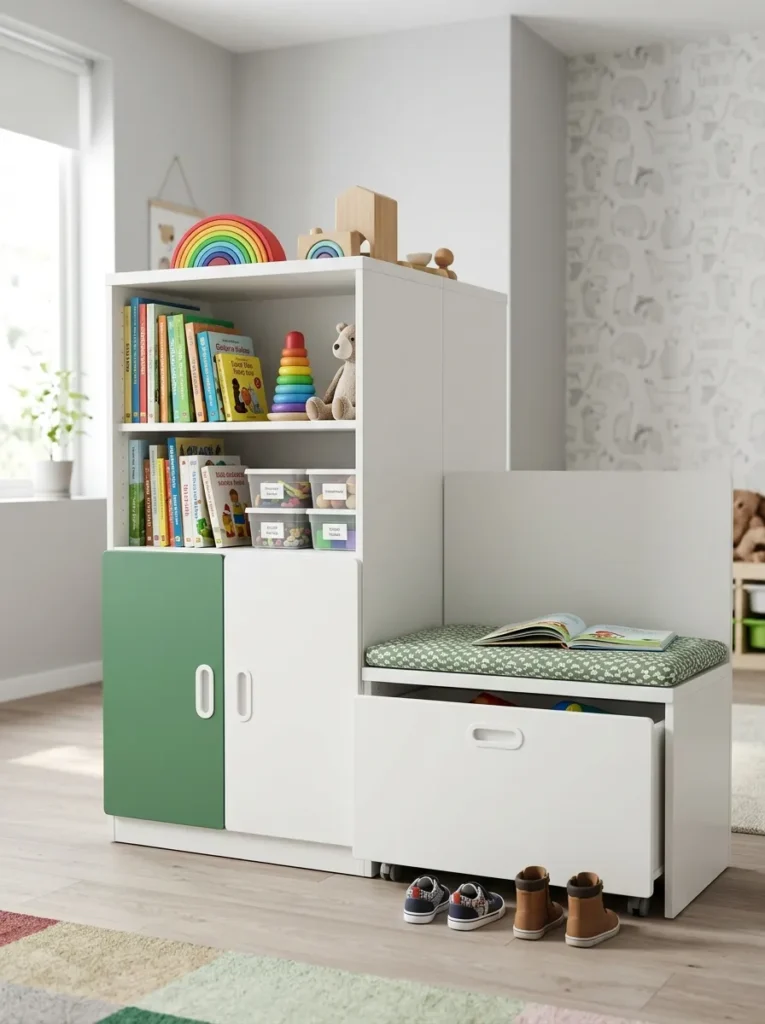
Vibe: The STUVA playroom feels like storage designed by someone who actually needed to organize a child’s possessions rather than display them — the practical combination of open and closed storage acknowledging that not all playroom items benefit from being visible.
Why it works: The STUVA storage system applies the adult-height-free design principle — STUVA’s 90cm maximum height (in the basic frame configuration, not the wardrobe-height version) ensures that a child can access every storage position without climbing or adult assistance. This accessibility is the specific design decision that enables a child to independently retrieve and return their own possessions, which is the behavioral precondition for any self-maintaining organizational system in a child’s space. The bench component specifically addresses the transition zone function (the space where outdoor shoes are removed and indoor play begins) that most playrooms lack — the bench seating with underseat drawer storage concentrates the entry-management function in one purposeful piece.
Shop The Look
| Product |
|---|
| IKEA STUVA storage combination |
| STUVA bench with drawer |
| STUVA door green accent |
| STUVA open shelf add-on |
| Small playroom rug transition zone |
12. PAHL Desk for Small Rooms — Folding Space Saving
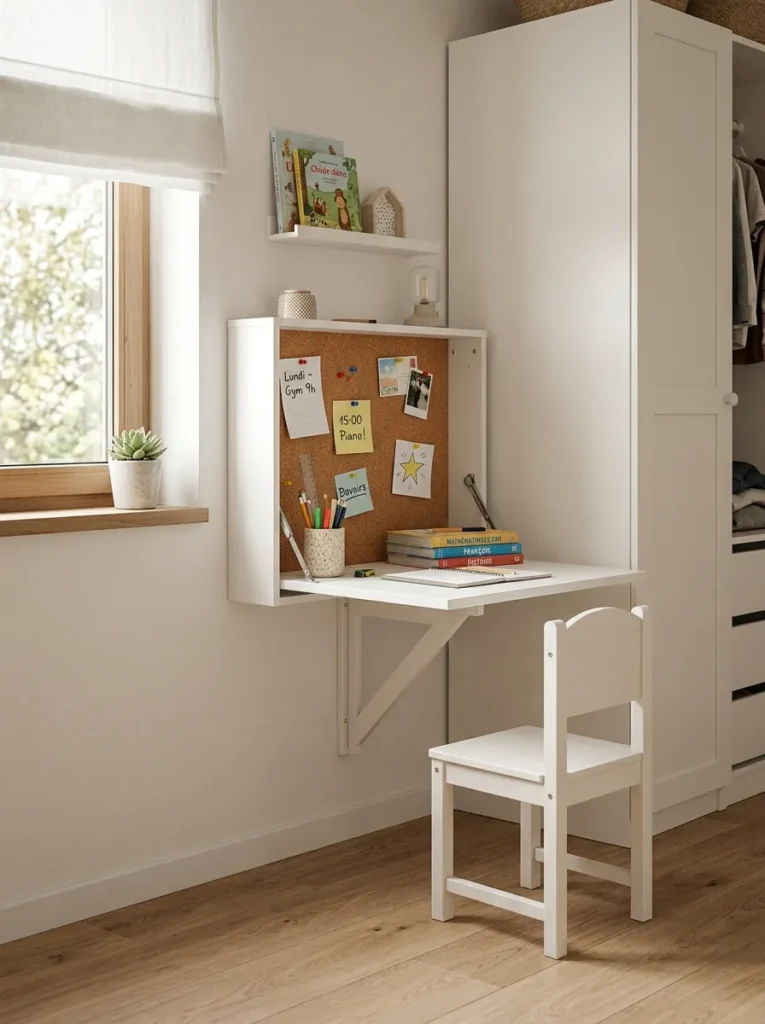
Vibe: The PAHL fold-down desk feels like a homework station that has learned to disappear — the entire study zone closing flush to the wall when school is over and the room needs to be a bedroom again.
Why it works: The PAHL wall-mounted fold-down desk applies the dual-use space principle — in small children’s rooms where a dedicated study area is not possible because the floor area serves multiple functions simultaneously (sleep, play, and study all in the same footprint), a wall-mounted fold-down desk provides the dedicated study surface when deployed and zero floor footprint when folded closed. The PAHL’s integrated cork surface (on the interior of the fold-down panel, accessible when the desk is open) provides a pinboard for homework schedules and reference material that is hidden when the desk is closed — the organizational display is present when studying and absent when not.
Age range: PAHL suits ages 5 and above — the fold-down and fold-up operation requires adult assistance for younger children, but from approximately 8 years a child can typically manage the desk independently.
Shop The Look
| Product |
|---|
| IKEA PAHL wall-mounted desk white |
| Simple desk chair small |
| Cork pushpin set desk board |
| Pencil pot small white ceramic |
| Wall anchor set PAHL installation |
13. EKET Cabinet System for a Teen’s Room
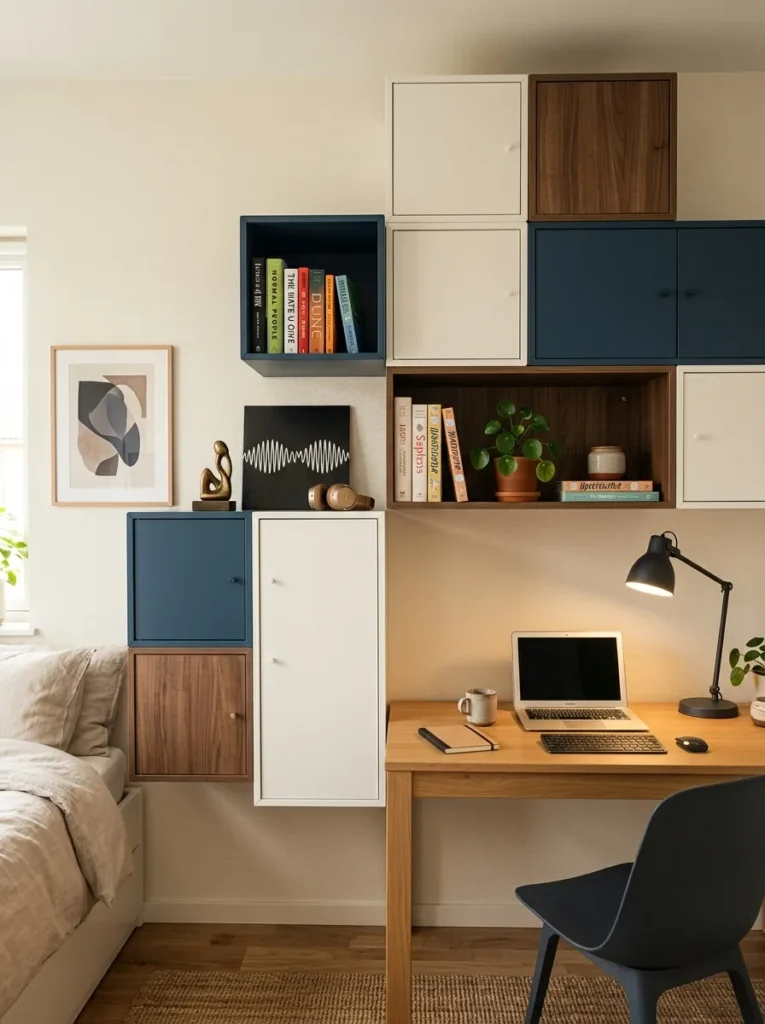
Vibe: The EKET wall feels like the teenager designed their own shelving system — the asymmetric arrangement and the mix of concealed and displayed storage communicating a personal curation decision.
Why it works: The EKET cabinet system applies the personal architecture principle for teenage rooms — the EKET’s modular format (cabinets in 35×35, 35×70, and 70×35cm formats with optional doors and open-front options) allows the teenager to design their own wall composition, choosing the arrangement, color combination, and mix of open and closed storage that reflects their specific storage needs and aesthetic sensibility. This participatory design dimension is specifically appropriate for teenage rooms where the development of personal taste and the expression of identity through space are genuine developmental functions. The wall-mounted format (EKET cabinets hang on a wall rail rather than standing on legs) provides a floating, architectural quality that reads as a considered design decision rather than a storage solution.
Shop The Look
| Product |
|---|
| IKEA EKET cabinet 35×35 white |
| IKEA EKET cabinet 35×70 dark blue |
| IKEA EKET cabinet door walnut |
| EKET wall mounting rail |
| Teen personal object display set |
14. SUNDVIK Rocking Chair for the Nursery — The Parent’s Piece
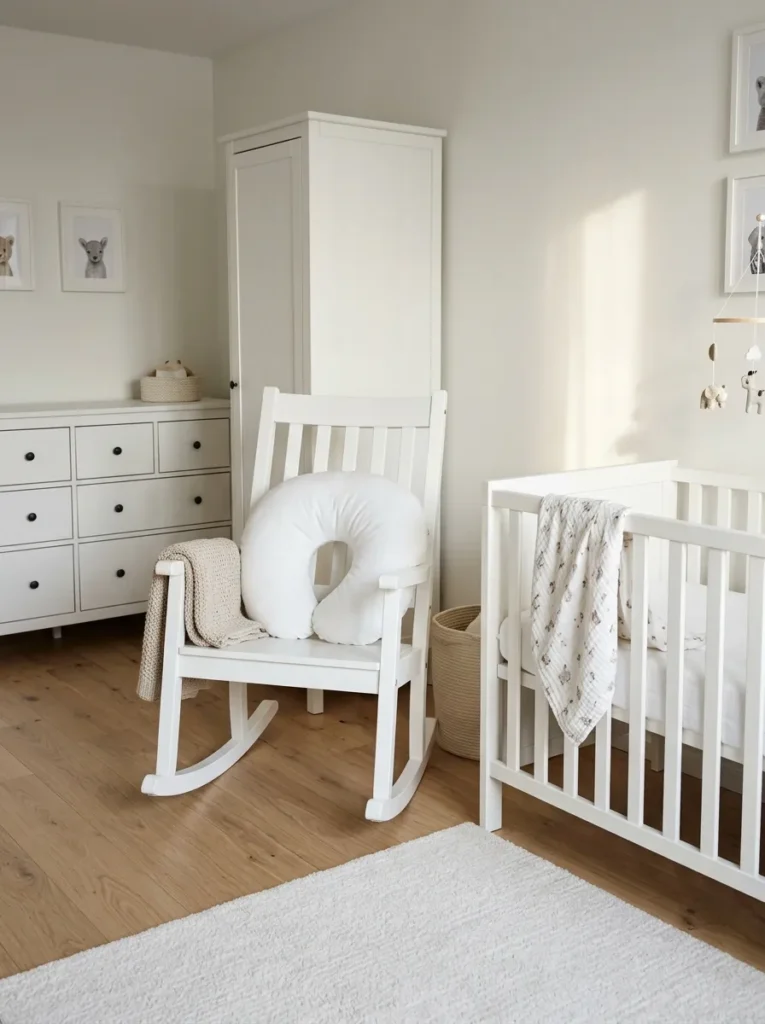
Vibe: The SUNDVIK nursery with rocking chair feels like the room was designed for the exhausted parent as much as the sleeping infant — the coordinated furniture system creating a calm that the parent needs as much as the child does.
Why it works: The SUNDVIK series applies the parent-as-primary-user principle for the nursery — in the first three to six months of a child’s life, the nursery’s primary user is the parent (particularly the nursing or bottle-feeding parent who spends significant overnight hours in the room), and the rocking chair is the piece of furniture that most directly serves this parent use. A comfortable, appropriately sized rocking chair with arm support at nursing height (approximately 70cm arm height for most adults) reduces the physical strain of overnight feeding sessions and creates the calm physical environment that promotes infant sleep return after feeding. The SUNDVIK series’ coordinated white finish ensures the rocking chair reads as part of the nursery’s designed furniture ensemble rather than as an added item from a different range.
Transition path: The SUNDVIK rocking chair transitions from nursing chair in the nursery (0–2 years) to reading corner chair in the toddler’s room (2–5 years) to an accent chair in a teenager’s room or a spare bedroom (5+ years). The investment is made once in a furniture piece that continues serving throughout the family home’s evolution.
Shop The Look
| Product |
|---|
| IKEA SUNDVIK crib white |
| IKEA SUNDVIK wardrobe white |
| IKEA SUNDVIK rocking chair white |
| Nursing pillow white removable cover |
| Small knitted throw oat nursery |
How to Start Your IKEA Kids Room Design
The single best first move before purchasing any IKEA kids furniture is drawing a simple floor plan of the room at scale (1cm = 10cm is sufficient) and marking the position of the door, the window, the radiator, and any fixed features like closets or alcoves. This floor plan exercise, which takes thirty minutes with a tape measure and graph paper, reveals three pieces of information that every furniture purchasing decision requires: the maximum bed length the room can accommodate (measured along the wall where the bed will sit, from the wall to the door clearance), the available wall width for shelving and storage (measured between the window, door, and any alcoves), and the floor area available for a desk or play space (the remaining floor area after bed and storage positions are assigned). Without this information, IKEA’s online planning tool (the IKEA Home Planner, available at ikea.com/planners) cannot produce an accurate room layout, and furniture purchases may arrive and not fit the room as expected.
The most common mistake in IKEA kids furniture selection is prioritizing the current age’s requirements over the growth trajectory. A parent purchasing a toddler bed for a three-year-old that will require replacement at five is making a five-year furniture investment horizon decision (the replacement cost, the assembly time, and the disposal of the original piece) that is unnecessary if the initial purchase is a bed with growth adaptability (KURA, BUSUNGE, VITVAL) rather than a standard toddler bed. Every IKEA kids furniture purchase should be assessed against two questions: how does this piece serve the child now, and how does this piece serve the child at the end of its useful life? If the answer to the second question is “it doesn’t — we’ll need to replace it,” the purchase should be reconsidered against a more adaptable alternative.
Three specific IKEA products under $150 that immediately and enduringly improve any children’s room: the TROFAST storage system ($35–85 for a starter frame and trays, which provides the most accessible and most child-maintainable toy storage available at any price and serves the child’s room through childhood with changing contents); the SKÅDIS pegboard ($15–25, which provides wall-mounted organization for small items at any height from a baby’s nursery to a teenager’s study station); and the ÖRFJÄLL height-adjustable chair ($55–80, which serves every IKEA desk in the range from the FLISAT children’s table through the MICKE homework desk to the adult BEKANT desk when the child eventually needs an adult workspace). These three items combined for under $150 address organization, wall storage, and ergonomic seating — the three functional requirements of a children’s room that most frequently lack an adequate solution.
A simple children’s room refresh (new storage system, updated bedding, reorganized desk area) is achievable in a single weekend for $200–500 in IKEA products. A mid-range children’s room fit-out (bed, storage, desk, and wardrobe from a coordinated IKEA range) takes a weekend of assembly and costs $600–1,500. A complete children’s room design (new flooring, full furniture fit-out, custom paint, window treatments, and lighting from IKEA and complementary suppliers) represents a $1,500–3,500 investment across two to three weekends. The TROFAST and the SKÅDIS happen this weekend; the KURA or VITVAL loft bed follows when the child’s developmental stage is appropriate, and the full EKET wall or STUVA combination takes its time and arrives as the room and the child together indicate what is needed next.
Frequently Asked Questions About IKEA Kids Furniture
Is IKEA kids furniture safe for young children?
IKEA’s children’s furniture meets all relevant safety standards in the markets where it is sold — EN 71 in the European Union and UK, ASTM F963 and CPSC standards in North America, and AS/NZS 8124 in Australia and New Zealand. The critical safety requirement that applies to all IKEA shelving, storage, and tall furniture in children’s rooms is the anti-tip anchor: every KALLAX, STUVA, HEMNES, TROFAST, and wardrobe product must be anchored to the wall before a child has access to the room, using the wall fixings supplied with the product. IKEA provides these fixings with every qualifying product and includes installation instructions in the assembly guide. This is not optional and not a recommendation — it is a mandatory safety requirement.
What IKEA products are best for a small children’s room?
For small children’s rooms, the IKEA products that provide the most function per square metre of floor footprint are: the KURA reversible bed in loft configuration (which converts the bed’s floor footprint into a vertical zone with sleeping above and play or study below), the PAHL wall-mounted fold-down desk (which provides a study surface with no floor footprint when folded closed), the TROFAST storage system (which provides categorical toy storage in a minimal floor footprint at child-accessible height), and the KALLAX 1×4 vertical tower (which uses vertical wall space rather than floor area for book and display storage). In combination, these four products can accommodate the full functional requirements of a children’s room — sleep, study, storage, and play — in a room as small as 8 square metres.
How do you make IKEA kids furniture look more custom or built-in?
The most effective approaches to making IKEA kids furniture read as custom or built-in are: removing the furniture’s standard legs and adding plinth bases that sit on the floor and match the room’s skirting board profile (this makes KALLAX and HEMNES units appear to sit on a continuous plinth rather than on individual leg fittings), painting all furniture pieces in the same color as the wall (either in the wall color itself or in the IKEA furniture paint range), adding architectural elements at the top of furniture units that connect the unit to the ceiling (a simple MDF board installed between the top of a KALLAX and the ceiling with cove molding at each edge reads as a built-in unit), and replacing the standard IKEA door and drawer hardware with premium alternatives (replacing the standard IKEA knobs with ceramic or brass knobs from a hardware specialist significantly elevates the furniture’s perceived material quality).
At what age should a child transition from a crib to a bed?
Most pediatric organizations recommend the crib-to-bed transition between 18 months and 3 years — specifically when the child shows signs of being able to climb out of the crib (which creates a fall risk), when the child is consistently disturbing sleep by standing in the crib, or when the crib’s height requirement is outgrown. The SNIGLAR and MÖJLIGHET cribs both allow a transition within the product by removing the upper side rail (converting the crib to a toddler bed configuration), which extends the useful life of the product and provides a lower transition hurdle for children who are anxious about the change from an enclosed crib to a fully open bed. The KURA or BUSUNGE in its low-to-ground standard bed configuration is the appropriate next step for most children between 3 and 5 years.
How long does IKEA kids furniture last?
IKEA’s children’s furniture range varies significantly in material quality and therefore in longevity. Products made from solid wood (SNIGLAR in beech, HEMNES in pine, KURA in pine) are significantly more durable than products made from particleboard with melamine or veneer surfaces (BUSUNGE, STUVA, MICKE, KALLAX in the standard specification) — solid wood products can last a child’s entire bedroom occupancy and beyond if properly maintained, while particleboard products typically show significant wear within 8–12 years of regular use. For products that must last the longest (the bed, the dresser), solid wood options are worth the additional investment. For products that will change function and potentially be replaced as the child grows (the activity table, the toy storage system), the particleboard specification is entirely adequate.
Ready to Design Your Child’s Room?
These 14 ideas move through every stage of childhood — from the SNIGLAR’s beech-and-white nursery serenity through the KURA loft bed’s playground-in-a-room versatility to the EKET wall’s teen-curated architectural expression — and every functional requirement, from feeding-night nursing chair to homework station to personal storage system. Starting with the floor plan — thirty minutes with a tape measure and graph paper before opening the IKEA website — is the beginning that makes every subsequent purchase decision precise rather than aspirational. It reveals what can actually fit, what the wall space can hold, and which IKEA products address the room’s specific constraints rather than its idealized version. Draw the floor plan this weekend, bring it to the IKEA planner, and let the room’s actual dimensions guide the furniture choices rather than the room’s imagined potential. When the KURA is assembled in the loft configuration and the child climbs the ladder for the first time and looks down at the under-bed desk that is already theirs — that is the room that was designed for the specific child in the specific room, and it will feel exactly right because it was planned to.