IKEA Bedroom Hacks for Cozy Bedrooms During Fall and Winter
IKEA bedroom hacks are small changes to standard IKEA furniture and textiles, such as covering a laminate nightstand with film or adding a fabric panel behind a basic bed frame, that make a bedroom warmer for the cold months. This guide covers 10 hacks with rough costs from about 15 dollars to 300 dollars or more (approximate, prices vary), and time from 15 minutes to a full weekend.
The main problem in fall and winter is heat loss and hard light. Cold air comes through windows, bare floors feel cold, overhead bulbs look harsh after dark, and clutter piles up as heavier blankets and coats come out. Most of these hacks fix one of those four things, so the room feels warmer without turning up the heating.
You do not need every hack. Pick two or three that match your biggest problem, start with the cheapest, and add one more each month if you want. Most people notice a difference after the first two.
Before you buy anything, check what IKEA currently sells. Product ranges change, and names used in hack guides, such as KURA, TARVA, or MALM, may be updated or discontinued, so look at the product page and the in-store stock first. Measure your bed, windows, and walls too. For drilling, heavy furniture, or wiring, follow the product instructions and your local rules, or ask a licensed professional.
Layered Bedding as a Low-Cost IKEA Bedroom Hack
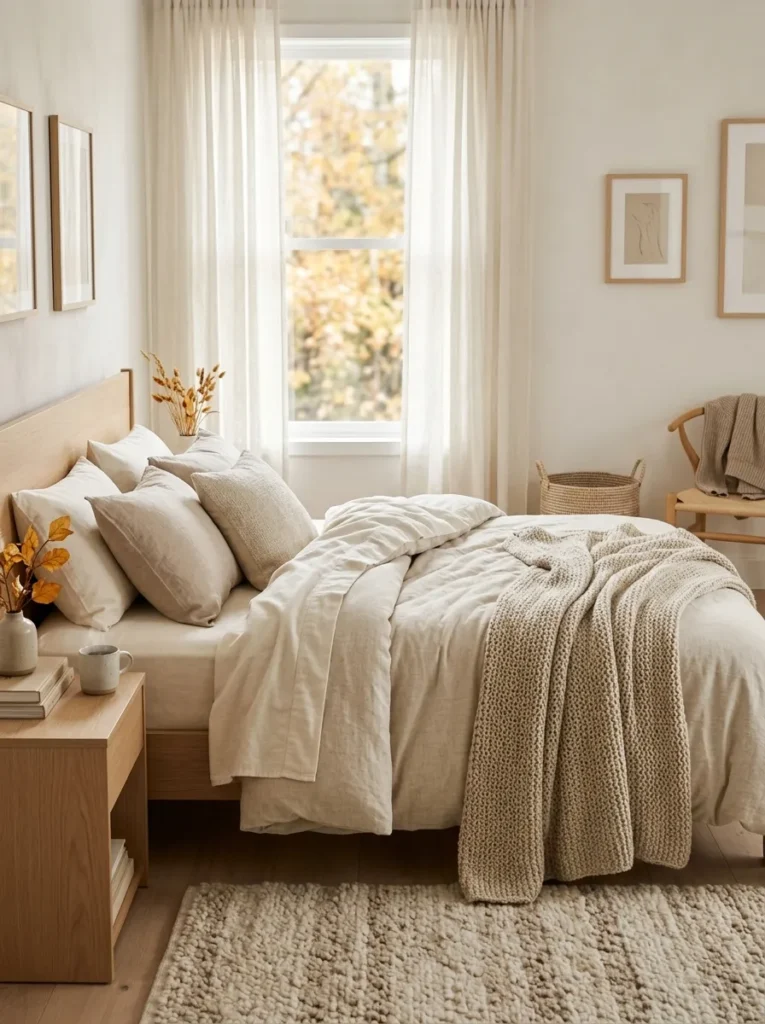
Layered bedding uses three layers: a fitted sheet, a duvet in a warmer weight, and a throw folded at the foot of the bed. It traps warmth without a new bed, and it costs roughly 30 to 120 dollars (approximate, prices vary) depending on what you already own. A standard throw runs about 50 by 60 inches.
Layer order: Start with a flannel or cotton sheet, add your duvet, then fold a throw into thirds across the bottom third of the bed. Do not pile more than one heavy blanket on top of the duvet, because overheating wakes people up. Check each care label before washing.
Texture swap: In fall, use a lighter waffle or cotton blanket. In winter, swap in a heavier knit throw and add two 20 by 20 inch pillows. This suits a double or queen bed, while narrow single beds need a smaller throw.
Shop This Look
Double Curtain Hack for Cold Windows
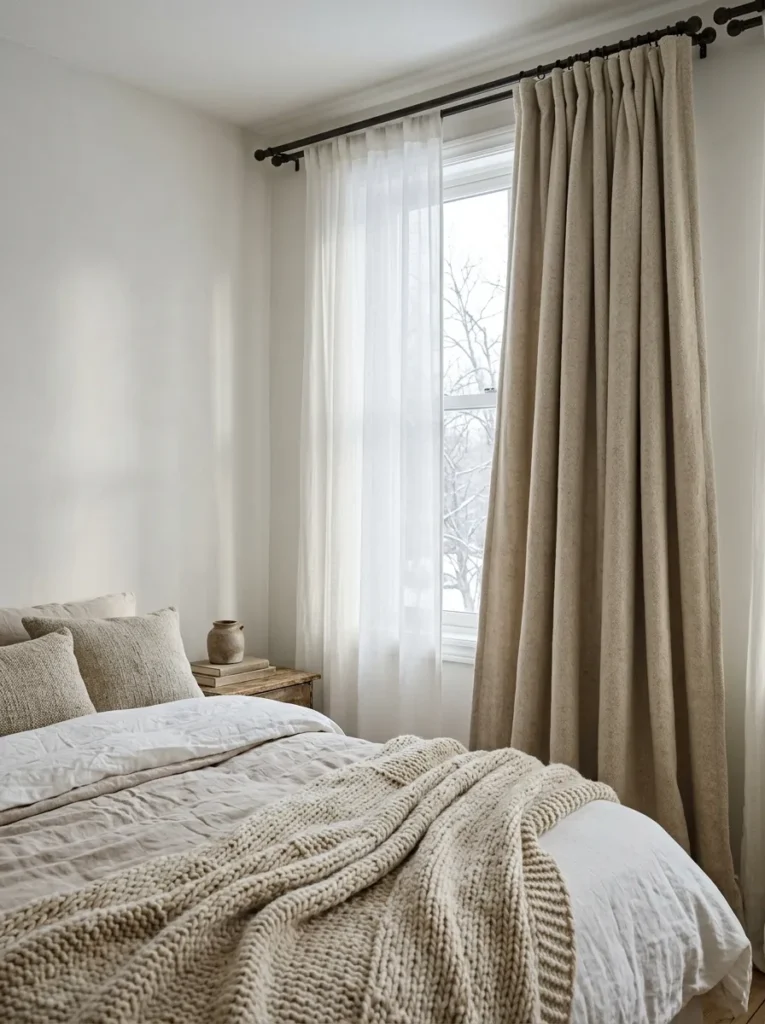
A double curtain hack hangs a sheer panel and a heavier panel on two rods, so the window has a light layer by day and a thick layer at night. The thick panel cuts drafts and glare. Mount the rod 4 to 6 inches above the frame and 8 to 12 inches wider on each side.
Rod placement: Measure the window width, add 16 to 24 inches, and mark the bracket spots with a pencil. Use wall anchors if you hit drywall instead of a stud, and check the weight rating on the box. If you rent, ask about drilling first.
Lining tip: If your curtains feel thin, add a thermal lining behind them. Close them at dusk and open them at midday to let in sun. This suits single-pane windows and cold corners, and floor-length panels need about an inch of clearance to avoid dust.
Shop This Look
Warm Lamp Hack with Soft, Low Lighting
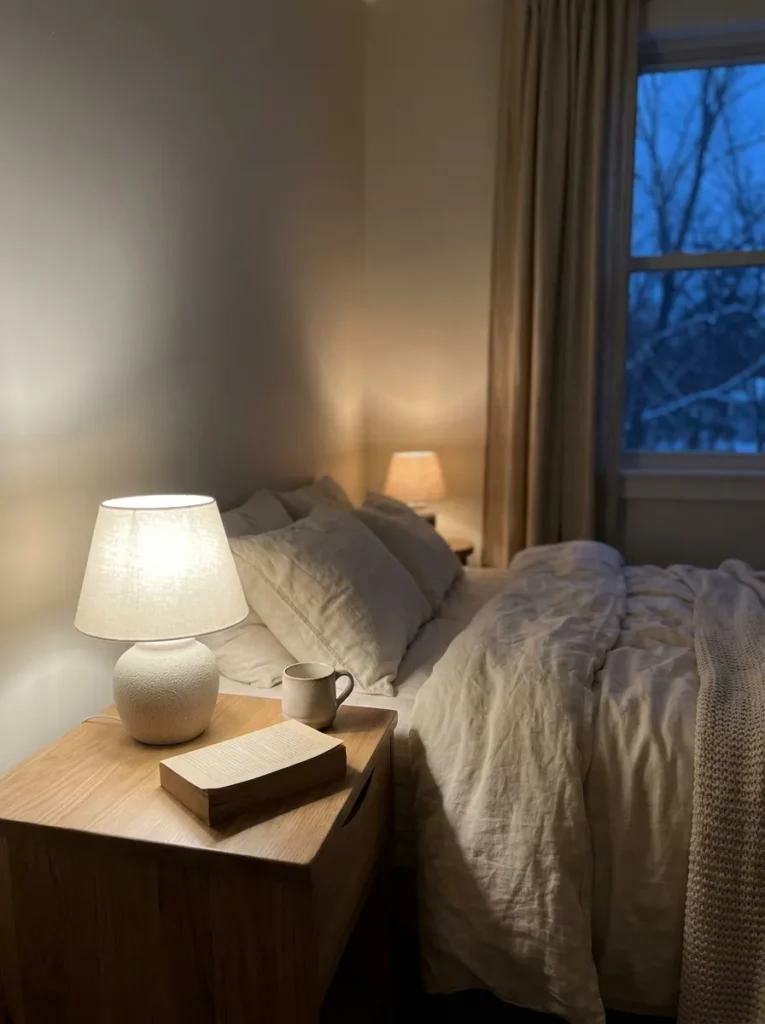
This hack replaces harsh overhead light with two or three small lamps at different heights, warm bulbs of 2200 to 2700 Kelvin, and one dimmer. Warm, low light feels softer after dark, and it usually costs roughly 40 to 100 dollars (approximate, prices vary). Lamps about 24 to 30 inches tall work well on nightstands.
Bulb check: Read the maximum wattage on the lamp label and do not go over it. Do not drape fabric over a bulb or shade, because heat can build up. LED bulbs run cooler, and any damaged cord should be replaced before use.
Dimmer option: Add a plug-in dimmer or a dimmable bulb, and set one small lamp low in a corner. This suits rooms with a single ceiling light. For new wiring or a wall dimmer, hire a licensed electrician.
Shop This Look
Peel-and-Stick Nightstand Makeover, a Simple IKEA Bedroom Hack

A peel-and-stick makeover covers a plain laminate nightstand with wood-look or solid color film, cut about 1 inch larger than each panel. It hides scratches and gives a warmer look for fall. A roll costs roughly 15 to 35 dollars (approximate, prices vary).
Surface prep: Wipe the surface with a damp cloth, dry it fully, and lightly sand any chipped edge with 220 grit paper. Peel a few inches of backing at a time and smooth with a plastic card. Prick air bubbles with a pin and press them flat.
Edge finish: Trim the excess with a craft knife and a straight edge, then add new knobs or pulls for a fresh look. This suits flat-front nightstands. Rounded or textured surfaces hold the film poorly, so check the product label first.
Shop This Look
Rug Layering Hack for Cold Floors
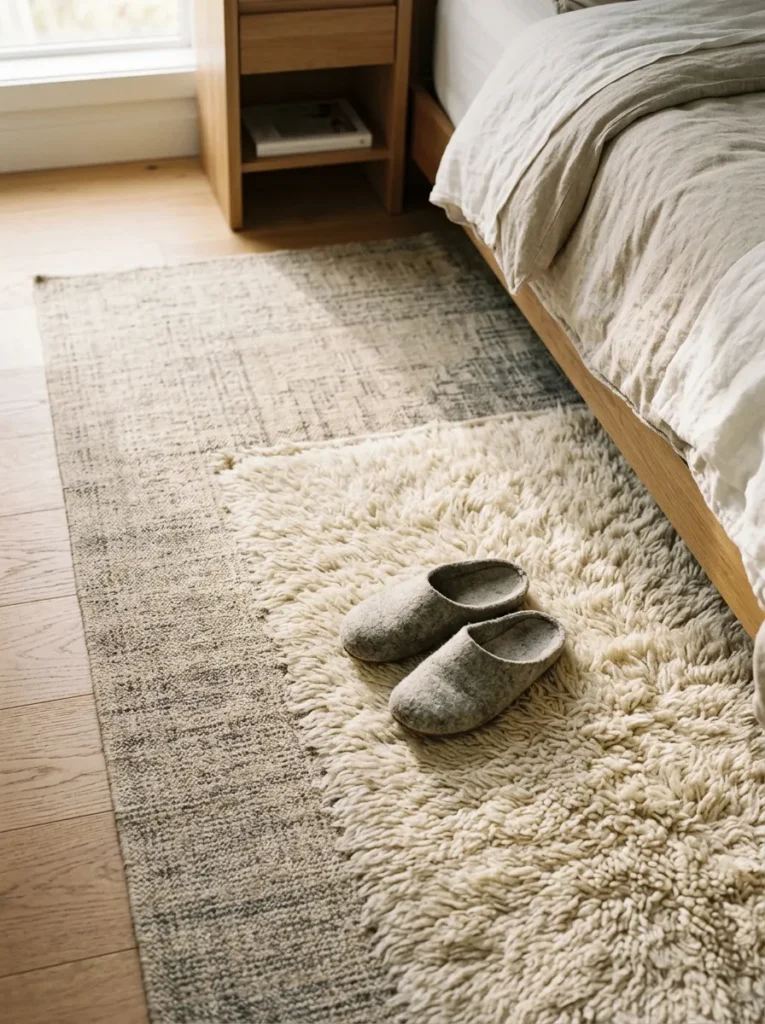
Rug layering puts a smaller textured rug, about 5 by 7 feet, on top of a larger flat rug, about 8 by 10 feet. The pair adds warmth underfoot and softens a hard floor. Expect roughly 80 to 250 dollars or more (approximate, prices vary), depending on size.
Underlay rule: Put a non-slip pad under the base rug and keep it 2 to 3 inches inside the edge. A rug that slides is a trip risk, so check that the corners lie flat. Avoid thick rugs near doors that need to open over them.
Pattern mix: Pair a plain base with a textured top, and keep both in the same color family. At the bedside, the rug should extend 18 to 24 inches past each side of the bed. On carpet, use a flat-weave base so it does not bunch.
Shop This Look
Picture Ledge Hack for a Cozy Bedside Wall
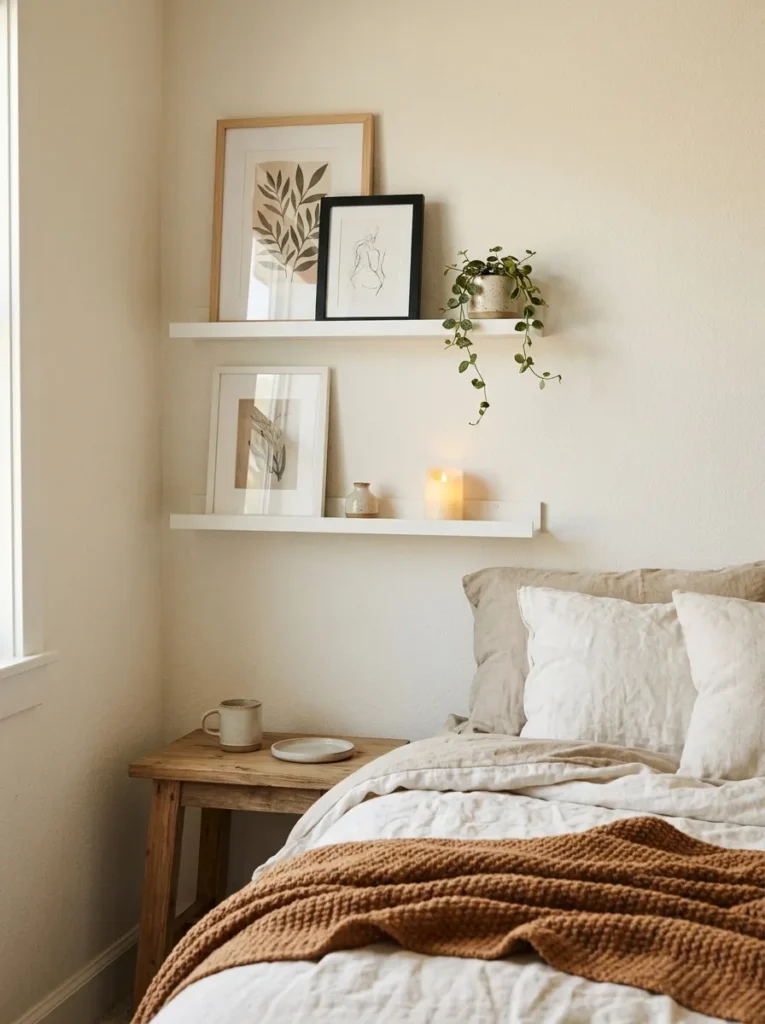
Picture ledges are narrow shelves, about 2 to 4 inches deep, that hold frames, books, and a small lamp. Hung 8 to 10 inches above a nightstand, they replace a bulky bookshelf. Two ledges cost roughly 20 to 50 dollars (approximate, prices vary).
Spacing guide: Mount ledges 10 to 12 inches apart and use a level, with anchors rated for the load. Do not stack heavy books at the edge. Put heavier items at the back, and keep objects away from the pillow line so nothing falls on you in your sleep.
Display swap: Rotate framed photos, a small plant, or a flameless LED candle each season. This suits narrow bedrooms where floor space is tight. Renters should check the lease before drilling into the wall.
Shop This Look
Upholstered Headboard Hack for an IKEA Bed Frame
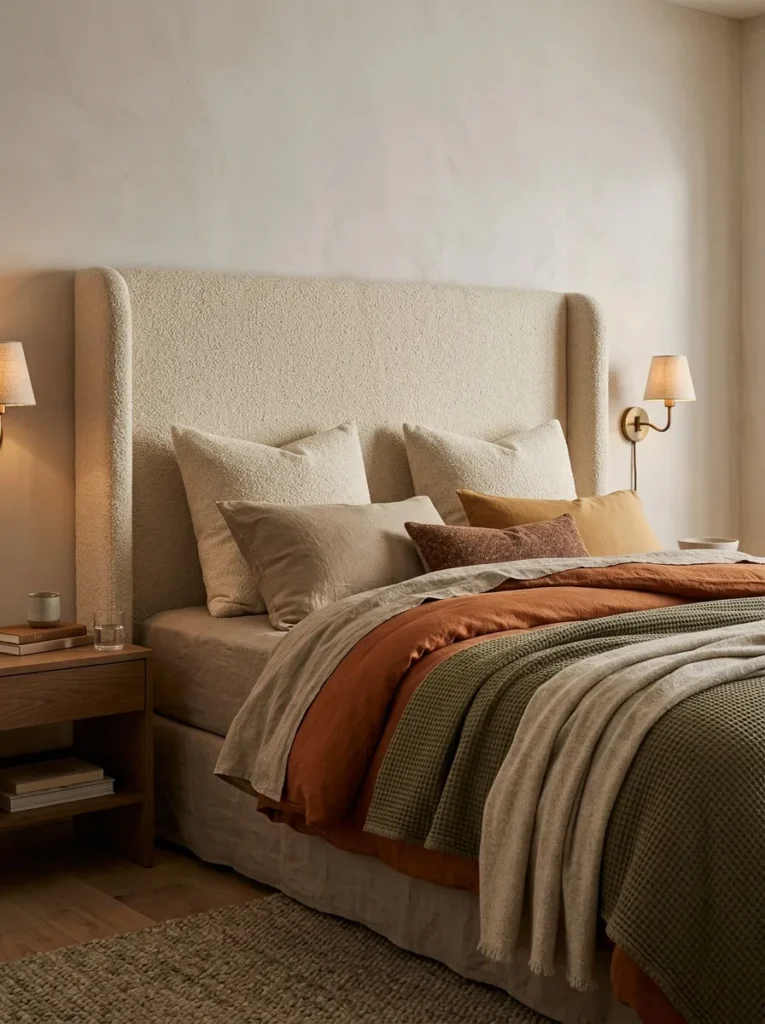
This hack covers a cushion or foam panel with batting and fabric, then fixes it behind the bed. A common version uses a cushion cut slightly larger than the bed frame, which gives a soft backrest for reading. Costs vary, roughly 60 to 150 dollars (approximate, prices vary).
Panel sizing: Cut a 1 to 2 inch thick foam or plywood panel to the width of the bed, wrap it in 1 inch batting, and staple the fabric on the back. Fabric pulled too tight will pucker, so keep light tension. Wear eye protection with the staple gun.
Mounting note: Fix the panel to wall studs or use a French cleat rated for its weight. Check the bed frame’s instructions before attaching anything to it. This suits platform and low frames, and the bottom edge should sit about 2 inches above the mattress.
Shop This Look
Reading Nook Hack for a Cozy Bedroom Corner
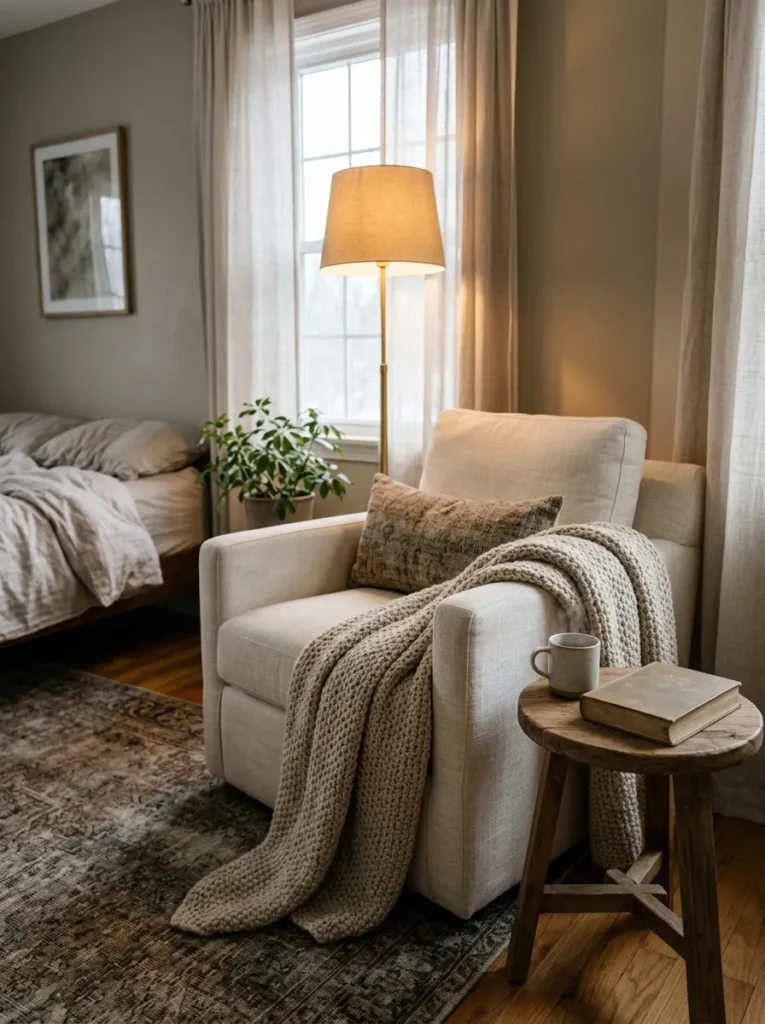
A reading nook is one armchair, a floor lamp, and a small side table in a corner about 3 by 4 feet. It gives you a place to sit that is not the bed, which keeps the bed for sleep. Many cozy bedroom lists feature an IKEA armchair such as the VEDBO, but check what is in stock. Costs run roughly 150 to 400 dollars or more (approximate, prices vary).
Corner spacing: Leave at least 24 inches of walking space around the chair, and keep the lamp about 12 inches from curtains. Do not place the chair in front of a vent or radiator. Keep fabric at least 3 feet from any space heater and follow the heater label.
Throw setup: Drape a throw over the chair arm, add a 12 by 20 inch lumbar pillow, and put a small tray on the side table for a book and a cup. This suits rooms at least 10 by 10 feet. In smaller rooms, use a floor cushion instead.
Shop This Look
Under-Bed Storage Hack to Clear Winter Clutter
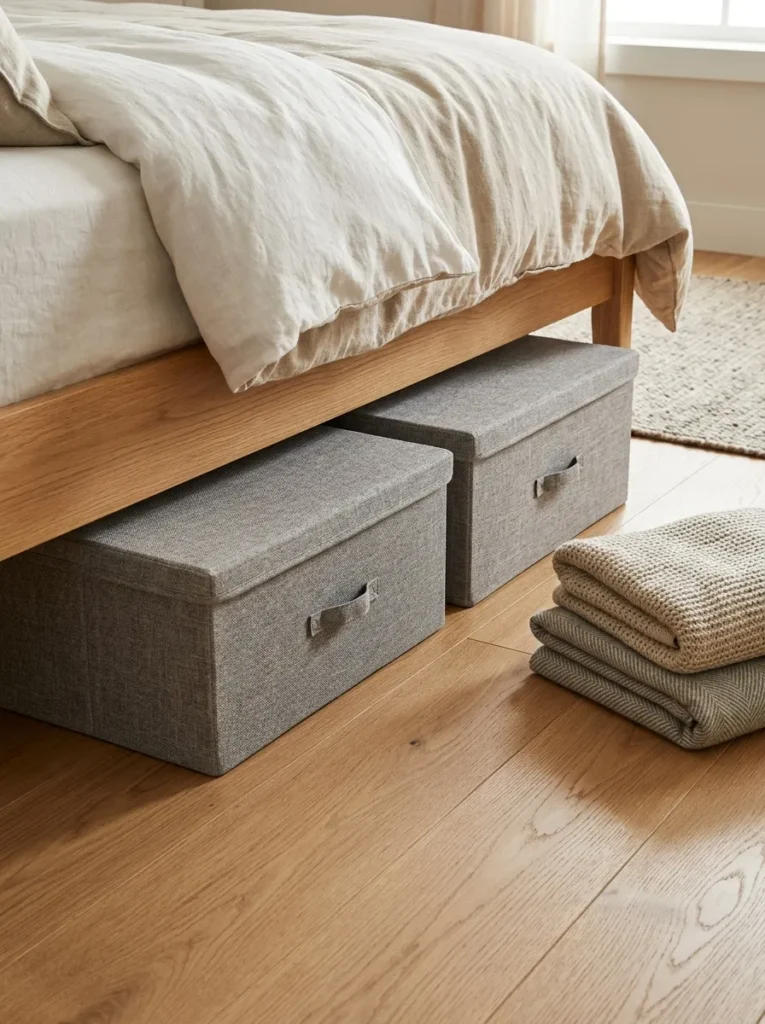
Under-bed storage uses flat bins or rolling drawers, about 6 to 8 inches tall, for off-season clothes and spare blankets. Less visible clutter makes a room feel calmer, and bedding swaps get easier. A set of bins costs roughly 20 to 60 dollars (approximate, prices vary).
Height check: Measure the gap between the floor and the bed frame, not the mattress. Use lidded bins and wipe the floor first, because dust collects. Store only clean, fully dry items, since damp fabric can grow mildew.
Rotation plan: Label each bin by season and swap them in October and April. This suits bed frames with at least 8 inches of clearance. For lower frames, use bed risers rated for the weight of your bed and mattress.
Shop This Look
Canopy Curtain Hack, the Most Involved of These IKEA Bedroom Hacks

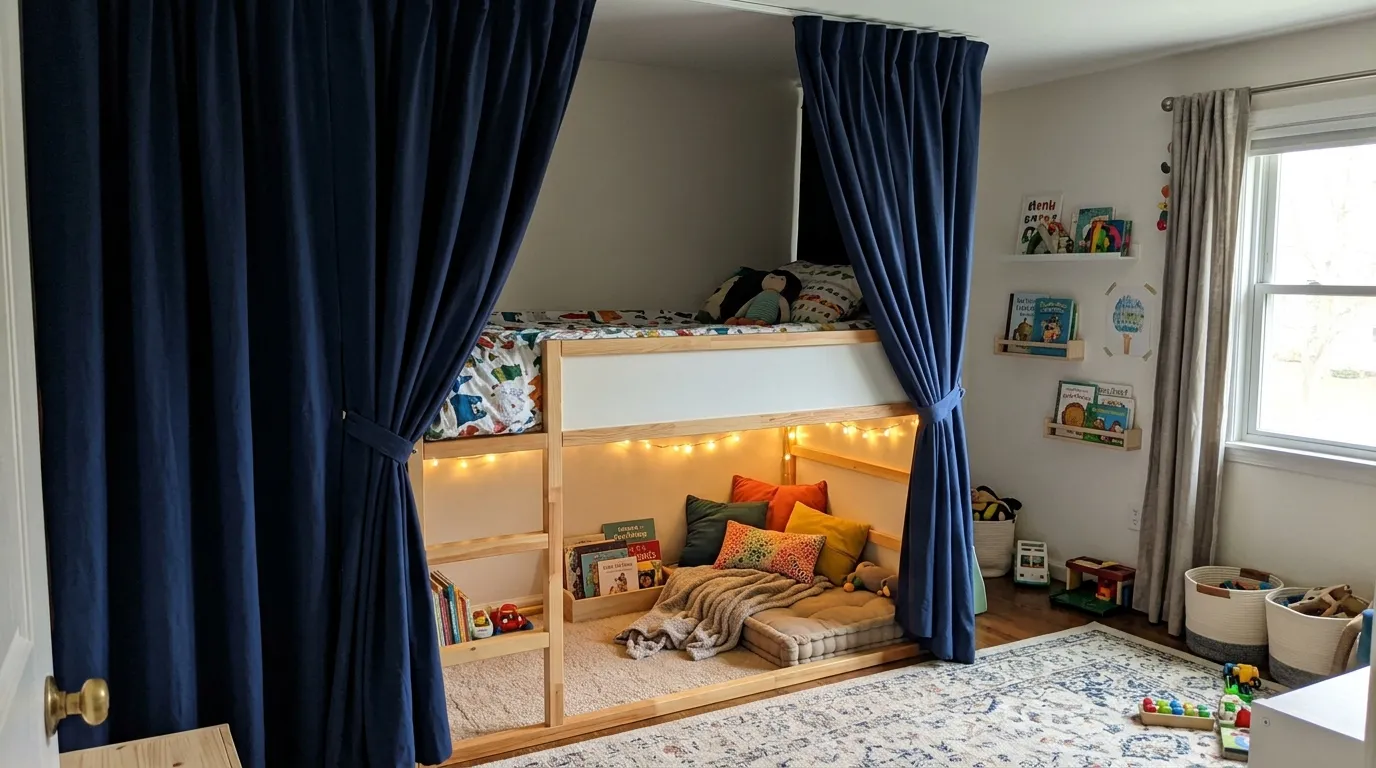
A canopy hack hangs curtain panels from a ceiling-mounted rod or a frame around the bed to create an enclosed nook. It blocks drafts and cuts light. Some people build it around frames like the KURA, but check the manufacturer’s instructions before changing how any bed frame is assembled. Plan on roughly 100 to 300 dollars or more (approximate, prices vary) and a weekend.
Anchor points: Find ceiling joists with a stud finder, and fix hooks or rod brackets into them with screws rated for the weight. Never hang heavy fabric from drywall alone. If you are unsure, hire a handyman, and keep fabric at least 3 feet from heaters.
Fabric choice: Use 4 panels of about 54 by 96 inches, lined if possible, and read the fabric label for care and flammability notes. This suits adult rooms with ceilings of at least 8 feet. Low ceilings feel crowded with a canopy.
Shop This Look
How to Start
Image Prompt: Flat lay of three starter items on a neutral bedspread: a folded chunky throw, two warm white light bulbs and a non-slip rug pad, with a notepad and a tape measure nearby, soft top-down light, realistic photo, vertical 2:3, no people, no text, no logos.
The first move is to find the coldest and darkest spot in the room. Sit on the bed in the evening and notice where you feel a draft, where the light is harsh, and where the floor feels cold. That tells you which hack to do first.
The order matters: bedding and rugs first, then curtains, then lighting, then furniture hacks, and storage last. Textiles are cheap and easy to undo, so you can try them before you commit to adhesive, paint, or drilling.
Three starter items for under roughly 65 dollars total (approximate, prices vary): a throw blanket at roughly 15 to 25 dollars, two warm LED bulbs at roughly 8 to 15 dollars, and a non-slip rug pad at roughly 15 to 25 dollars.
Plan 1 to 2 hours for the first round, and roughly 100 to 250 dollars over the whole season if you do four or five hacks (approximate, prices vary). The headboard and canopy hacks need a weekend and a second person.
Shop This Look
Common Mistakes
Image Prompt: Bedroom scene with a tape measure, a pencil and a notebook on the bed beside a curtain rod and a level, soft daylight, tidy and calm mood, realistic photo, vertical 2:3, no people, no text, no logos.
- Skipping measurements: Items arrive too big or too small. Measure the wall, the window, and the bed first, and write the numbers down.
- Too much brightness: A bright bulb in every lamp makes the room feel harsh. Use 40 to 60 watt equivalent bulbs and add a dimmer.
- Heavy items on weak walls: Drywall anchors fail under heavy loads. Find studs, or use anchors rated above the weight you plan to hang.
- Overcrowding the bed: More than 5 or 6 pillows and 2 throws make it hard to get in. Keep 4 to 5 pillows, one duvet, and one throw.
- Fabric near heat: Curtains, throws, and canopy panels near heaters or hot bulbs are a fire risk. Keep them at least 3 feet away and follow product labels.
- Buying before checking stock: A hack built around one product fails if it is out of stock. Check the product page and keep a backup option.
Frequently Asked Questions
Image Prompt: Cozy Scandinavian-style bedroom at dusk, warm lamp on, neatly made bed with layered bedding, a small notebook and a mug on the nightstand, inviting and calm, realistic photo, vertical 2:3, no people, no text, no logos.
What are the best IKEA bedroom hacks for a cozy bedroom?
The best ones are usually the cheapest: layered bedding, double curtains, warm lamps, and a layered rug. They fix cold, drafts, and harsh light, which are the main comfort problems in fall and winter. Furniture hacks like a headboard or canopy add more style but take more time and tools.
How can I make my bedroom cozy for fall on a budget?
Start with textiles and light bulbs. A throw, warm LED bulbs, and a rug pad cost roughly 40 to 65 dollars (approximate, prices vary) and change the feel of the room in about an hour. Add a second hack each month instead of buying everything at once.
Can I hack IKEA furniture without drilling?
Yes, many hacks need no drilling. Peel-and-stick film, layered bedding, rugs, and under-bed bins all work without touching the wall. For anything heavy, such as a headboard or a canopy, drilling into studs is safer, so check your lease and ask first if you rent.
Which IKEA bed frames are easiest to hack?
Simple, flat-sided frames are easiest, and names like TARVA and MALM often appear in hack guides. IKEA changes its range, so check what is currently sold before you plan around one frame. Read the assembly instructions, and do not change how a frame carries weight.
How much do IKEA bedroom hacks cost?
Most simple hacks cost roughly 15 to 120 dollars, while a headboard, reading nook, or canopy can reach 150 to 400 dollars or more (approximate, prices vary by store and region). Price depends on the extra items you add, such as paint, fabric, or lamps. Set a budget per hack before you shop.
The Finishing Touch
Image Prompt: Finished fall bedroom seen from the doorway, made bed with warm layered bedding, lamps glowing, a rug underfoot and curtains drawn, soft golden evening light, realistic interior photography, vertical 2:3, no people, no text, no logos.
Step back and check four things at night with the lamps on: warmth near the bed, glare from any bulb, walking space around the bed, and anything loose or heavy on a wall. If all four feel right, the room is ready. Sit on the bed for a minute and notice how it feels.
If something is off, change one thing and look again after a few days. Cold floor, add a rug pad. Harsh light, swap a bulb. Cluttered corner, add a bin. Changing several things at once makes it hard to tell what helped.
Today, measure the window and the bed, and write the numbers on your phone. Then pick one hack from the list above and finish it this week, starting with the cheapest. Save your favorite IKEA bedroom hacks to a Pinterest board so you have a clear plan before you shop.