15 Yellow House Exterior Color Combinations
Yellow house exterior color combinations use warm, optimistic yellow — from pale buttercream through soft mustard, golden ochre, and deep harvest gold — as the primary exterior color, paired with trim, door, shutter, and accent colors that either complement, contrast, or ground the yellow to create a complete exterior palette that reads as designed rather than default. This article gives you exactly 15 ideas spanning pale yellows, mid-tone golds, deep mustards, and everything in between, across architectural styles from Victorian and craftsman to colonial, contemporary, and coastal, so every house and every homeowner finds a yellow exterior combination that genuinely works.
A yellow house done well communicates warmth, optimism, and welcome before the front door has been opened. It is the color of morning light on a wall, of ripe grain in a field, of the specific domestic warmth that a pale gold exterior casts in late afternoon sun. Done poorly, yellow reads as a decision that was made without understanding what yellow does to the architectural elements around it — how it interacts with roof color, how it reads against the specific green of the garden, how it shifts from morning to afternoon light. Understanding those interactions is what this list is built around. Here are 15 combinations worth saving — and painting.
Why Yellow House Exterior Color Combinations Work So Well
Yellow is the most behaviorally complex exterior color available to a homeowner — it is the color that shows the most variation between its appearance in a paint store chip under fluorescent light and its appearance on a full sun-facing exterior wall in midsummer, between its appearance in morning light and afternoon light, between its appearance against a red brick path and a gray concrete driveway, and between its appearance in the Pacific Northwest’s soft gray natural light and the Southwest’s intense direct sunlight. This variability is both yellow’s greatest challenge and its greatest opportunity: no other exterior color produces such dramatically different — and dramatic — results across different applications, which means that the rewards for understanding yellow’s behavior are proportionally greater than for any more stable exterior color choice.
The specific yellows that work best as house exterior colors share one critical property: they lean warm without tipping into orange or green. A yellow with too much red undertone (particularly in a bright, high-saturation version) reads as orange in direct sunlight, losing the specifically yellow quality that makes a yellow house appealing. A yellow with too much blue or green undertone (common in “vintage” or “antique” yellow formulations) reads as olive or chartreuse in certain light conditions, which is a very different aesthetic register. The yellows that reliably produce beautiful results are warm yellow-ochre yellows (which share their undertone with the golden light they are trying to reference), pale buttercream yellows (which are essentially warm whites with a gentle yellow cast), and deep gold or harvest yellow (which are essentially orange-adjacent but pulled back toward the yellow range by their brown component).
Trim color is the most impactful decision in a yellow exterior combination after the yellow itself. The three primary trim relationships that work with yellow are: white or warm white trim (the most classic approach, providing clean definition between wall and trim without competing with the yellow’s warmth), dark trim in black, dark navy, or deep charcoal (the most architecturally dramatic approach, creating maximum contrast with the yellow and making the architectural details pop as graphic elements against the yellow field), and warm brown, terra cotta, or deep green trim (the most nature-referencing approach, grounding the yellow in the natural landscape context that it references most directly). Door color is the highest-impact single decision within a yellow exterior palette because the door provides the focal point that the eye travels to after registering the yellow field — a door color that is the wrong chroma, value, or hue relationship to the yellow converts an otherwise successful yellow exterior combination into a confused one.
Style at a Glance
| Element | Yellow Exterior Core | Combination Edge |
|---|---|---|
| Philosophy | Warm, optimistic, and genuinely welcoming | The right trim turns yellow from bold to resolved |
| Key Yellows | Buttercream, golden ochre, mustard, harvest gold | Pale to deep across the warm yellow spectrum |
| Critical Decisions | Trim, door, and shutter color relative to yellow |
15 Yellow House Exterior Color Combinations
1. Pale Buttercream Yellow with Crisp White Trim and Black Door
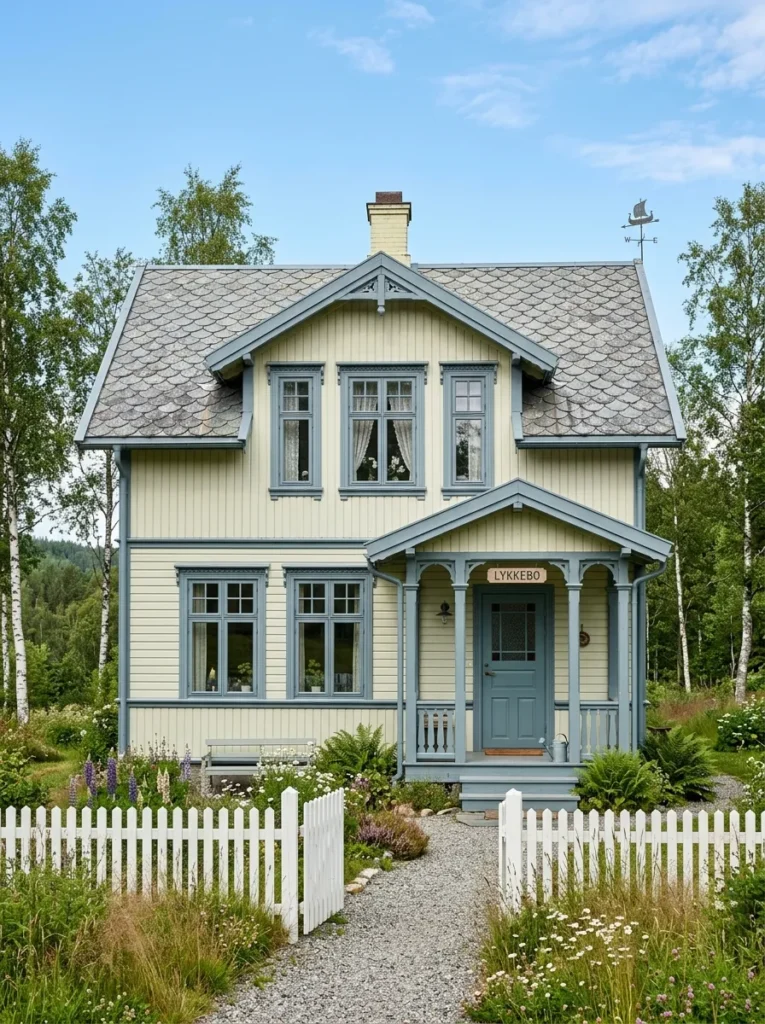
Vibe: The pale buttercream house feels like the most timeless version of a yellow house — the color so gentle that it reads as warm white in some lights and soft yellow in others, always appropriate.
Why it works: Pale buttercream yellow with white trim and a black door applies the classic American colonial exterior combination principle — the three colors (pale warm yellow, bright white, and black) are the original palette of New England domestic architecture, where the warmth of painted clapboard, the precision of white trim, and the formality of a black door created the visual language of colonial establishment. The matte black door provides maximum contrast against both the pale yellow field and the white trim, drawing the eye to the entry point with graphic clarity. The black shutters (painted to match the door) tie the black accent color across the full facade, preventing the door from reading as an isolated element.
How to get it: Specify the yellow in Farrow & Ball Farrow’s Cream No. 67, Benjamin Moore Pale Straw 2154-60, or Sherwin-Williams Antique White SW 6119 — all are warm whites that read as pale yellow in direct light. Use a pure bright white for all trim (Benjamin Moore White OC-17 or Farrow & Ball All White No. 2002 in an exterior eggshell). Specify the door and shutters in Benjamin Moore Black Beauty 2128-10 or Farrow & Ball Off-Black No. 57.
Shop The Look
| Product |
|---|
| Pale buttercream exterior paint sample |
| Bright white trim exterior eggshell |
| Matte black exterior door paint |
| Black shutter pair exterior |
| Black door knocker cast iron |
Also view: 14 Easy Yarn Craft Ideas for Cozy DIY Days
2. Golden Ochre with Forest Green Shutters and Warm White Trim
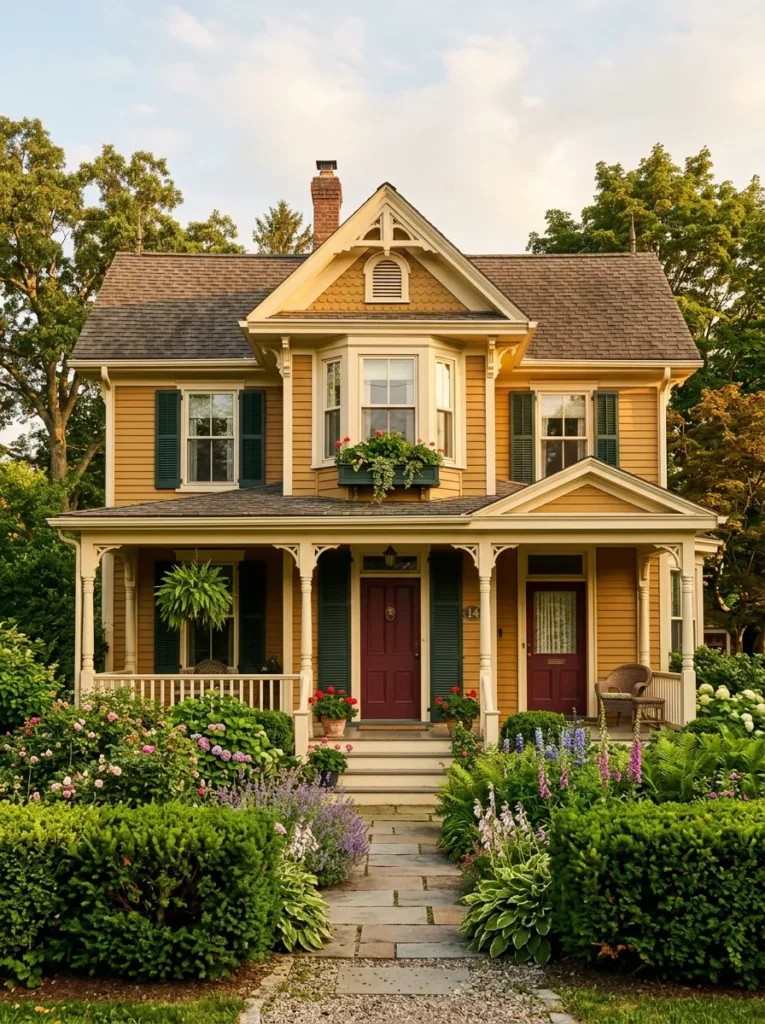
Vibe: The golden ochre house with green shutters feels like it has been standing at the edge of a field for two hundred years — the colors from the landscape rather than from a paint chip.
Why it works: Golden ochre with forest green shutters applies the nature palette principle — golden ochre and deep forest green are the two primary colors of the autumn landscape (golden field, dark forest edge), making them a combination that is simultaneously bold and grounded in the natural world. The warm off-white trim (rather than a bright cool white) maintains the warmth of the overall palette — a cool white trim on a golden ochre house creates a color temperature conflict that reads as jarring; a warm off-white coordinates with the ochre’s warmth. The deep red or burgundy door introduces the third color of the autumn landscape palette (the red berry, the copper leaf) and completes a fully nature-referenced exterior combination.
How to get it: Specify the ochre in Sherwin-Williams Harvest Gold SW 6360, Benjamin Moore Golden Straw 2152-40, or Farrow & Ball Straw No. 13. Use a warm off-white for trim: Benjamin Moore White Dove OC-17 or Sherwin-Williams Creamy SW 7012. Specify shutters in Sherwin-Williams Rockwood Dark Green SW 2809 or Benjamin Moore Dark Hunter Green HC-137. The door in Benjamin Moore Caliente AF-290 or Farrow & Ball Blazer No. 212.
Shop The Look
| Product |
|---|
| Golden ochre exterior paint sample |
| Forest green exterior shutter paint |
| Warm off-white exterior trim paint |
| Deep red exterior door paint |
| Brass door knocker heritage style |
3. Soft Mustard Yellow with Charcoal Gray Trim and Copper Door
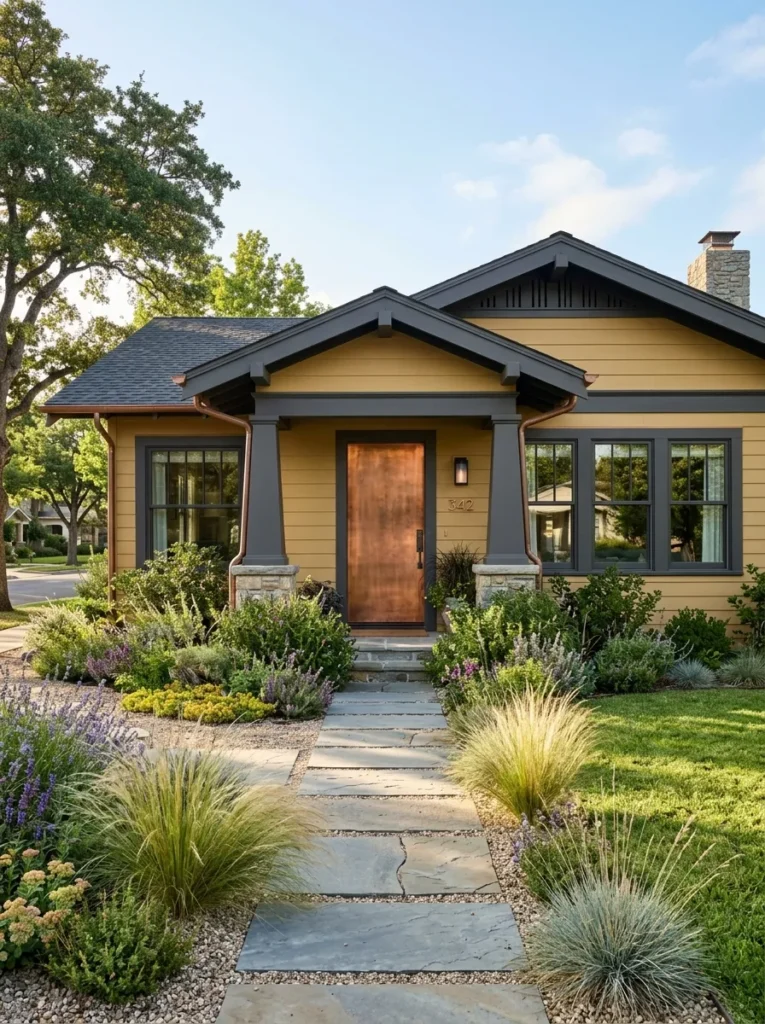
Vibe: The mustard and charcoal house feels genuinely contemporary — the pairing referencing the color palette of mid-century California design while feeling entirely current.
Why it works: Soft mustard with charcoal gray trim and a copper door applies the contemporary warm-neutral pairing principle — mustard yellow and charcoal gray are both warm-toned neutrals (mustard is yellow pulled toward brown; charcoal is black pulled toward warm gray), which means they share the same warm undertone family despite their dramatic value contrast. This shared undertone makes the combination feel cohesive rather than contrasted. The copper door introduces a warm metallic accent that amplifies the mustard’s golden quality without competing with the charcoal’s depth — copper, mustard, and charcoal are all from the same warm, earth-material palette.
How to get it: Specify mustard in Benjamin Moore Butterscotch 2158-10, Sherwin-Williams Antiquity SW 6123, or Farrow & Ball Babouche No. 223. Specify charcoal trim in Benjamin Moore Iron Mountain 2134-30 or Sherwin-Williams Urbane Bronze SW 7048 (one of the most versatile warm charcoal-browns available). The copper door: a naturally patinated copper door from a specialist supplier, or a standard door painted with a copper metallic exterior paint (Rust-Oleum Metallic Copper).
Shop The Look
| Product |
|---|
| Soft mustard exterior paint sample |
| Warm charcoal gray trim exterior paint |
| Copper metallic door paint |
| Dark gray window frame paint |
| Copper house number set modern |
Also view: 14 Smart MOSSLANDA Storage Hacks for Small Spaces
4. Pale Lemon Yellow Coastal House with Navy Shutters and White Trim
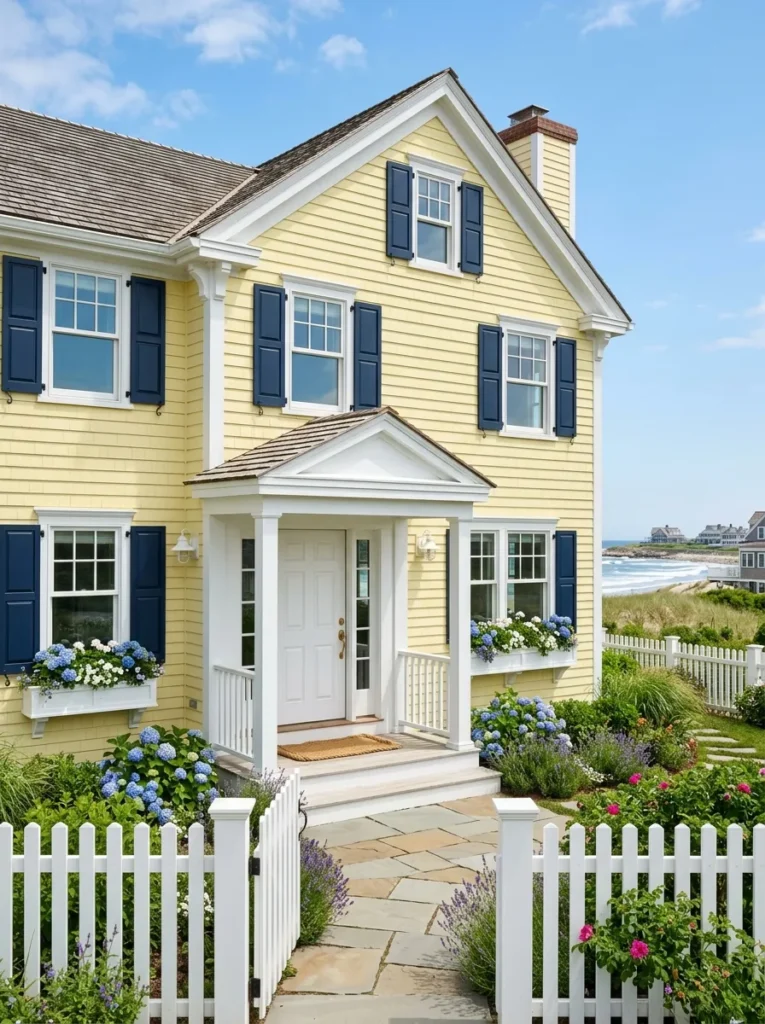
Vibe: The pale lemon coastal house feels like the most recognizable version of the American summer vacation home — the yellow and navy combination referencing the maritime flag tradition and seaside architecture simultaneously.
Why it works: Pale lemon yellow with navy shutters applies the nautical complement principle — the yellow-navy combination is the most recognized two-color pairing in maritime design (from signal flags to naval uniforms to boat hull design), carrying strong coastal cultural associations that amplify the house’s connection to the coastal landscape. Pale lemon (rather than a deep golden yellow) is the specifically coastal yellow because its slight coolness references the quality of coastal light — bright, slightly blue-tinted, clear — rather than the warm afternoon light that a golden yellow references. The white trim and white picket fence complete the New England coastal aesthetic with precision.
How to get it: Specify pale lemon yellow in Benjamin Moore Yellow Lotus 2021-50, Sherwin-Williams Beeswax SW 7769, or Farrow & Ball Citron No. 74. Specify deep navy shutters in Benjamin Moore Hale Navy HC-154 or Sherwin-Williams Naval SW 6244. Bright white trim in Benjamin Moore Chantilly Lace OC-65 or Sherwin-Williams Extra White SW 7006.
Shop The Look
| Product |
|---|
| Pale lemon exterior paint coastal |
| Deep navy blue exterior shutter paint |
| Bright white exterior trim paint |
| White picket fence panel garden |
| Blue hydrangea foundation planting |
5. Deep Harvest Gold with Chocolate Brown Trim and Sage Green Door
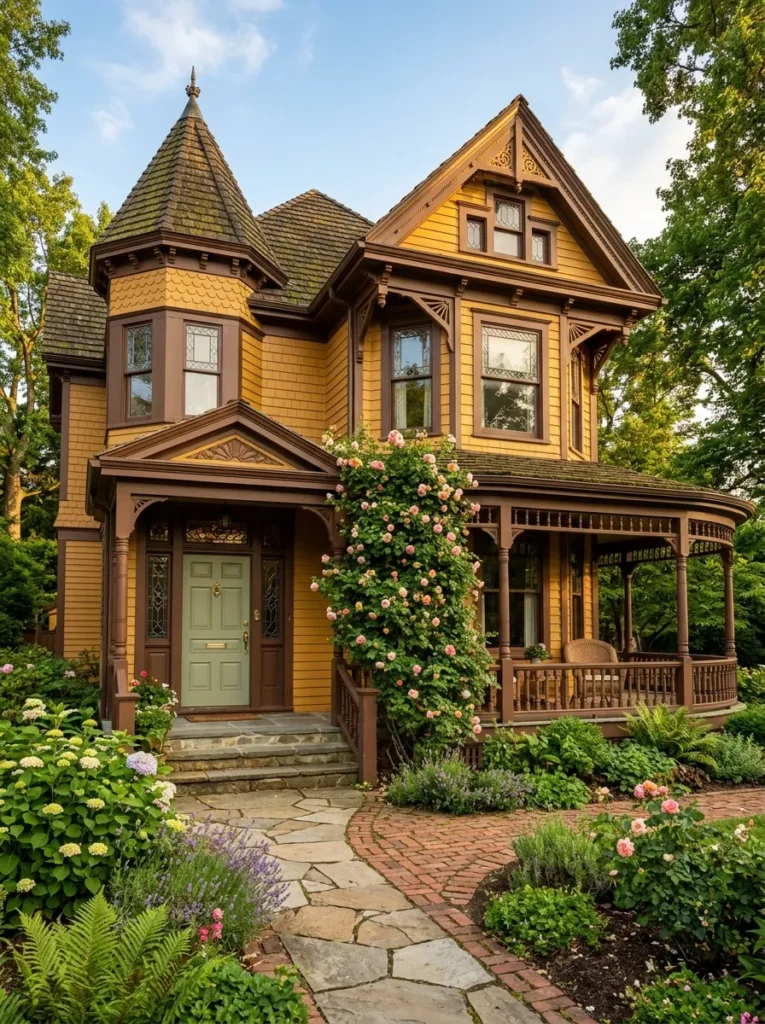
Vibe: The harvest gold Victorian feels like a house that is proud of its specific historical moment — the deep gold and chocolate brown the quintessential colors of Victorian domestic architecture.
Why it works: Deep harvest gold with chocolate brown trim applies the Victorian period palette principle — the deep, rich color combinations of Victorian domestic architecture (including the iconic “Painted Ladies” of San Francisco) used deep, warm, complex colors for the primary wall combined with darker or contrasting trim colors that emphasized the architecture’s ornamental detail. Chocolate brown trim on a harvest gold house performs the same function — the dark trim catches every bracket, every column, every frieze element and makes it legible as architectural detail against the warm gold field. The sage green door introduces the natural-world botanical color that completes the Victorian earth-palette reference.
How to get it: Specify harvest gold in Benjamin Moore Autumn Harvest 2163-10, Sherwin-Williams Marigold SW 6680, or Farrow & Ball India Yellow No. 66. Specify chocolate brown trim in Sherwin-Williams Kona Brown SW 6041 or Benjamin Moore Dark Chocolate 2107-10. Sage green door in Farrow & Ball Mizzle No. 266 or Sherwin-Williams Retreat SW 6207.
Shop The Look
| Product |
|---|
| Deep harvest gold exterior paint |
| Chocolate brown exterior trim paint |
| Sage green exterior door paint |
| Dark roof tile or shingle sample |
| Heritage brass door hardware set |
6. Warm Yellow with Terracotta Roof Tiles and White Stucco Trim
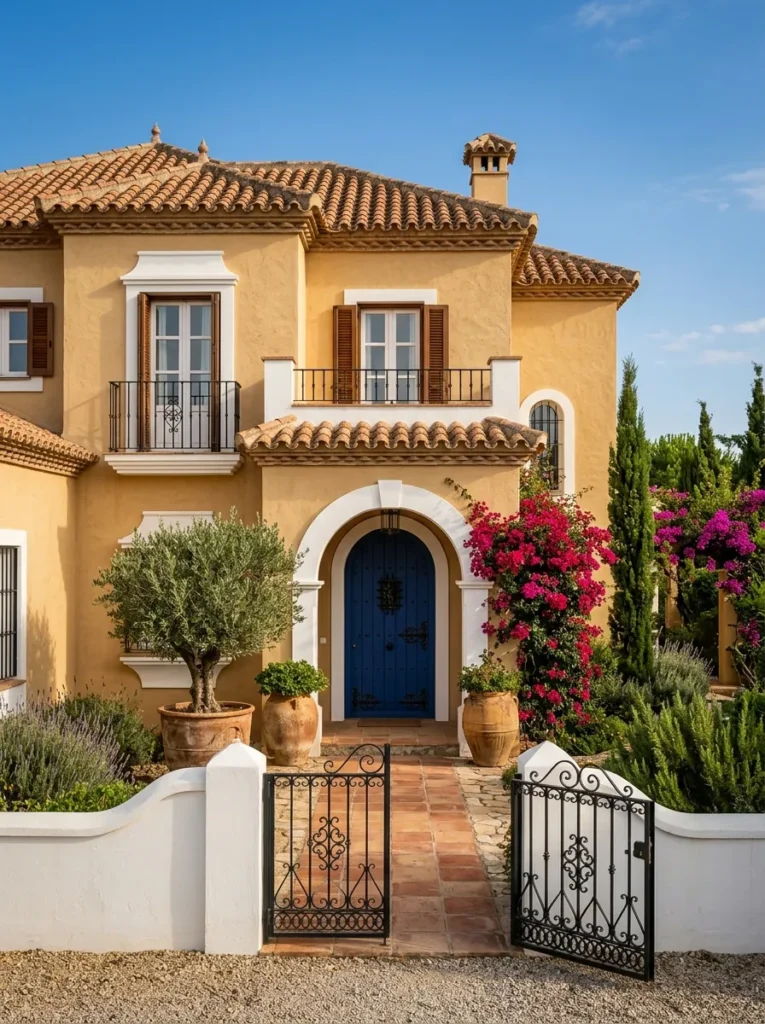
Vibe: The Mediterranean yellow house feels like the south of France or coastal Andalusia — the terracotta tiles and cobalt door completing a palette that references the specific warmth of the Mediterranean built environment.
Why it works: Warm yellow stucco with terracotta roof tiles applies the Mediterranean color wheel principle — sandy yellow and terracotta are adjacent on the warm color spectrum (both in the yellow-orange range), creating a harmonious, landscape-grounded combination that references the colors of the Mediterranean built environment. The cobalt or teal blue door provides the contrast that both the Mediterranean color tradition and color design theory prescribe: blue and orange-yellow are complementary colors on the color wheel, making the blue door against the yellow-and-terracotta backdrop the most visually resolved door-color relationship available for this combination.
How to get it: Specify the yellow stucco in Sherwin-Williams Restrained Gold SW 6129, Benjamin Moore Sandlot 2155-50, or the Farrow & Ball Pale Hound No. 71. The door in Farrow & Ball Vardo No. 288 or Benjamin Moore Beau Green 2013-40. Terracotta tiles are specified by the roofing contractor from a Spanish or Mediterranean tile range.
Shop The Look
| Product |
|---|
| Sandy yellow stucco exterior paint |
| Cobalt or teal exterior door paint |
| White stucco detail paint |
| Terracotta planter large pair |
| Wrought iron door hardware set |
7. Buttercup Yellow with Red Brick Accents and White Trim
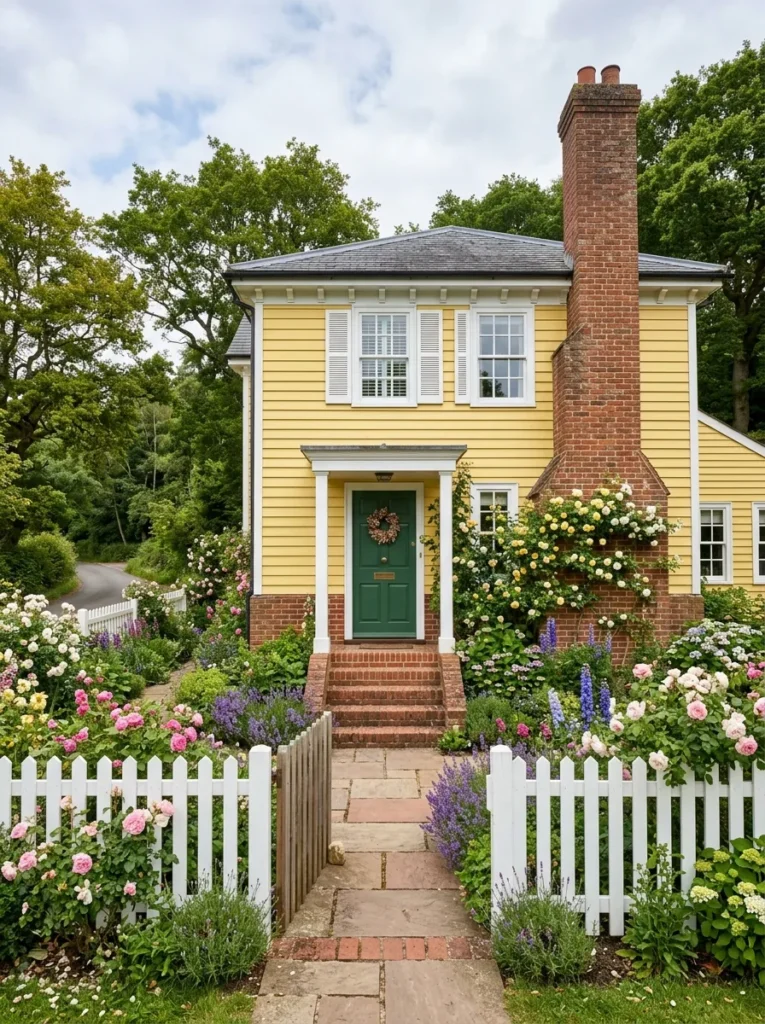
Vibe: The buttercup house with red brick feels like an English village house in July — the yellow and red brick together creating the specific cheerfulness of a British summer garden.
Why it works: Buttercup yellow with red brick applies the material complement principle — warm yellow and red brick are a classic pairing in British domestic architecture because the natural ochre-red of fired brick is in the same warm color family as the golden-yellow of painted timber, creating a combination that reads as both historically grounded and materially harmonious. The forest green door references the garden and the landscape, completing the English country garden aesthetic with appropriate botanical color. The white trim provides the clean definition between yellow siding and the garden’s green, preventing the warm-on-warm color combination of yellow and green from muddying into an indistinct palette.
How to get it: Specify buttercup yellow in Benjamin Moore Yellow Highlighter 2021-40, Sherwin-Williams Jonquil SW 6678, or Farrow & Ball Buttercup No. 281. White trim in Farrow & Ball All White No. 2002 or Benjamin Moore White Dove OC-17. Forest green door in Farrow & Ball Green Smoke No. 47 or Sherwin-Williams Rookwood Dark Green SW 2809.
Shop The Look
| Product |
|---|
| Buttercup yellow exterior paint medium |
| Bright white exterior trim paint |
| Forest green exterior door paint |
| White picket fence panel |
| Brass door knocker round traditional |
8. Deep Mustard with Black Iron Architectural Details
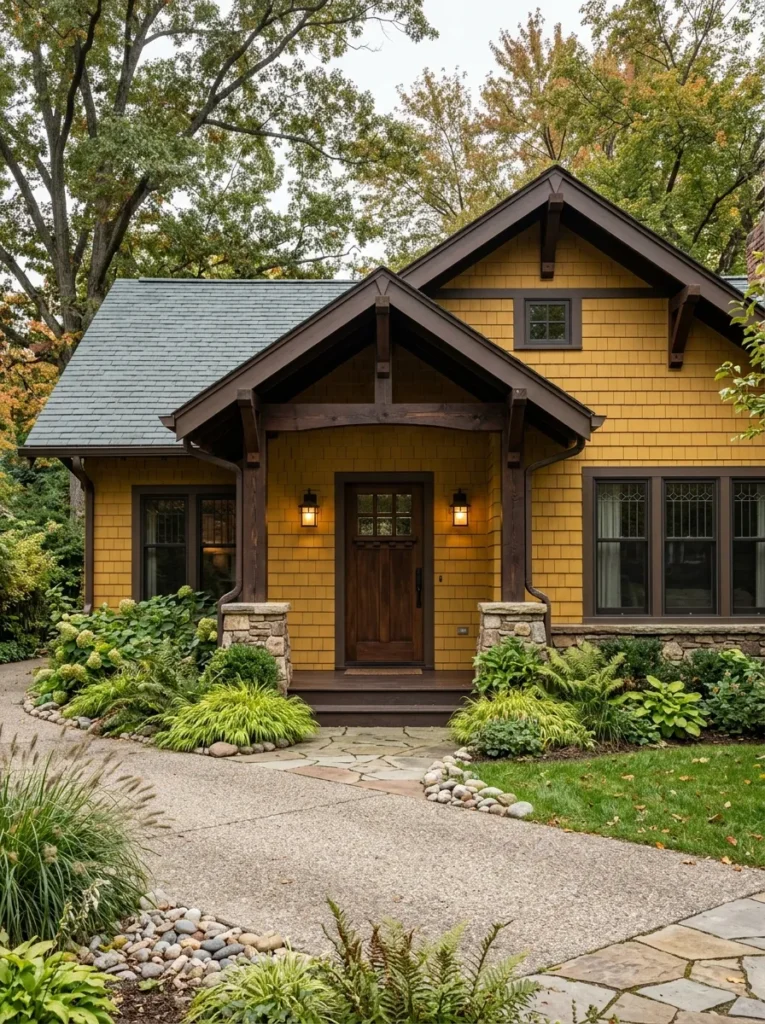
Vibe: The deep mustard craftsman house feels like the most resolved version of the arts and crafts exterior ideal — the deep warm yellow, natural materials, and iron details creating a cohesive handcraft aesthetic.
Why it works: Deep mustard with black iron and dark timber applies the craftsman exterior material principle — the arts and crafts design movement specifically chose deep, warm yellow-gold as one of its primary exterior color references because it references both the natural material world (golden stone, thatched roof) and the specific craft quality of materials that develop warmth with age and use. Black iron (sconces, door hardware, window latches) is the craft movement’s metal of choice because it ages beautifully and maintains the warm, hand-wrought quality that the movement valued. Together they create an exterior palette that references the philosophical values of the arts and crafts movement through its materials and colors.
How to get it: Specify deep mustard in Sherwin-Williams Nugget SW 6697, Benjamin Moore Arrowroot 2163-40, or Farrow & Ball Yellowcake No. 279. Dark trim in Sherwin-Williams Tricorn Black SW 6258 or Benjamin Moore Onyx 2133-10. Black iron fixtures from a specialist architectural ironwork supplier.
Shop The Look
| Product |
|---|
| Deep mustard exterior paint |
| Black iron exterior sconce pair |
| Dark brown exterior trim paint |
| Black exterior door paint |
| Dark roof shingle charcoal sample |
9. Pale Yellow with Sage Green and Natural Cedar Accents
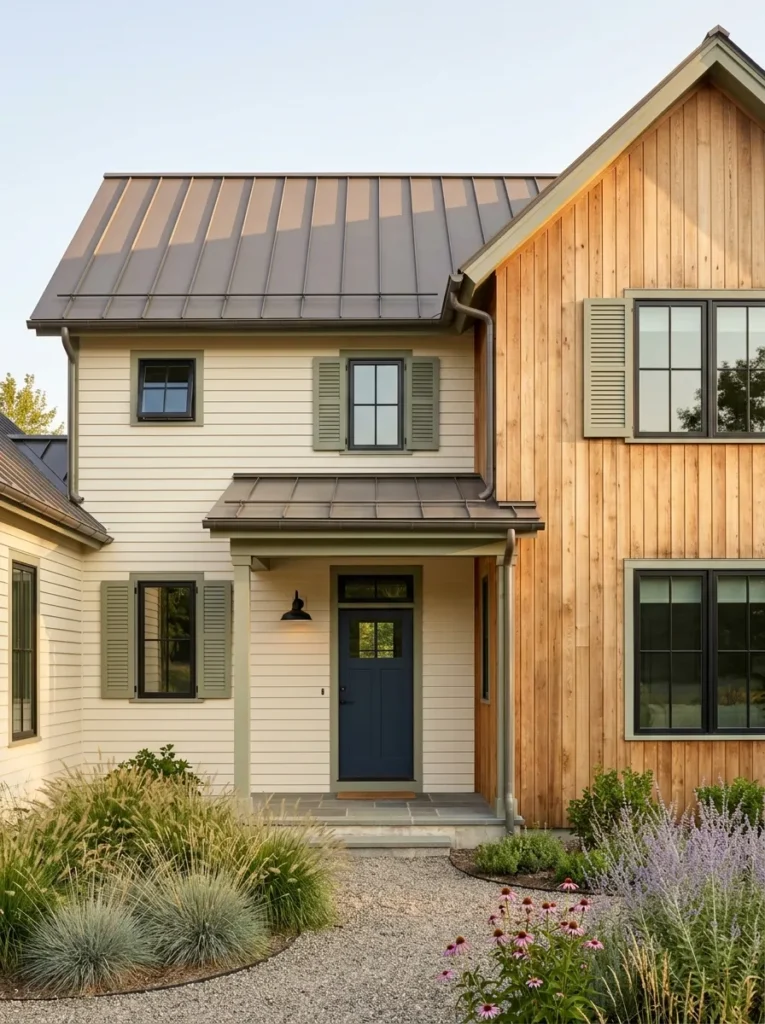
Vibe: The pale yellow farmhouse with cedar accents feels like contemporary design that references its agricultural context without imitating it — the material combination of painted siding and natural wood reading as specifically current.
Why it works: Pale yellow with sage green and natural cedar applies the contemporary farmhouse material palette principle — the combination of pale painted siding (contemporary, clean), sage green accents (botanical, grounded), and natural wood cladding (material, honest) creates an exterior palette that references the farm building tradition through its materials (painted board, natural timber) while achieving a contemporary restraint in its color palette (pale rather than saturated, botanical rather than primary). Natural cedar’s warm golden tone sits precisely between the pale yellow siding and the sage green shutters on the warm color spectrum, acting as a transitional material that ties the two painted colors together through its natural warmth.
How to get it: Specify pale yellow in Sherwin-Williams Vanilla SW 6357, Benjamin Moore Linen White OC-146, or Farrow & Ball Clunch No. 2009. Sage green in Farrow & Ball Mizzle No. 266 or Sherwin-Williams Retreat SW 6207. Dark navy door in Benjamin Moore Hale Navy HC-154 or Farrow & Ball Hague Blue No. 30.
Shop The Look
| Product |
|---|
| Pale yellow-cream exterior paint |
| Sage green exterior accent paint |
| Cedar cladding natural panel |
| Dark navy exterior door paint |
| Simple stainless or black door hardware |
10. Golden Yellow Victorian with Multiple Complementary Trim Colors
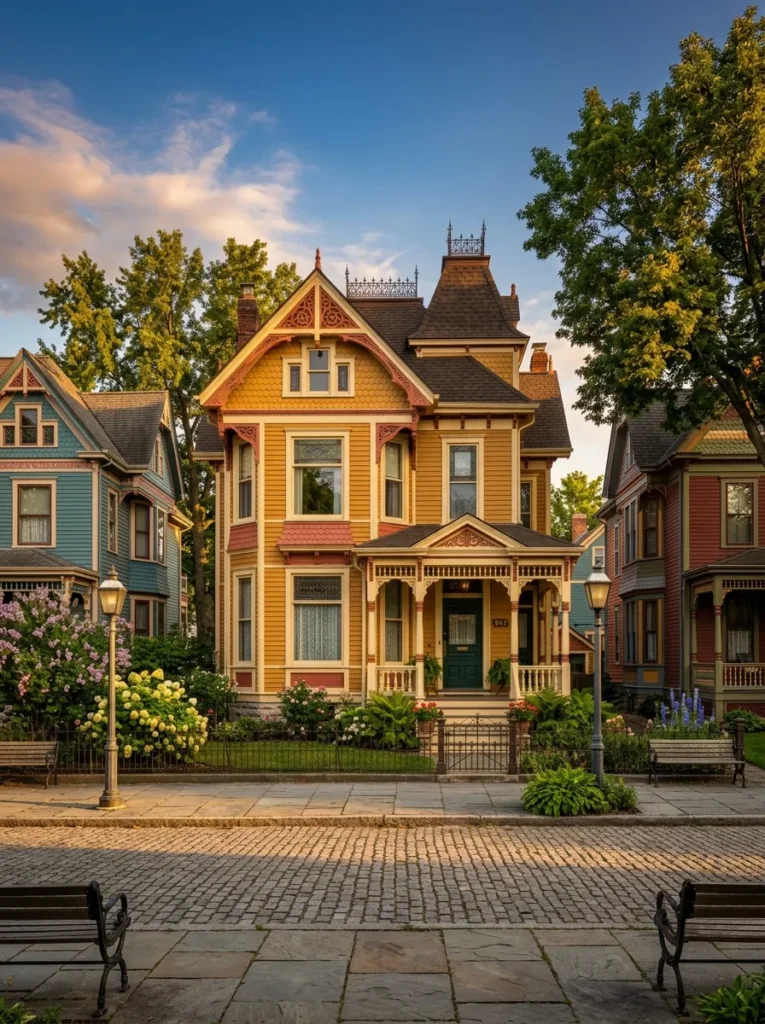
Vibe: The golden Victorian painted lady feels like a declaration that architecture and color are the same act of making — the multiple colors working together to reveal rather than overwhelm the building’s ornamental richness.
Why it works: A Victorian house with multiple complementary trim colors applies the “painted ladies” exterior painting principle — Victorian homes (particularly Queen Anne style) were designed with a wealth of ornamental detail (gingerbread trim, decorative gable boards, porch brackets, turned porch columns) that is invisible when painted in a single color but becomes legible and architecturally significant when differentiated by color. Using three to four harmonious colors (the golden yellow field, the warm white main trim, the terracotta accent detail, the forest green door) reveals the building’s architectural intention: each different material and each different design element reads as a distinct layer of the composition.
How to get it: Specify the primary golden yellow in Benjamin Moore Golden Gate Bridge HC-40, Sherwin-Williams Curry SW 6954, or Farrow & Ball Sudbury Yellow No. 51. The main trim in Farrow & Ball Cream No. 44 or Benjamin Moore Linen White OC-146. The terracotta accent detail in Benjamin Moore Terracotta Tile 2090-30 or Farrow & Ball Venetian Red No. 217. The forest green door in Farrow & Ball Studio Green No. 93 or Sherwin-Williams Basil SW 6194.
Shop The Look
| Product |
|---|
| Golden yellow Victorian exterior paint |
| Warm cream Victorian trim paint |
| Terracotta accent detail paint |
| Forest green door exterior paint |
| Victorian gingerbread trim sample |
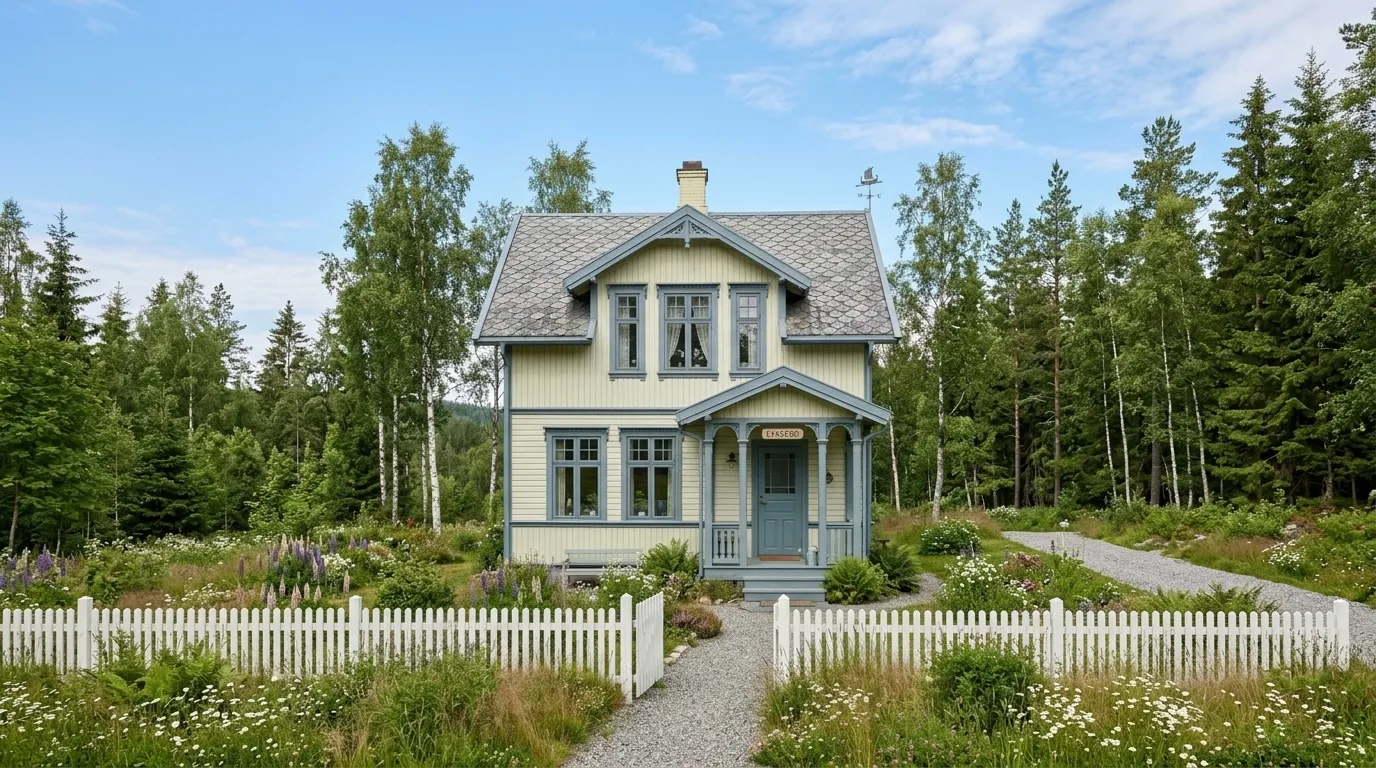
11. Pale Yellow with Dusty Blue-Gray Trim for a Scandinavian Look
Vibe: The Scandinavian pale yellow house feels like a Swedish summer country house — the pale yellow and blue-gray combination the specific chromatic signature of Nordic domestic architecture.
Why it works: Pale yellow with dusty blue-gray trim applies the Nordic domestic color principle — Scandinavian domestic architecture has used the combination of pale yellow and blue-gray for centuries, most famously in the Swedish Gustavian style and the traditional Swedish Falun red house palette, because these two colors reference the specific light conditions of Nordic latitudes (pale, cool sunlight on warm surfaces). The combination reads as simultaneously warm (the yellow) and cool (the blue-gray), capturing the specific quality of Nordic summer light where warmth and coolness coexist in the same scene.
How to get it: Specify pale cool yellow in Farrow & Ball Citron No. 74, Benjamin Moore Pale Daffodil 2021-60, or Sherwin-Williams Lightning Bug SW 6914. Dusty blue-gray trim in Farrow & Ball Parma Gray No. 27, Benjamin Moore Buxton Blue HC-149, or Sherwin-Williams Niebla Azul SW 9137. Slate blue door in Farrow & Ball Borrowed Light No. 235 or Benjamin Moore Aegean Teal 2136-40.
Shop The Look
| Product |
|---|
| Pale cool yellow exterior paint Nordic |
| Dusty blue-gray exterior trim paint |
| Slate blue exterior door paint |
| Weathered gray roof shingle sample |
| Simple Scandinavian door hardware |
12. Bright Sunflower Yellow with White and Red Accent Door
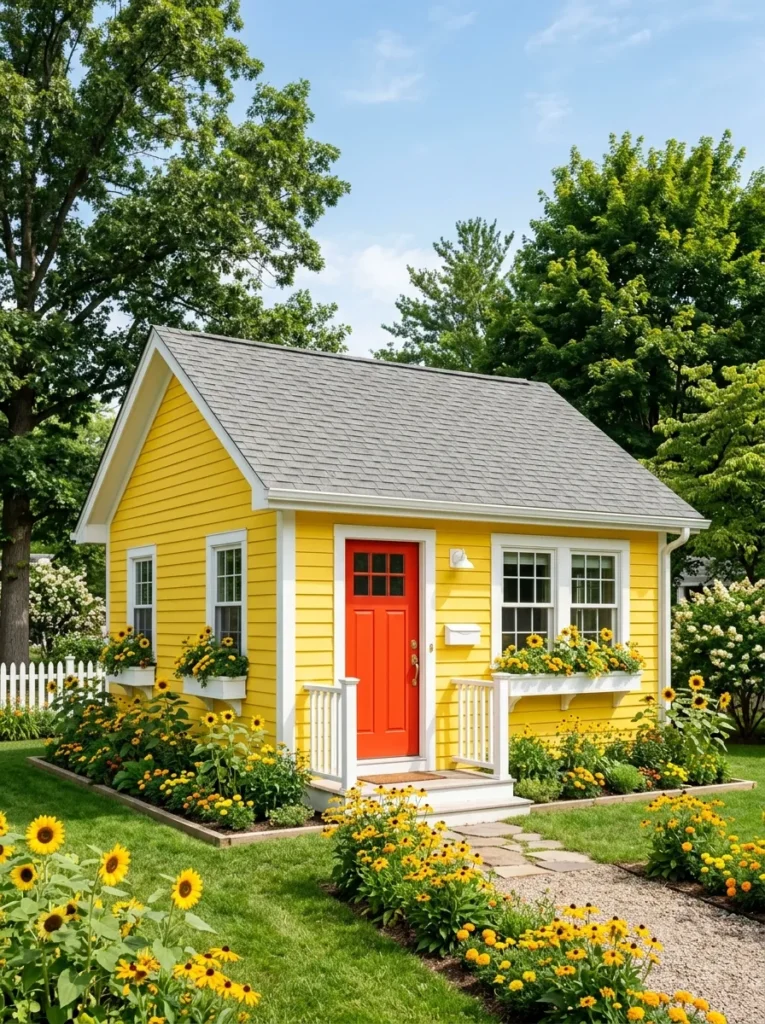
Vibe: The bright sunflower yellow cottage feels unapologetically joyful — the color a bold personal statement that turns the house into the neighborhood’s most optimistic presence.
Why it works: Bright sunflower yellow with white trim and a red door applies the tricolor complement principle — yellow, white, and red is one of the most energetic and visually resolved three-color combinations available in exterior design because all three colors are at maximum saturation (no gray or brown moderating their chromatic intensity), and the red and yellow are analogous colors (adjacent on the color wheel) that share warmth without competing. The white provides the neutral resolution between the two warm high-saturation colors. This combination is appropriate for smaller structures (cottages, bungalows, small houses) where the high saturation reads as charming rather than overwhelming — the same combination on a large two-story house can read as excessive.
How to get it: Specify sunflower yellow in Benjamin Moore Sunflower 2155-30, Sherwin-Williams Bee Balm SW 6900, or Farrow & Ball Sunburn No. 231. Bright white trim in Benjamin Moore Chantilly Lace OC-65. Fire red door in Benjamin Moore Heritage Red 2083-10 or Farrow & Ball Blazer No. 212.
Shop The Look
| Product |
|---|
| Bright sunflower yellow exterior paint |
| Bright white exterior trim |
| Fire red exterior door paint |
| Sunflower garden planting mix |
| White window box pair |
13. Pale Gold with Stone Masonry and Deep Plum Door
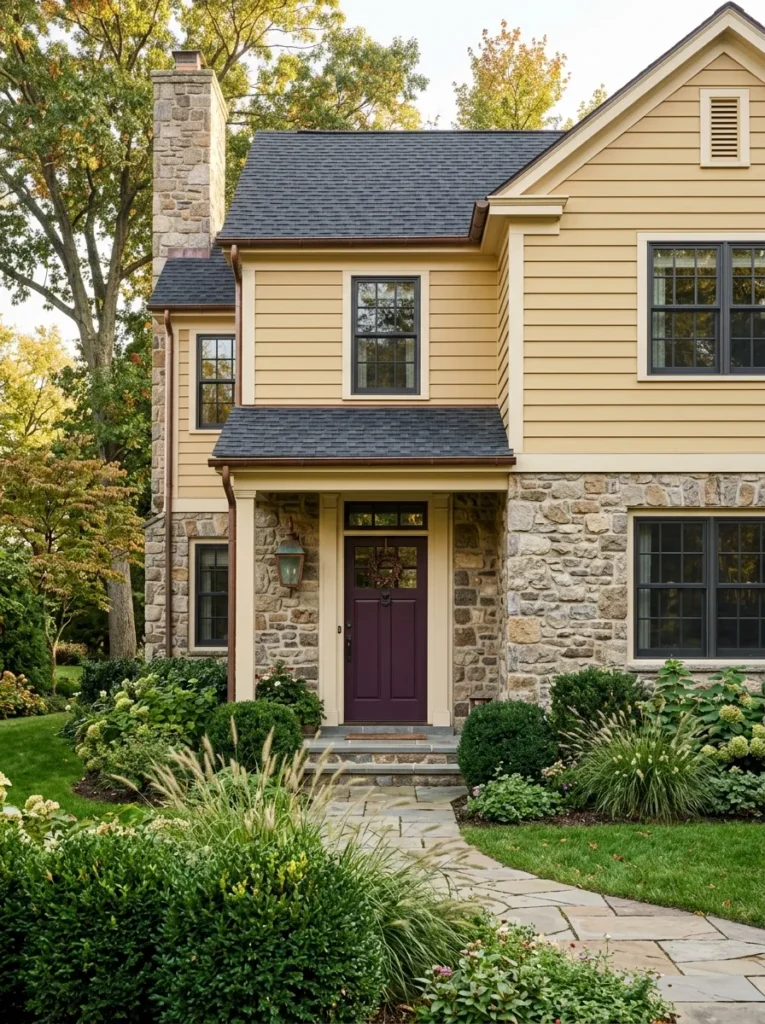
Vibe: The pale gold and stone house with a plum door feels like a jewel in a warm setting — the unexpected plum door creating the specific sophisticated surprise that confident decorating always involves.
Why it works: Pale gold with natural stone and a deep plum door applies the analogous complement principle — pale gold is a warm, mid-value yellow; natural stone is a warm, mid-value gray-beige; and deep plum is a warm, dark purple. Yellow and purple-violet are complementary colors (opposite each other on the color wheel), making the plum door the maximum possible complement to the pale gold walls — the strongest possible visual interest from the minimum possible color addition. Natural stone’s warm gray bridges between the warm gold and the cool-warm plum, providing a material transition that prevents the gold-to-plum relationship from reading as abrupt.
How to get it: Specify pale gold in Benjamin Moore Golden Straw 2152-40, Sherwin-Williams Interactive Cream SW 6113, or Farrow & Ball String No. 8. Deep plum door in Benjamin Moore Eggplant 2116-10, Sherwin-Williams Passionate Purple SW 6858, or Farrow & Ball Brinjal No. 222. Dark charcoal window frames in Benjamin Moore Black Beauty 2128-10.
Shop The Look
| Product |
|---|
| Pale gold exterior paint |
| Deep plum exterior door paint |
| Warm cream exterior trim |
| Dark charcoal window frame paint |
| Aged copper exterior lantern |
14. Mustard Yellow Ranch House with White Trim and Turquoise Door
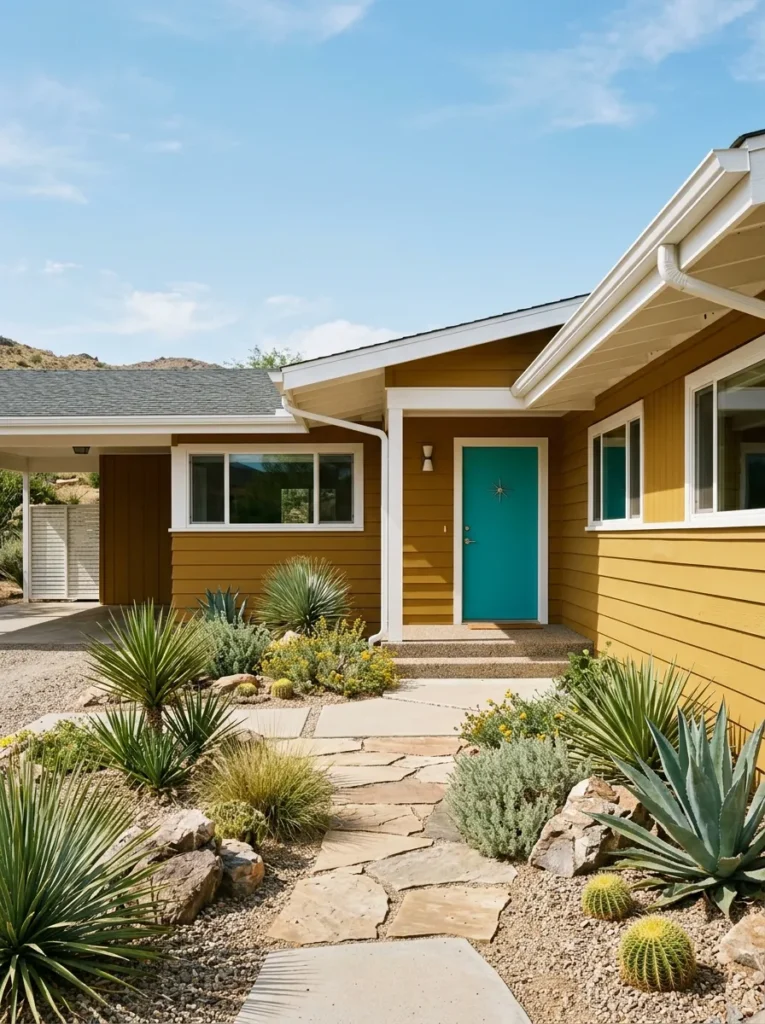
Vibe: The mustard ranch with turquoise door feels like the mid-century Southwest American design moment at its most confident — the mustard and turquoise combination iconic from California to New Mexico.
Why it works: Mustard yellow with bright white trim and a turquoise door applies the Southwest mid-century complement principle — mustard yellow and turquoise are the iconic color pairing of mid-century Southwestern American design, appearing in everything from Taos Pueblo painted details to Palm Springs modernist interiors to Frida Kahlo’s Casa Azul. Turquoise is a blue-green, which sits at the complement of the orange-yellow range on the color wheel — making turquoise and mustard a maximum-complement pairing at a medium saturation level that is warm and inviting rather than jarring. The bright white trim provides the graphic clarity that allows both the mustard and the turquoise to read at full value without muddying each other.
How to get it: Specify mustard in Benjamin Moore Gold Finch 2023-40, Sherwin-Williams Auric SW 9026, or Farrow & Ball Babouche No. 223. Turquoise door in Benjamin Moore Atlantis 2050-40, Sherwin-Williams Leisure Blue SW 6508, or Farrow & Ball Blue Ground No. 210. Bright white trim in Sherwin-Williams Extra White SW 7006.
Shop The Look
| Product |
|---|
| Mustard yellow ranch exterior paint |
| Turquoise exterior door paint |
| Bright white exterior trim |
| Desert native planting set |
| Mid-century door hardware simple |
15. Warm Yellow with Dark Walnut Stain Wood Accents and Charcoal Door
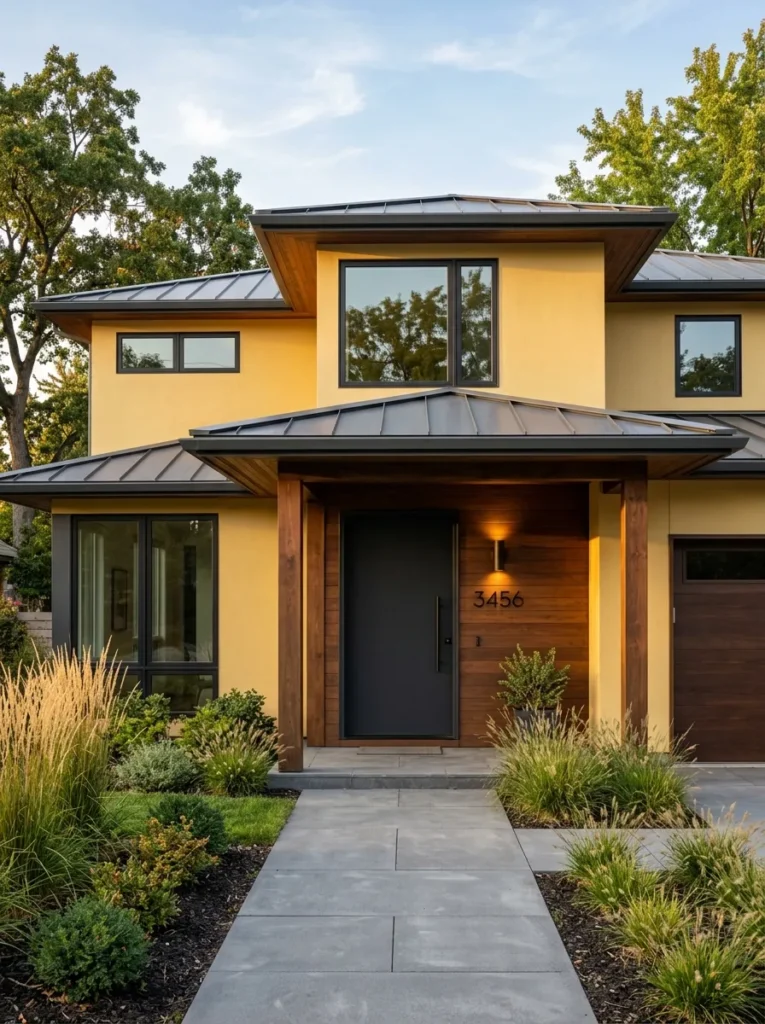
Vibe: The contemporary yellow house with walnut timber and charcoal door feels like a considered architectural decision rather than a paint color choice — the three materials (yellow, walnut, charcoal) working together as a composed material palette.
Why it works: Warm yellow with dark walnut timber and charcoal applies the contemporary material palette principle — contemporary residential architecture increasingly uses combinations of painted and natural material cladding (painted panel plus natural wood cladding, for example) as a design strategy that creates material variety and architectural depth. The warm yellow and dark walnut both share the warm orange-brown undertone family (yellow is warm and golden; walnut is warm and brown), making them a harmonious material pairing despite their value contrast. The charcoal door anchors both warm materials with a dark, neutral counterpoint, preventing the warm-on-warm combination of yellow and walnut from reading as insufficiently resolved.
How to get it: Specify warm yellow in Sherwin-Williams Medici Ivory SW 0016, Benjamin Moore Pale Gold 2159-40, or Farrow & Ball Citron No. 74. Dark walnut timber cladding from a specialist timber supplier (cedar or Douglas fir stained with a dark walnut exterior stain, Cabot Australian Timber Oil in Jarrah Brown or Sikkens Cetol Wood Finish in Teak). Charcoal door in Farrow & Ball Downpipe No. 26 or Sherwin-Williams Urbane Bronze SW 7048.
Shop The Look
| Product |
|---|
| Warm yellow contemporary exterior paint |
| Dark walnut exterior timber stain |
| Charcoal exterior door paint |
| Black powder-coat window frame paint |
| Dark gray metal roof panel sample |
How to Start Your Yellow Exterior Color Transformation
The single best first move before committing to any yellow exterior paint color is purchasing a minimum of three large paint samples (at least 30×30cm each) in the candidate yellow colors and living with them on the actual exterior wall for a minimum of one week, observing them at different times of day (morning light, afternoon light, overcast light, dusk), against the actual roof material, at different seasons if possible, and from multiple viewing distances (from the street, from the front path, from adjacent properties). Yellow is the exterior color most dramatically affected by light condition changes — a yellow that appears soft and warm in a paint store under fluorescent light can appear garish in full afternoon sun, or read as a slightly different hue than expected against the specific green of the existing garden. The physical sample test on the actual wall in the actual light conditions of the actual property is the only reliable way to confirm a yellow exterior color decision before committing to full paint.
The most common mistake in yellow house exterior combinations is choosing a yellow that is too saturated (too high in chromatic intensity) for the architectural style and the surrounding context. Most houses benefit from a yellow that is one to two saturation steps below what looks appealing on a paint chip in hand — because the full-size exterior application of a paint color at the same saturation as the chip reads as significantly more intense than the chip suggests. If the paint chip appeal is a bright, saturated yellow, the actual exterior paint should typically be one step paler and one step less saturated. The exception is a small cottage or a distinctive architectural statement home where the bold saturation is part of the intentional design identity.
Three specific tests to conduct before finalizing any yellow exterior combination: the roof test (hold the yellow paint chip against the actual roof material and assess whether the combination reads as harmonious, discordant, or neutral — the roof is the largest fixed color element on the house exterior and must be compatible with the chosen yellow); the garden test (assess the yellow against the specific greens of the existing garden planting at the time of year when the house will be painted — summer greens and autumn-brown gardens read differently against the same yellow); and the neighbor test (assess the yellow against the colors of immediately adjacent houses — a yellow that reads beautifully in isolation may read as discordant against a neighboring house’s red brick or gray rendered exterior).
A complete exterior repaint in a new color (including surface preparation, primer, two topcoats, and all trim colors) represents a $2,000–8,000 investment for a standard house depending on size and whether it is self-applied or professionally contracted. A single exterior accent color change (repainting only the front door and shutters) is achievable in a weekend for $50–150 in paint and represents the most immediately impactful single change available to a yellow house exterior for a minimal budget — a new door color in any of the combinations described in this list can be experienced before any decision about the primary wall color is committed to.
Frequently Asked Questions About Yellow House Exterior Colors
What trim color looks best with a yellow house?
The trim color that looks best with any specific yellow depends on the yellow’s undertone and the desired aesthetic register. Bright white trim is the most universally appropriate trim color for yellow houses at all saturation levels — it provides clean definition between wall and trim, works in every light condition, and suits all architectural styles. Warm off-white or cream trim (rather than a cool bright white) is the better choice for deep golden or harvest yellow houses, where a cool white trim would create a temperature conflict with the warm yellow. Dark trim (charcoal, near-black, or dark brown) is the most dramatic and architecturally precise option, emphasizing every architectural detail against the yellow field — it suits craftsman, Victorian, and contemporary architectural styles particularly well. Avoid gray trim on yellow houses — gray and yellow share no undertone relationship and the combination typically reads as uncertain rather than designed.
What roof color goes with a yellow house?
Charcoal gray and dark charcoal roof shingles are the most universally complementary roof colors for yellow houses because they provide strong value contrast (dark roof against light-to-medium yellow walls) without competing with the yellow’s warmth. Weathered brown or warm gray-brown roofing suits golden ochre and harvest gold yellows because the brown reference the warm undertone family that the deep yellows occupy. Green or gray-green roofing (common in aged copper and some slate varieties) works beautifully with golden and mustard yellows, as green is yellow’s analogous neighbor on the color wheel. Avoid cool silver or blue-gray roofing on warm golden yellows — the temperature conflict between cool roof and warm wall can make the exterior palette read as unresolved.
Can a yellow house look sophisticated rather than cheerful?
Yes — the most sophisticated yellow houses are those using deep, muted, complex yellows (harvest gold, golden ochre, deep mustard) with dark trim (charcoal, black, or chocolate brown) rather than bright, saturated yellows with white trim. Deep mustard with charcoal trim (Idea 3 or Idea 8) reads as architecturally sophisticated and distinctly contemporary; harvest gold with chocolate brown trim (Idea 5) reads as Victorian and historically sophisticated. The key principle is that sophistication in any color comes from depth and complexity rather than brightness — a yellow with some brown, gray, or ochre in it reads as more sophisticated than a pure bright yellow regardless of the trim and door combination.
Should window frames match the door or the trim on a yellow house?
In most exterior combinations, window frames benefit from matching either the trim color (for a unified background against which the yellow and door color read as the primary elements) or the door color (for a unified dark accent color that ties the door to the windows as a composed system of openings). Matching the trim color (typically white or cream) is the most classic approach and the most widely applicable — it maintains the clear two-element composition of yellow walls plus white trim. Matching the door color (particularly if the door is a dark charcoal or black) creates a more graphic, contemporary aesthetic where the entire opening system (door and windows) reads as a dark accent against the yellow field.
What door color should a yellow house have?
The door color in a yellow exterior combination is the highest-impact single decision after the yellow itself. The most consistently successful door color families for yellow houses are: deep, jewel-toned complements (deep plum, cobalt blue, teal — all from the blue-purple family, which is the chromatic complement of yellow on the color wheel); deep green (forest green, hunter green, sage green — which references the garden and grounds the yellow in its landscape); black or very dark charcoal (the most graphic and contemporary option, providing maximum contrast); and deep red or burgundy (the autumn-landscape complement to golden and ochre yellows). The door colors that most consistently fail on yellow houses are other warm yellows and oranges (which create a saturated warm-on-warm combination without sufficient contrast), and light pastels (which read as too tentative against the yellow’s inherent warmth).
Ready to Paint Your Yellow House?
These 15 combinations move through every dimension of what makes a yellow exterior genuinely beautiful — from the pale buttercream colonial’s classic restraint to the Victorian painted lady’s joyful ornamental richness, from the mustard craftsman’s material warmth to the contemporary yellow house’s composed material palette, from the coastal lemon yellow’s fresh maritime energy to the Scandinavian pale yellow’s cool Nordic clarity. Starting with the physical sample test on the actual wall — three large sample boards attached to the actual facade, observed in morning light and afternoon light and overcast light over a full week — is not a cautious beginning. It is the specific beginning that prevents the single most common and most expensive yellow exterior mistake: committing to a yellow color that reads beautifully in hand and garish on the wall. Purchase the sample pots this week, cut the boards this weekend, and live with the three yellows against your actual roof and garden for seven days. When the right one reveals itself — warmer in the afternoon than the morning, always coordinating with the existing brick path and the neighbor’s roofline — the combination will be ready to commit to with confidence. Pin the trim and door ideas that complement the yellow you’re testing, and return to the full color specification when the seven days have given you the knowledge the paint chip alone never could.