14 Handmade Gift Ideas That Feel Extra Special
A handmade gift is a deliberately crafted object — made by hand rather than purchased off a shelf — that communicates personal investment, creative skill, and specific knowledge of the recipient through the choices made in its design and making. This article gives you 14 genuinely creative, achievable handmade gift ideas that feel qualitatively different from purchased gifts — not because handmade is inherently superior to bought, but because the right handmade gift communicates something that no amount of money spent in a store can replicate: that the giver thought about this person specifically, and made something for them alone.
Most handmade gifts fail not because they lack craft skill but because they lack specificity — a candle made for everyone is felt by no one as made for them. The gifts in this list are designed around the opposite principle: they start with the recipient and work backward to the making. Here are 14 ideas worth saving — and giving.
Why Handmade Gifts Feel Extra Special
The psychology of gift giving has been studied extensively by behavioral economists and social psychologists, and the research consistently identifies one variable as the strongest predictor of a gift’s perceived value to the recipient: the perception of effort and personal investment. A 2012 study published in the Journal of Experimental Social Psychology found that recipients valued handmade gifts not for their monetary equivalence but for the love and effort they perceived the maker to have invested — a finding that has been replicated in multiple subsequent studies across different cultural contexts and gift-giving occasions. The handmade gift’s psychological power is not craft quality — it is the evidence of time, attention, and specific knowledge of the recipient that the making represents.
The materials that define the best handmade gifts are those that balance maker accessibility with recipient-perceived quality. Natural beeswax and soy wax for candles, linen and cotton for sewn gifts, high-quality paper and pigment inks for illustrated and calligraphed gifts, food-grade ingredients for edible gifts, and natural botanical materials for preserved arrangements — all of these are materials that produce finished gifts of genuine aesthetic and functional quality when worked with care, without requiring the specialist tools or training that professional craft production demands. The gap between a beginner maker’s first attempt and a professional craftsperson’s finished product is smallest in these categories, which is why they consistently produce the most successful handmade gifts.
The cultural moment for handmade gift giving is particularly strong. A 2023 Etsy survey of 10,000 gift recipients found that 76% reported receiving a handmade gift as more memorable than a purchased gift at the equivalent price point, and 82% reported that a handmade gift made them feel more valued by the giver than a purchased one. This perception premium has grown alongside the broader cultural shift away from mass consumption and toward intentionality, sustainability, and the valuing of human skill and attention that the maker movement has championed since 2010. Handmade gifts are not a nostalgic or amateur alternative to purchased gifts — they are increasingly the most sophisticated choice available to a thoughtful gift giver.
The skill level required for every idea in this list is genuinely accessible to a first-time maker — none requires prior craft experience, specialist equipment beyond basic household tools, or a significant materials investment. The ideas range from a minimum 2-hour making time (the pressed flower card) to a maximum 8-hour making time (the hand-embroidered hoop art), with most falling in the 3–5 hour range that produces a gift of substantial perceived effort without demanding a full weekend of making. Every idea includes the specific material specifications, techniques, and design decisions that make the difference between a handmade gift that feels extra special and one that reads as a well-intentioned craft project.
Style at a Glance
| Element | Detail |
|---|---|
| Philosophy | The best handmade gift starts with the recipient and works backward to the making — specificity is the ingredient that purchased gifts cannot buy |
| Key Materials | Beeswax, soy wax, linen, cotton, quality paper, botanical materials, food-grade ingredients, natural dyes, polymer clay, pressed flowers |
| Time Range | 2–8 hours per gift, with most ideas in the 3–5 hour range |
14 Handmade Gift Ideas
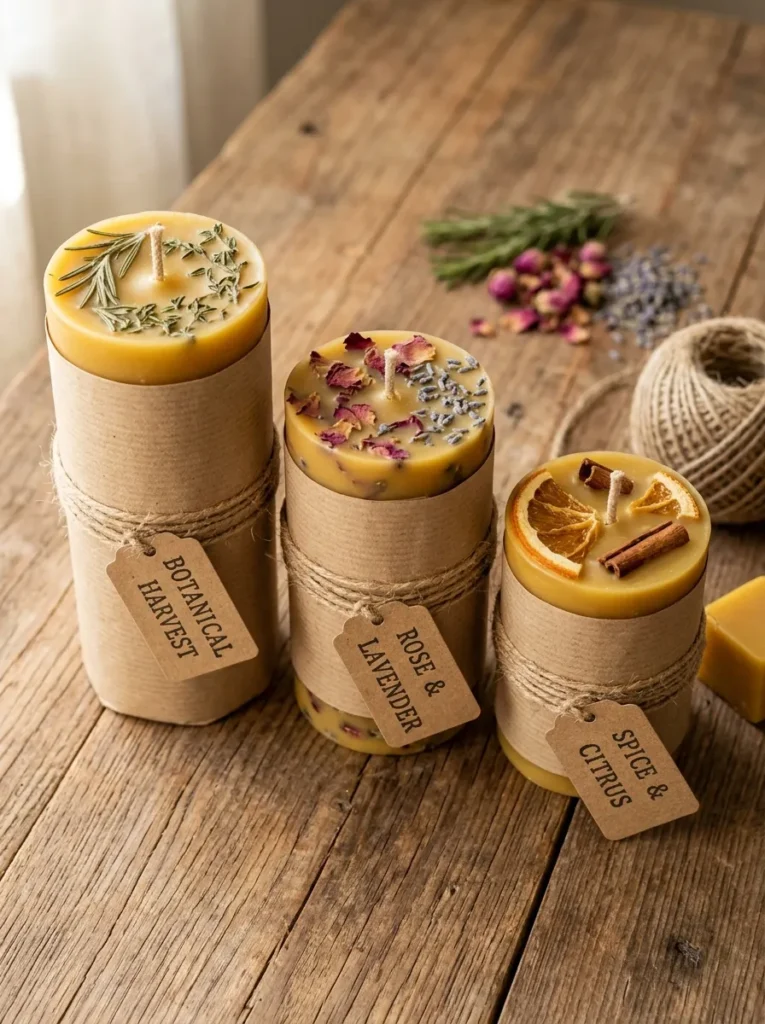
1. Hand-Poured Beeswax Candle with Personal Botanicals
Vibe: Warm and personal — the candle that smells like the maker thought about who would light it.
Why it works: The hand-poured beeswax candle becomes an extra-special handmade gift when the botanical choice is made with the specific recipient in mind rather than selected for general appeal — rosemary and thyme for someone who loves cooking and herbs, dried rose and lavender for someone who fills their home with botanicals, orange slice and cinnamon for someone who associates those scents with warmth and winter celebration. This botanical specificity is the design decision that transforms a beautiful craft object into a personal gift: it communicates that the maker thought about this person’s specific sensory world and made something for it. Beeswax is the premier candle material for a handmade gift specifically because its natural honey scent, warm golden color, and clean burn distinguish it immediately from commercial paraffin candles — the recipient knows they are holding something genuinely different from anything they could purchase.
How to get it: Melt cosmetic-grade beeswax pellets in a double boiler at 70°C. Pour into a pre-warmed pillar mold at 65°C — pouring too hot causes cracking as the wax contracts during cooling. Press the dried botanicals against the outer wax surface while the candle is still slightly warm from the mold (within 30 minutes of unmolding) — the residual surface warmth allows the botanicals to adhere without additional wax or adhesive. Wrap each finished candle in a single sheet of natural kraft paper, tied with jute twine and a hand-stamped tag naming the botanical blend. The hand-stamped name tag is the final detail that makes this a personal gift rather than a craft market product.
Quick Win: Dipping the finished botanicals briefly in a thin wash of melted beeswax before pressing them to the candle surface creates a stronger adhesion that prevents herbs and petals from detaching during shipping or handling — a 5-second dip and 10-second cool time per botanical element, and every embed holds permanently.
Shop the Look
| Product |
|---|
| Beeswax pellets cosmetic grade 500g |
| Pillar candle mold set varied heights |
| Dried rosemary bunch craft |
| Dried lavender bunch craft |
| Kraft paper roll and jute twine |
Also view: 14 IKEA KALLAX TV Unit Hacks for Modern Homes
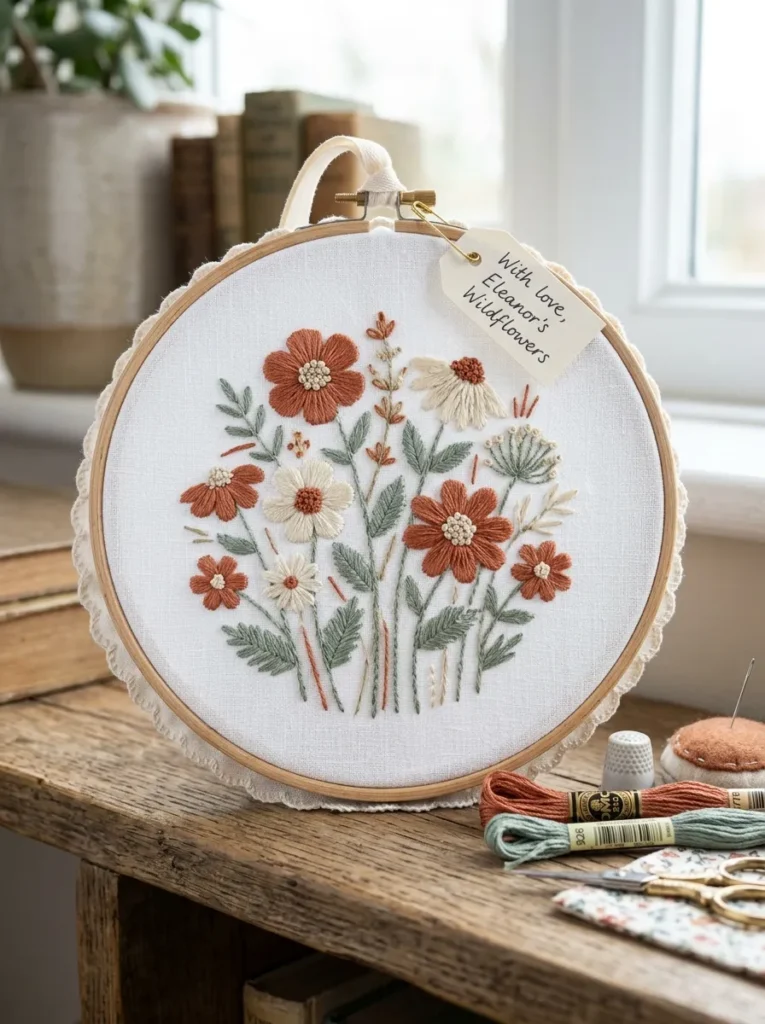
2. Hand-Embroidered Botanical Hoop Art
Vibe: Warm and handcrafted — a piece of art that becomes more beautiful the closer you look at it.
Why it works: Hand embroidery is the handmade gift medium where the evidence of human time and attention is most visibly legible in the finished object — every stitch is a physical record of the maker’s presence at the needle, and the accumulation of hundreds of individual stitches into a composed botanical image communicates the investment of real hours in a way that no other gift medium does as directly. The botanical hoop art gift is personalizable at the design level (the specific plants chosen can reference the recipient’s garden, their birth month flower, or their favorite botanical), and the hoop art format — a complete, frameable display object — means the gift does not require the recipient to do anything to honor it, unlike fabric gifts that require sewing or yarn gifts that require knitting.
How to get it: Transfer the botanical design to the linen using a water-soluble stabilizer pen — trace the design directly from a printed template, embroider over the pen lines, then spritz with water to remove them completely. Use three strands of six-strand embroidery floss for satin-stitch petals and solid color fills, two strands for stem stitch outlines, and one strand for the finest detail work. Finish the hoop by trimming the linen to 30mm beyond the hoop edge, running a gathering stitch around the perimeter, pulling the gathering thread to close the fabric neatly behind the inner hoop, and gluing a circle of scalloped linen over the gathered back — this professional back finish is the detail that distinguishes a gift-quality hoop from a craft project hoop.
Shop the Look
| Product |
|---|
| Natural timber embroidery hoop 20cm |
| White linen fabric embroidery weight |
| Embroidery floss set botanical colors |
| Water soluble stabilizer pen |
| Embroidery needle set sizes |
Also view: 15 Organized Craft Closet Ideas for Creative Homes
3. Naturally Dyed Linen Pouch with Personalized Wax Seal
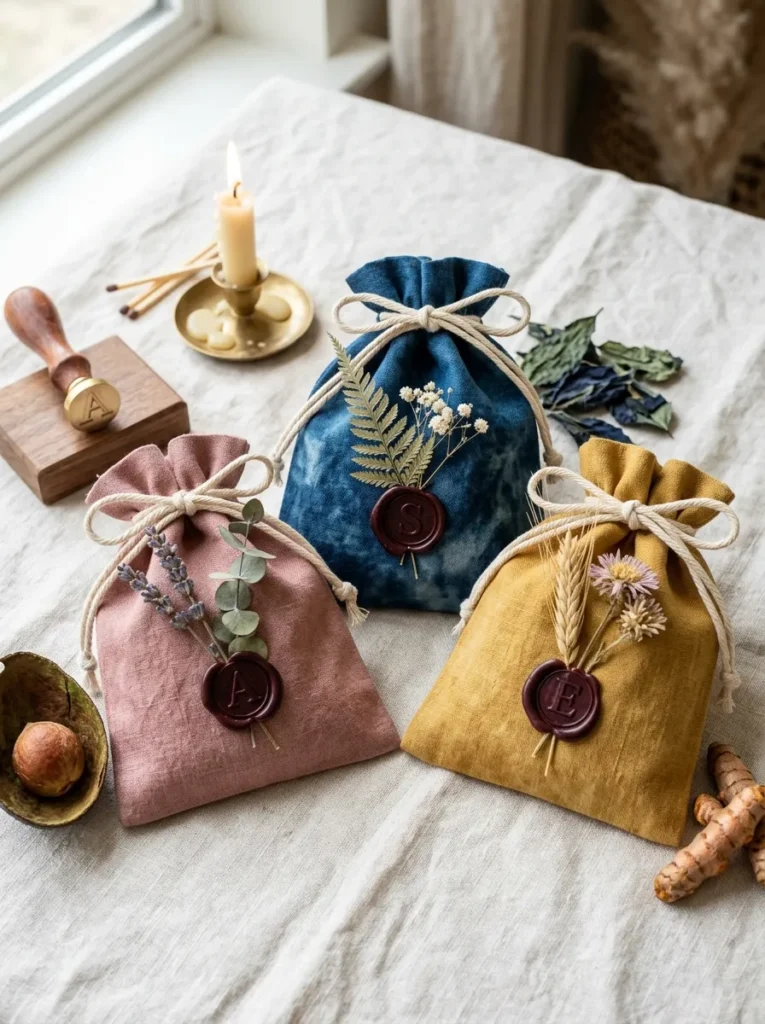
Vibe: Natural and considered — a pouch that the recipient will keep long after it has been emptied.
Why it works: The naturally dyed linen pouch earns its extra-special status through the convergence of two distinct personal details that transform a functional object into a meaningful one: the natural dye color chosen specifically for the recipient (avocado pink for someone who loves the dusty, earthy palette of natural dye; indigo blue for someone who has expressed love for that specific color in their home or wardrobe; turmeric gold for someone who cooks or has a warm, maximalist aesthetic), and the wax seal initial that closes the pouch — a gesture borrowed from historical personal correspondence that communicates the sender’s specific identity and the gift’s address to a specific person. The linen pouch is the handmade gift that most gracefully transcends its own function: long after the original contents have been used, the pouch itself becomes a storage object — for jewelry, for loose coins, for letters, for dried botanicals — making it a lasting daily-use gift rather than a single-use experience.
How to get it: Dye pre-sewn blank linen pouches (available from craft suppliers for $2–4 each) using the natural dye bath techniques described in Idea 8 of the Best-Selling Craft Ideas article — alum mordant followed by turmeric, avocado, or indigo dye bath. Dry completely before applying the wax seal. To apply the wax seal: heat a stick of sealing wax in a candle flame until the wax is liquid, pour a pool of wax onto the linen directly over the drawstring knot, and press the initial stamp firmly for 10 seconds before releasing.
Shop the Look
| Product |
|---|
| Natural linen drawstring pouch blank |
| Alum mordant 500g |
| Sealing wax stick set colors |
| Initial wax seal stamp set |
| Dried botanical sprig bunch |
4. Pressed Flower Greeting Card with Watercolor Background
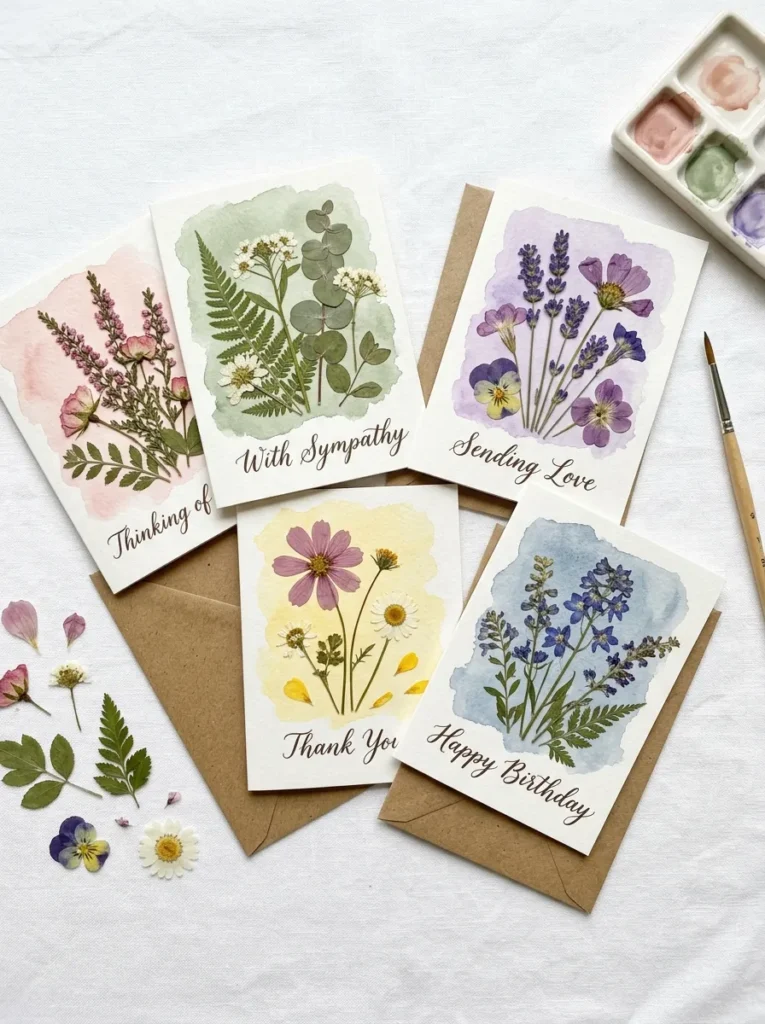
Vibe: Delicate and personal — the card that outlasts the occasion it was made for.
Why it works: The pressed flower greeting card with a hand-painted watercolor background occupies the specific gift space where a handmade card transcends the card category entirely — it becomes a small artwork that the recipient keeps and frames rather than reads and recycles. This transformation from consumable card to lasting art object happens when two quality thresholds are met: the watercolor background must be painted on quality watercolor card stock (300gsm minimum) rather than standard greeting card paper, which produces a clean, professional wash without buckling, and the pressed flowers must be completely dry before mounting (minimum 2 weeks in a flower press) to prevent moisture-related browning after mounting. When both thresholds are met, the finished card reads as a unique botanical art piece rather than a decorated card.
How to get it: Paint the watercolor background wash first and allow to dry completely (minimum 30 minutes) before positioning the pressed flowers. Arrange the pressed botanical specimens in an asymmetric composition — one larger flower as the focal point, smaller flowers and leaves radiating organically — before sealing with a thin coat of matte Mod Podge applied with a flat brush. Write the hand-lettered sentiment in the lower quarter of the card after the Mod Podge has dried — the matte sealed surface accepts fine-tip brush pen lettering cleanly without bleeding.
Quick Win: A flower press ($15–25 at any craft store) filled with garden flowers — violas, pansies, daisies, herb flowers, and fern fronds — produces a library of pressed botanical material within 2 weeks that provides making material for dozens of pressed flower cards, all at the cost of the press and the garden flowers that were already growing.
Shop the Look
| Product |
|---|
| 300gsm watercolor card stock A5 |
| Watercolor paint set compact |
| Flower press wooden set |
| Matte Mod Podge brush on |
| Fine brush lettering pen black |
5. Hand-Painted Porcelain Mug with Botanical Motif
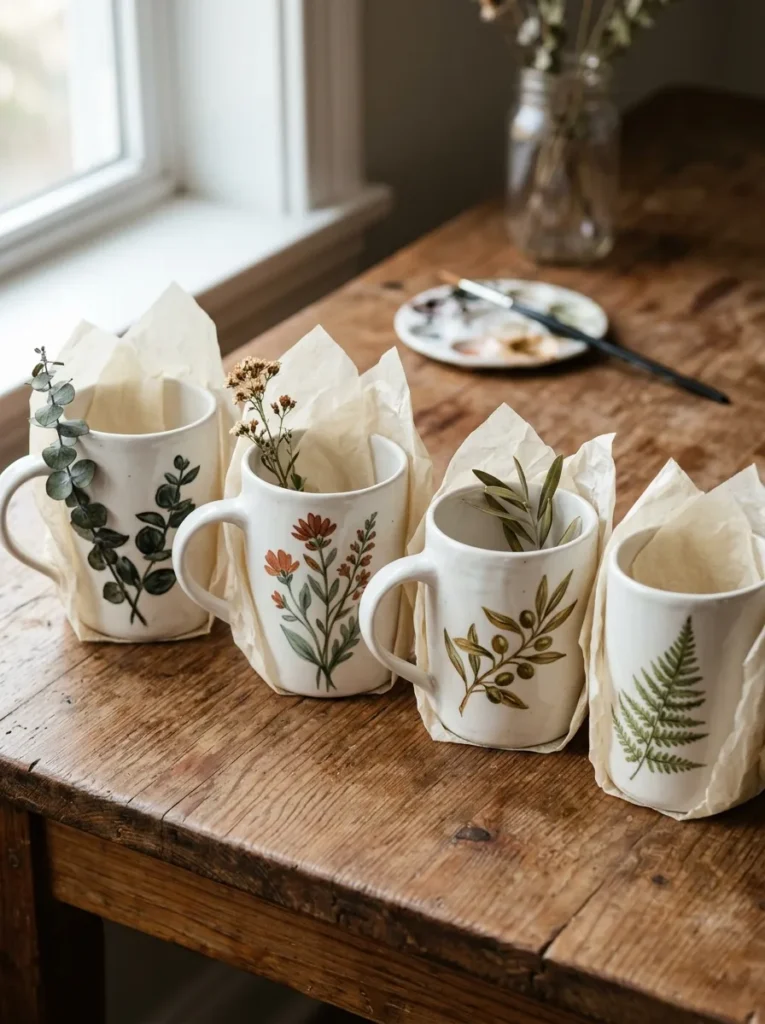
Vibe: Warm and artisanal — the mug that makes the first coffee of the day feel like an occasion.
Why it works: The hand-painted porcelain mug is the handmade gift that delivers daily emotional resonance for longer than any other gift in this list — a person who receives a hand-painted mug from someone they love uses it every morning, and every morning the object connects them to the maker and the occasion of the giving. This daily emotional compound return is the specific quality that makes the painted mug the most affectively powerful handmade gift available for the relationship category of close friends, partners, and parents. The botanical motif is the correct design choice for most recipients because it has the broadest cross-demographic appeal and the greatest personalization potential — a eucalyptus sprig for a Scandi-aesthetic friend, a fern for a forest-loving parent, a wildflower for a garden-passionate partner.
How to get it: Use Amaco Velvet Underglaze in Jet Black and Velvet Underglazes in botanical colors (deep green, terracotta, sage) applied to white bisque porcelain mugs, fired at a community pottery studio for $3–8 per piece. The bisque mug surface is the correct substrate because it absorbs underglaze at the same rate as dried paper absorbs watercolor — the painting experience is intuitive for anyone with basic drawing experience. Fire at cone 06 (approximately 1000°C) for a food-safe, dishwasher-safe finish. If community kiln access is not available, food-safe porcelain paint pens ($8–15 per pen) applied to glazed white porcelain mugs and oven-set at 160°C for 35 minutes produce a durable, food-safe alternative without kiln firing.
Shop the Look
| Product |
|---|
| White bisque porcelain mug |
| Amaco velvet underglaze set botanical |
| Food safe porcelain paint pen set |
| Fine detail brush set ceramic |
| Tissue paper natural white |
6. Homemade Infused Olive Oil with Hand-Labeled Bottle
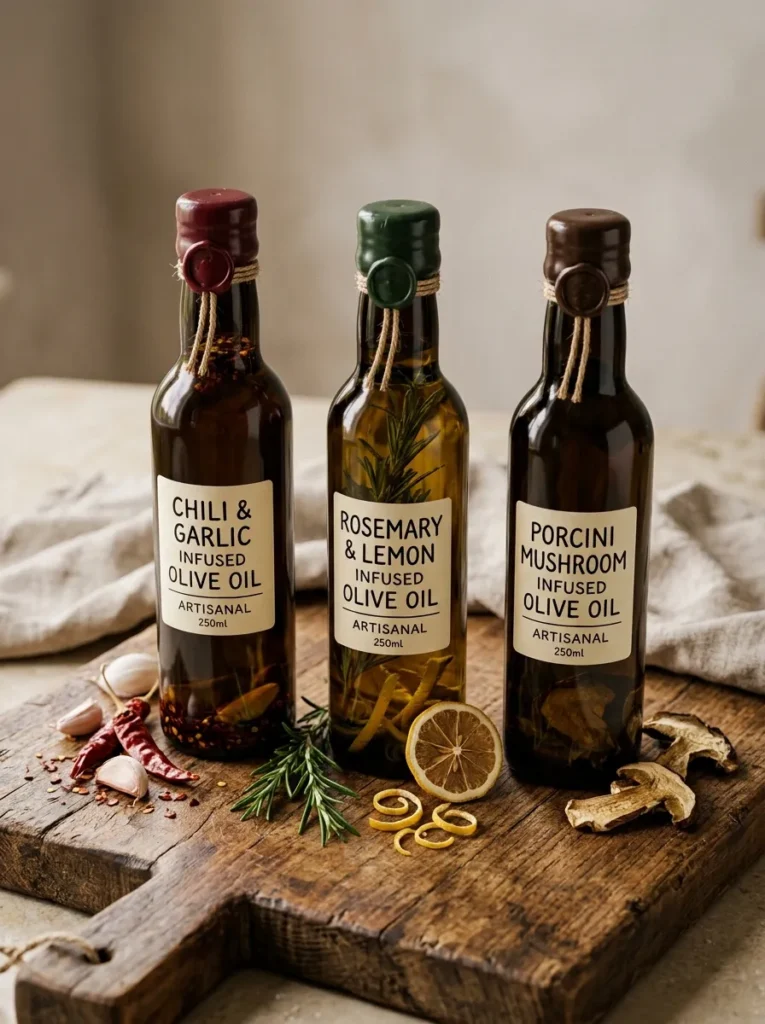
Vibe: Warm and edible — the gift that says “I know how you cook, and I made this for the way you cook.”
Why it works: Infused olive oil is the handmade edible gift that most successfully communicates the maker’s knowledge of the recipient’s specific culinary life — chili and garlic oil for someone who loves spicy Mediterranean cooking, rosemary and lemon oil for someone who roasts chicken on Sunday afternoons, porcini mushroom oil for someone who finishes risottos with a drizzle of something exceptional. This culinary specificity is the element that transforms a food gift from a generic gesture into a personal one, and it requires the maker to have paid attention to how the recipient actually cooks rather than selecting a standard flavor for a general palate. The infused olive oil is also the handmade edible gift with the lowest technical barrier — it requires no cooking skill, only quality ingredients, a sterilized bottle, and patience for the infusion period.
How to get it: Use a quality extra-virgin olive oil with a neutral-enough base flavor that the infusion ingredients read clearly — an assertively flavored olive oil overwhelms delicate infusions. Combine room-temperature oil with dried infusion ingredients in a sterilized dark glass bottle (the dark glass protects the oil from light degradation that turns olive oil rancid). For chili-garlic: 3 dried whole chilies, 3 peeled garlic cloves per 250ml oil. For rosemary-lemon: 2 sprigs dried rosemary, the peel of half a lemon per 250ml oil. For porcini: 15g dried porcini per 250ml oil. Infuse at room temperature for 2 weeks before sealing with a wax dip and labeling. Note: always use dried rather than fresh herbs to prevent botulism risk in oil infusions.
Shop the Look
| Product |
|---|
| Dark glass bottle 250ml with stopper |
| Quality extra virgin olive oil 1L |
| Dried chili whole bag |
| Food safe bottle wax seal |
| Kraft label adhesive set |
7. Hand-Bound Journal with Fabric Cover
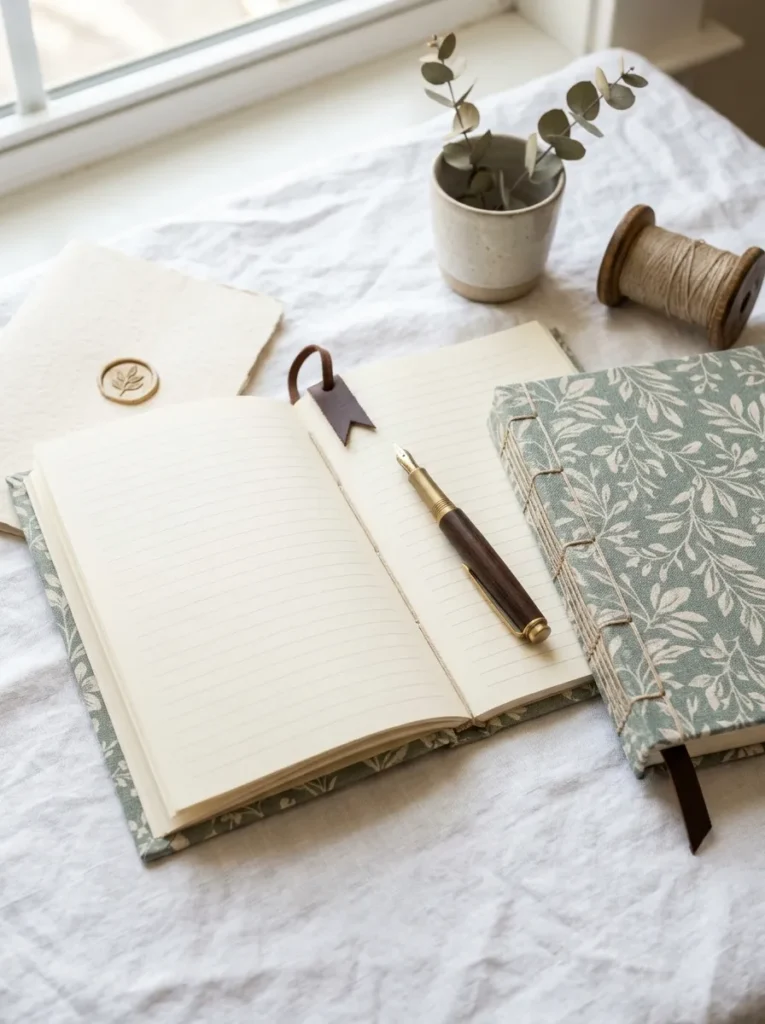
Vibe: Warm and considered — the journal that makes someone feel they deserve a beautiful place to put their thoughts.
Why it works: The hand-bound journal is the handmade gift that most directly communicates a belief in the recipient’s inner creative life — giving someone a beautiful journal communicates that you believe their thoughts, their writing, their daily noting and sketching and recording deserves a beautiful container, which is one of the most affirming messages a gift can carry. The Japanese stab binding method is the correct bookbinding technique for a first-time bookbinder because it requires no specialist adhesives, no bookbinding press, and no complex signatures — it produces a clean, professionally finished book with a visible, decorative stitching pattern on the spine that reads as an intentional design feature rather than an exposed structural element. The fabric cover material should be chosen for the specific recipient — a botanical print linen for a nature-loving recipient, a deep indigo for someone whose aesthetic leans toward color depth and simplicity, a natural unbleached linen for a minimalist.
How to get it: Cut 60 sheets of 90gsm cream writing paper to A5 size (148mm × 210mm) and stack with two pieces of 300gsm bookboard cut to the same size as the covers. Pierce seven holes through the full stack using a bookbinding awl and a template that places holes at 15mm from the top and bottom edges, with even spacing between. Stab stitch with a 1.5-meter length of waxed linen thread, following the standard four-hole or seven-hole stab stitch pattern. Glue the linen cover fabric to the external bookboard faces after binding is complete — this sequence means the stitching holds the book’s structure before the cover is applied, producing a neater result than covering the boards first.
Quick Win: Waxing linen thread before stab stitching — pulling it across a block of beeswax twice before threading the needle — prevents tangling during the stitching process and produces a thread that slides through the paper holes cleanly rather than catching and fraying at the edges.
Shop the Look
| Product |
|---|
| 90gsm cream writing paper A5 |
| Botanical print linen fabric |
| Bookboard 300gsm sheets |
| Waxed linen thread bookbinding |
| Bookbinding awl tool |
8. Personalized Map Art in a Handmade Frame
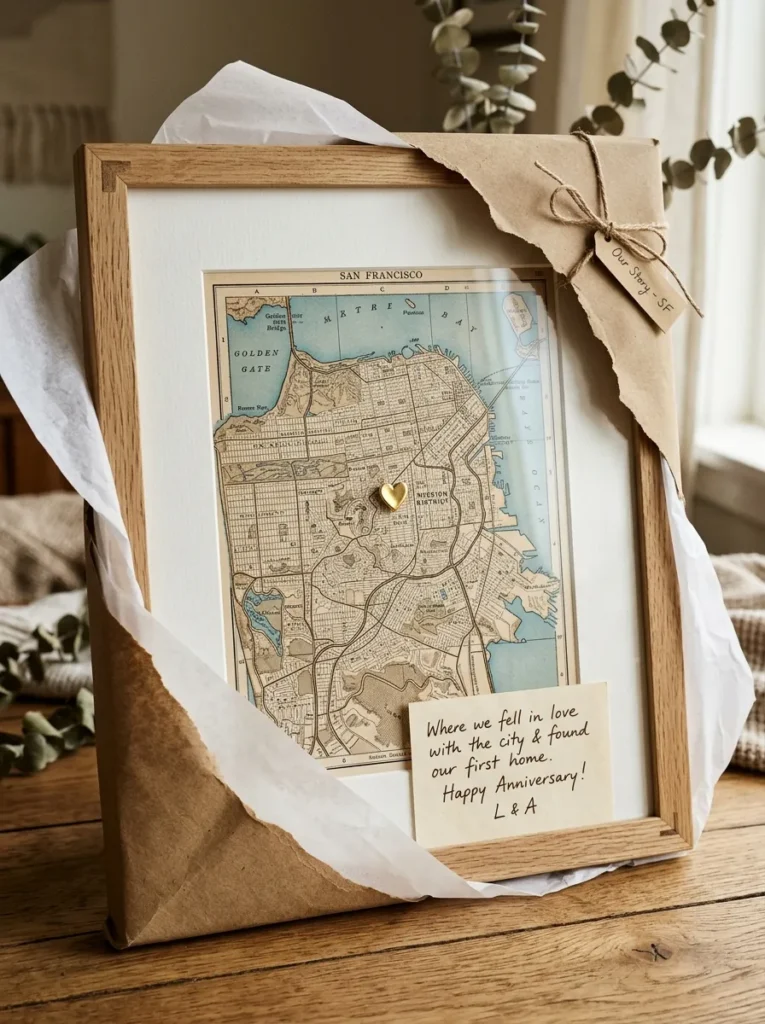
Vibe: Warm and sentimental — the gift that finds the exact coordinates of a shared memory and makes them visible.
Why it works: The personalized map art gift is the handmade gift idea with the highest emotional precision available to a non-artist maker — it requires no drawing skill, no craft experience, and no specialist tool beyond a printer, a frame, and a handful of basic woodworking tools, but it produces a gift of deeply personal significance because it locates a specific moment, relationship, or place in physical space and makes that location visible and beautiful. The meaningful location might be where two people first met, where they got engaged, where they grew up, where they live now, or where a memorable journey was shared — the specificity of the location is the entire emotional content of the gift, and the maker’s job is simply to find the location, print the map beautifully, frame it with care, and write the significance into the hand-written note beneath the mat.
How to get it: Print a vintage-style map at A4 or A3 size using the free Mapbox or Old Maps Online resources, which produce printable historical maps at any world location. Print on 200gsm matte photo paper for a quality that reads as art print rather than office paper. Build a simple timber frame from 30mm × 20mm dressed pine, mitred at 45 degrees at each corner and pinned with a nail gun or wood glue and clamps. The hand-written note beneath the mat (visible in the lower mat board section below the map image) is the personalizing detail that transforms the map art from a decorative print into a specific gift — write the significance of the location in the maker’s own hand, in ink on the mat board surface directly.
Shop the Look
| Product |
|---|
| 200gsm matte photo paper A3 |
| Dressed pine frame timber 30x20mm |
| White mat board A4 |
| Gold push pin heart decorative |
| Miter saw or miter box manual |
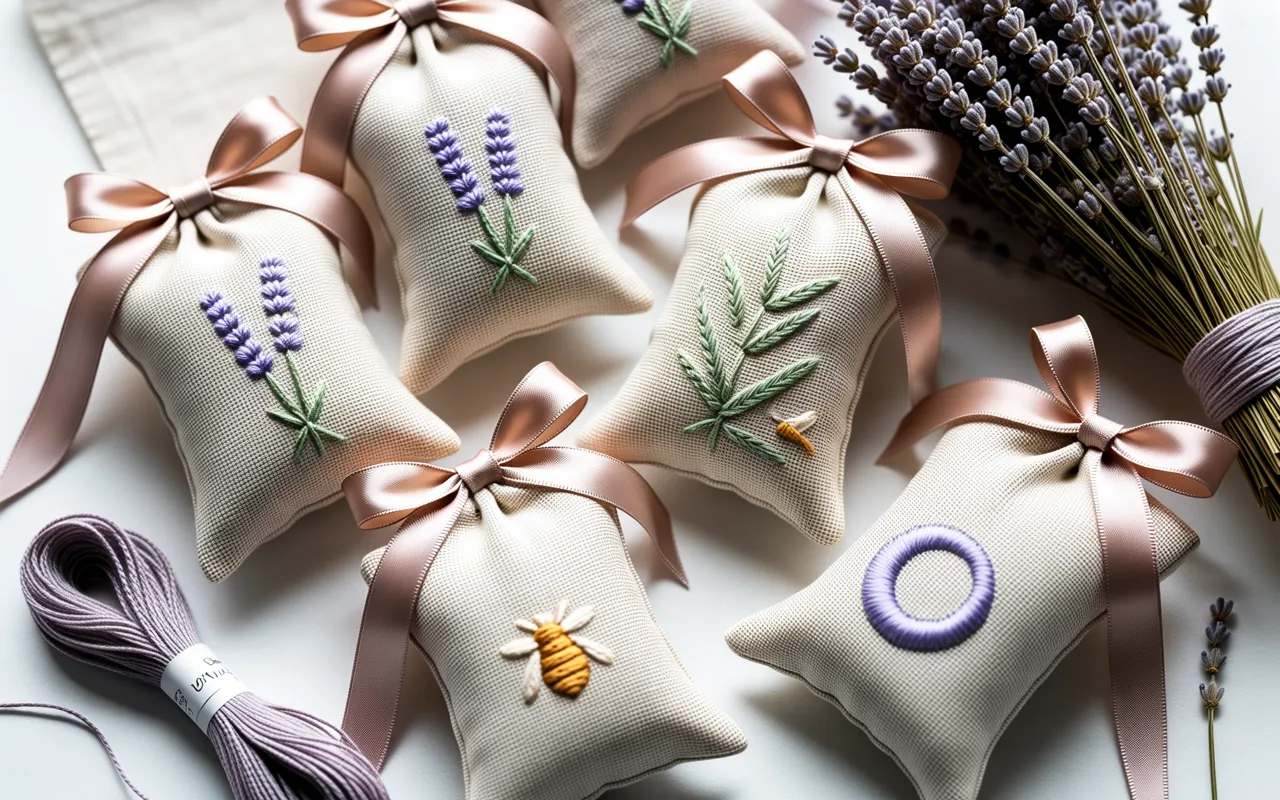
9. Hand-Sewn Linen Lavender Sachets with Embroidered Detail
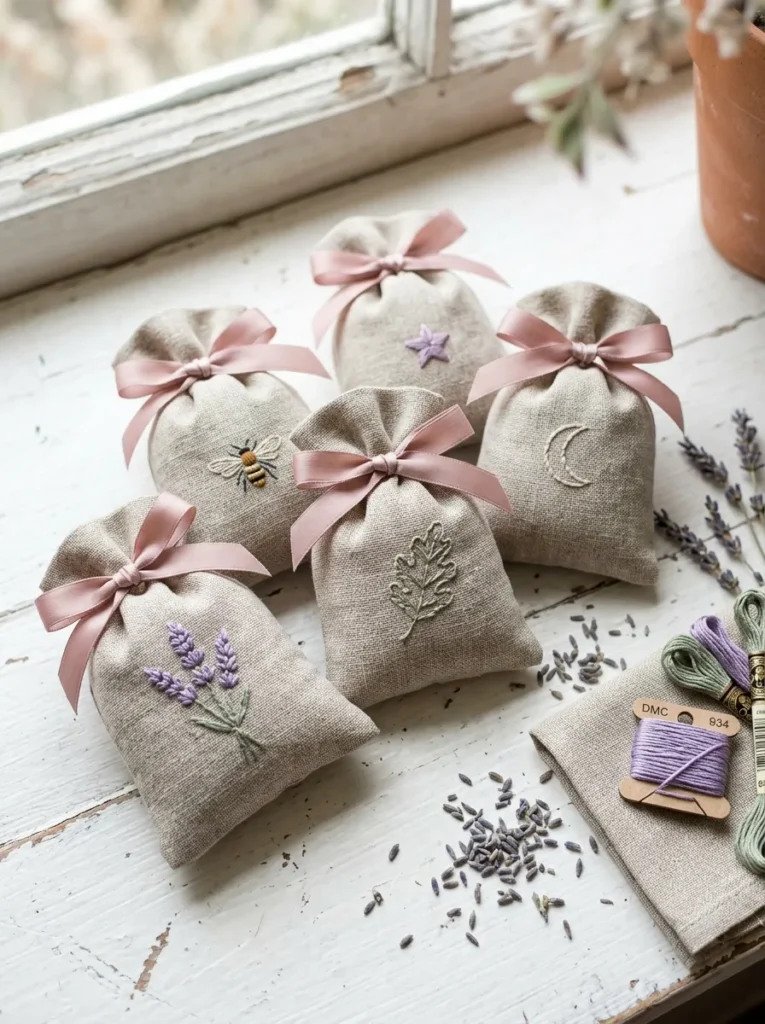
Vibe: Soft and handcrafted — the gift that makes opening a drawer or a wardrobe a small sensory pleasure every day.
Why it works: The hand-sewn linen lavender sachet is the handmade gift that most consistently rewards daily habitual use with the emotional resonance of the maker’s presence — every time the recipient opens the drawer or wardrobe where the sachet lives, the lavender scent is a sensory reminder of the giver. This daily olfactory connection is the specific emotional mechanism that makes the lavender sachet a lasting gift rather than a one-occasion object: its functional life (lavender fragrance lasts 6–12 months) exactly aligns with the period during which a meaningful relationship gift should continue to resonate. The embroidered motif on the sachet front is the personalization detail — a small bee for a beekeeper, a botanical leaf for a plant lover, a moon for an astrology enthusiast — that makes a standard craft-market product into a specifically personal gift.
How to get it: Cut two identical rectangles of natural linen at 100mm × 130mm for each sachet. Embroider the chosen motif on the front panel before sewing — the unsewn flat panel is far easier to embroider than the finished three-dimensional sachet. Sew the two panels right-sides together with a 10mm seam allowance, leaving a 40mm gap at the top for filling. Turn right-side out, fill firmly with dried lavender (2–3 tablespoons of dried lavender buds per sachet — fill firmly enough that the sachet is plump and rounded rather than flat), and hand-stitch the opening closed. Tie the satin ribbon bow around the sachet neck, covering the hand-sewn closing stitches.
Shop the Look
| Product |
|---|
| Natural undyed linen fabric |
| Dried lavender buds 200g |
| Embroidery floss set natural tones |
| Dusty blush satin ribbon roll |
| Embroidery needle set fine |
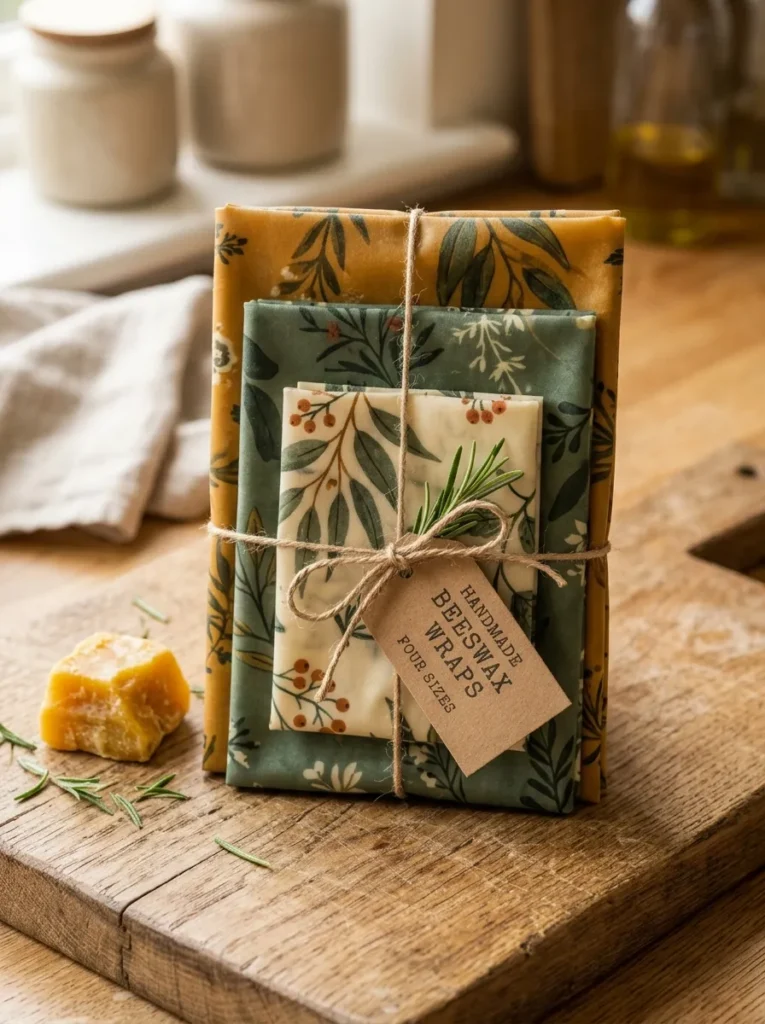
10. Handmade Beeswax Food Wraps in Botanical Fabric
Vibe: Warm and purposeful — a gift that makes the recipient feel good about using it every single day.
Why it works: Handmade beeswax food wraps are the handmade gift that most directly aligns maker effort with recipient values in the sustainability-conscious gift-giving space — they are a zero-waste alternative to single-use plastic wrap, beautifully made in fabric chosen by the maker, and communicate both the giver’s craft effort and their knowledge of the recipient’s environmental values. The fabric choice is the personalization element: a botanical print in the recipient’s favorite color palette, a geometric print for a minimalist, a classic stripe for someone with a traditional kitchen aesthetic — the fabric selection communicates that the maker chose this specific visual language for this specific recipient. The four-size set (small for half lemons and cheese ends, medium for bowls and bread, large for full loaves, extra-large for large casserole dishes) provides genuine daily-use utility that makes this gift practical as well as beautiful.
How to get it: Cut 100% cotton fabric in four sizes: 20cm × 20cm, 30cm × 30cm, 40cm × 40cm, and 50cm × 50cm. Trim the edges with pinking shears for the characteristic serrated edge that prevents fraying without hemming. Place each fabric square on a baking tray, sprinkle with grated beeswax (90% beeswax, 10% jojoba oil by weight), and melt in a 110°C oven for 4–5 minutes. Spread the melted wax across the fabric surface with a silicone brush before the tray cools, ensuring complete, even coverage. Lift the wrap from the tray immediately and hang to cool and set — 5 minutes hanging in cool air produces a set wrap with the correct tackiness for food clinging use.
Shop the Look
| Product |
|---|
| Botanical print cotton fabric |
| Beeswax block natural 200g |
| Jojoba oil food grade |
| Pinking shears fabric |
| Kraft gift tag set |
11. Hand-Thrown or Pinch Pot Ceramic Bowl with Personal Glaze
Vibe: Warm and artisanal — the small bowl that becomes the most-used object on every desk, bedside table, and vanity it visits.
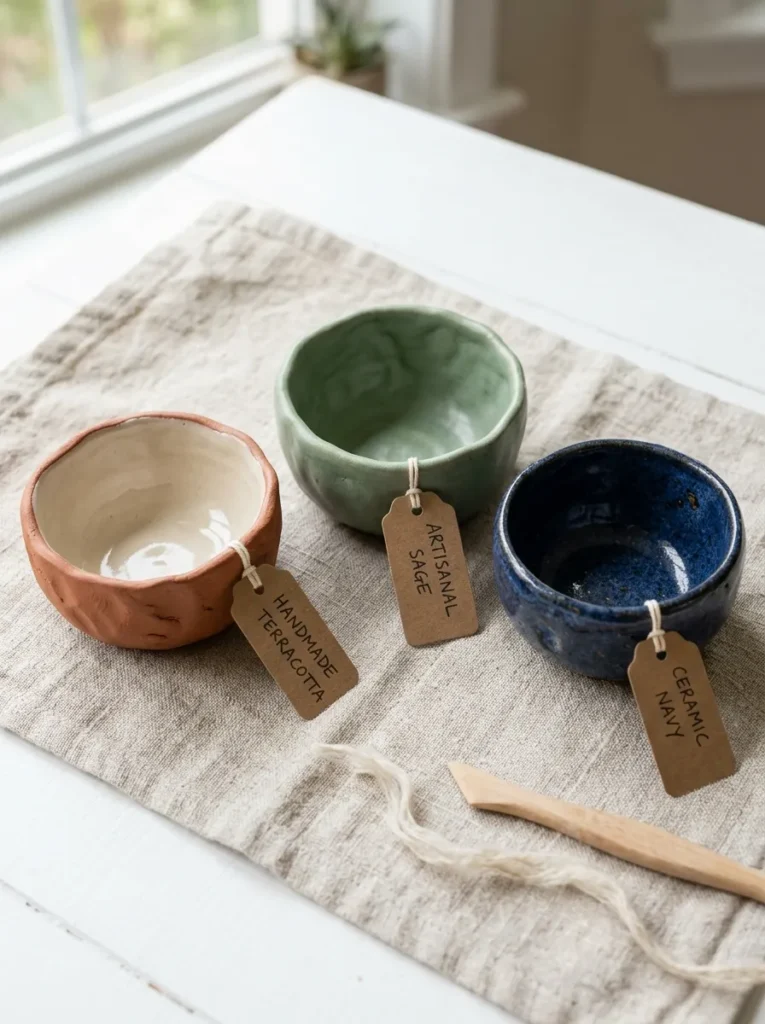
Why it works: The hand-pinched ceramic bowl is the handmade gift object with the most enduring daily presence in a recipient’s domestic life — small ceramic dishes migrate through a home’s most-used surfaces, collecting rings, keys, earrings, paperclips, and the daily debris that needs a beautiful containing place. The handmade pinch pot has a behavioral magnetism that manufactured dishes do not: its visible hand-formation, the characteristic slight irregularity of the rim, and the finger-pinch marks in the exterior clay are aesthetic qualities that invite touch and that improve with use as the glaze develops a subtle patina. The glaze color is the personalization axis — a terracotta glaze for someone with a warm, earthy home aesthetic, sage green for a botanical-palette friend, deep navy speckled for someone whose home is filled with deep, saturated color.
How to get it: Use self-drying air-dry clay or low-fire earthenware clay (available at art supply stores for $12–20 per kilogram) to form the pinch pot: start with a ball of clay the size of a large walnut, press a thumb into the center to create a well, and gradually pinch the walls upward and outward to create a shallow bowl form of consistent wall thickness (8–10mm). Smooth the interior with a damp finger. For air-dry clay: allow to dry 48 hours and seal with a food-safe varnish. For earthenware clay: fire at a community pottery studio and apply commercial pottery glaze before the second (glaze) firing.
Quick Win: A community pottery studio open session ($20–40 for a 2-hour session including materials and firing) provides the kiln access and clay materials needed to produce three to five pinch pot gifts in a single afternoon — the studio environment also provides immediate expert guidance on forming and glazing technique that accelerates quality significantly beyond self-teaching.
Shop the Look
| Product |
|---|
| Air dry clay white 1kg |
| Earthenware clay low fire |
| Food safe ceramic glaze set |
| Ceramic tool set beginner |
| Natural linen fabric square |
12. Hand-Dipped Tapered Candles in Seasonal Colors
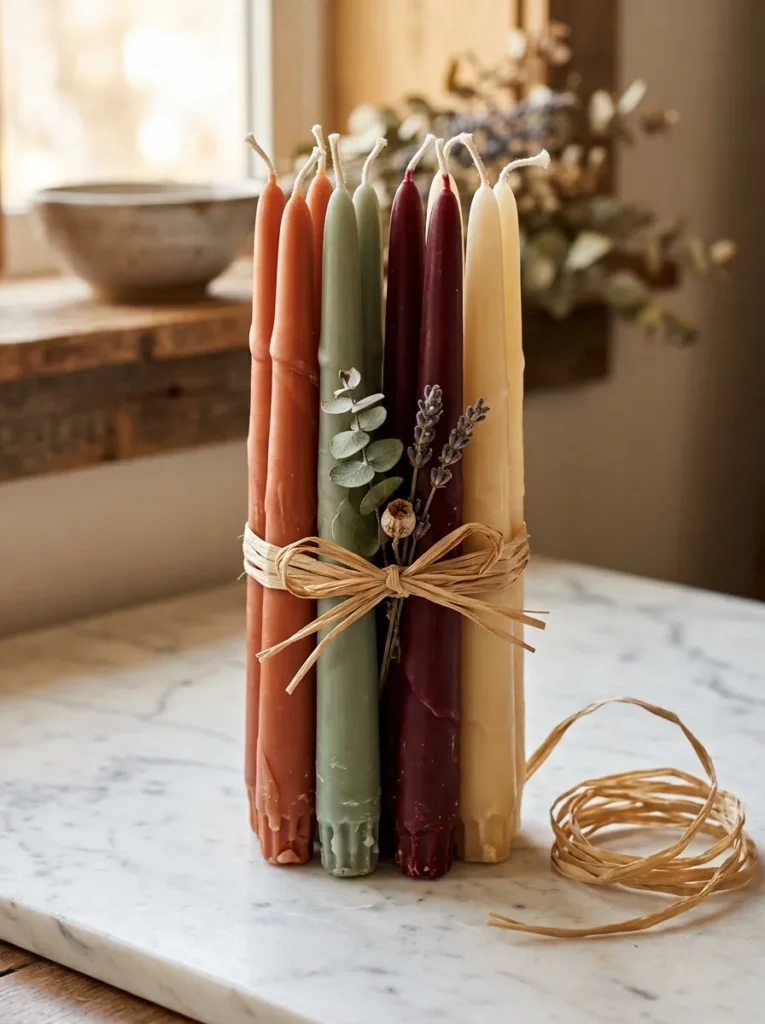
Vibe: Warm and seasonal — the candle pair that makes any dinner table feel like a celebration.
Why it works: Hand-dipped tapered candles are the handmade gift with the most immediate atmospheric impact per object — a pair of tapered candles in the recipient’s home aesthetic color palette, placed in their candlestick holders and lit for a dinner table, transforms an ordinary evening meal into an occasion. The hand-dipping process produces a specific visual quality that no manufactured taper candle replicates: the slight thickening of wax at the base where the candle has been turned at each dip, the organic thinning at the wick end, and the visible layering of color if a tinted finish coat has been applied over a base coat — all of these are evidence of the hand-dipping process that distinguish the gift from anything purchased. The seasonal color palette makes the gift specific to an occasion — terracotta and sage for autumn, burgundy and ivory for winter celebration, blush and sage for spring, gold and white for summer.
How to get it: Melt paraffin wax or beeswax in a tall, narrow vessel (a clean tin can or a purpose-made dipping vat) deep enough to accommodate the full taper length. Tie two lengths of 24-ply cotton wick at each end of a 300mm wooden dowel as the dipping handle. Dip the wicks into the melted wax, hold for 3 seconds, remove, and allow to cool for 30 seconds before re-dipping. Repeat 25–35 dip cycles per taper pair — each dip adds approximately 0.3mm of wax to the candle diameter. After the final dip, smooth the taper sides by rolling briefly on a smooth marble or glass surface while the wax is still slightly warm.
Shop the Look
| Product |
|---|
| Paraffin wax or beeswax pellets |
| Cotton wick 24-ply spool |
| Candle dye chips color set |
| Natural raffia tie roll |
| Marble rolling surface slab |
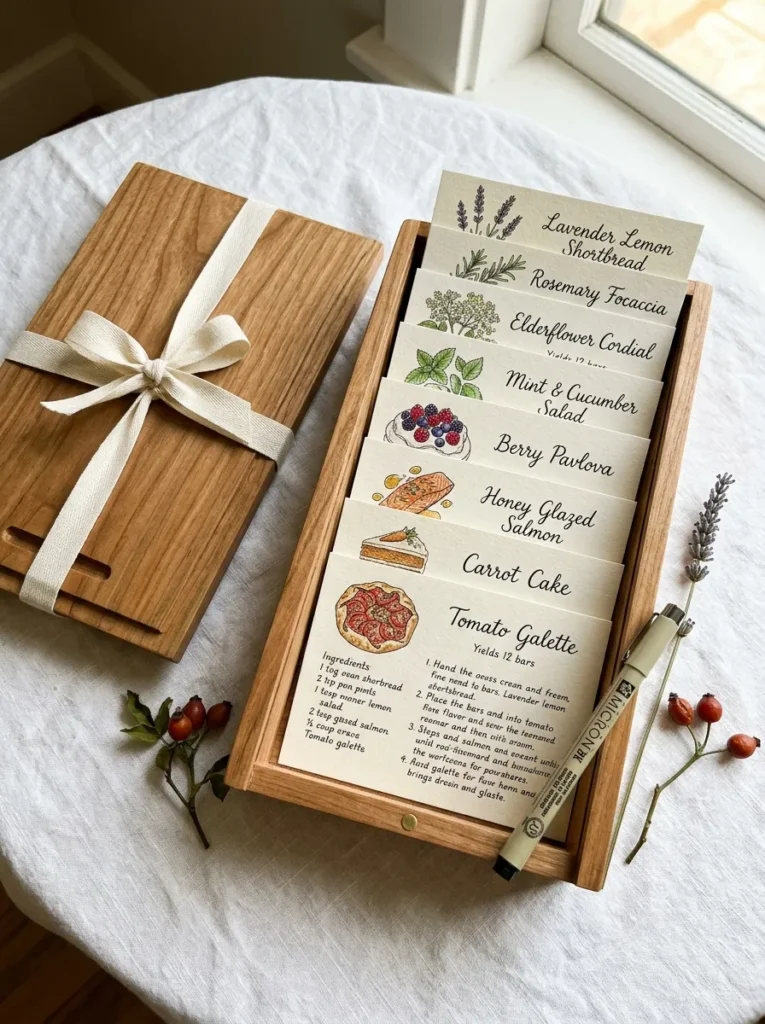
13. Illustrated Recipe Card Set for a Loved Cook
Vibe: Warm and personal — the recipe set that turns a collection of shared meals into a kept archive.
Why it works: The illustrated recipe card set for a loved cook is the handmade gift with the highest degree of relationship-embedded content available in this list — to make this gift well, the maker must know the recipient’s cooking style, their favorite cuisines, the dishes they return to again and again, and the recipe that they always want to write down but never have. The cards can carry the maker’s own recipes (a grandmother’s cake, a family soup, a signature dish that the recipient always requests at dinner parties), recipes known to be the recipient’s favorites from shared cooking experiences, or recipes curated from a cuisine the recipient has expressed wanting to explore. The illustrated botanical header on each card is the aesthetic element that elevates a recipe card from a functional document to a beautiful one — each card becomes a small art piece that the recipient is likely to display in their kitchen rather than store in a drawer.
How to get it: Write each recipe on a piece of 300gsm cream card stock cut to 150mm × 210mm — the A5 recipe card size is the standard that fits most recipe boxes and can be held comfortably while cooking. Hand-letter the recipe title and ingredient list in a clean, legible hand rather than calligraphic script — recipe cards are used while cooking and must be read quickly under kitchen conditions, so legibility takes priority over decorative lettering style. Watercolor the botanical illustration in the upper third of each card before writing the recipe — paint the illustration first, allow to dry completely, then write below it. Store the finished set in a small sliding-lid timber recipe box lined with a folded piece of cream linen.
Shop the Look
| Product |
|---|
| 300gsm cream card stock A5 |
| Watercolor paint compact set |
| Fine liner pen black 0.3mm |
| Timber recipe box sliding lid |
| Cream linen ribbon narrow |
14. Hand-Knitted or Crocheted Luxury Yarn Dishcloth Set
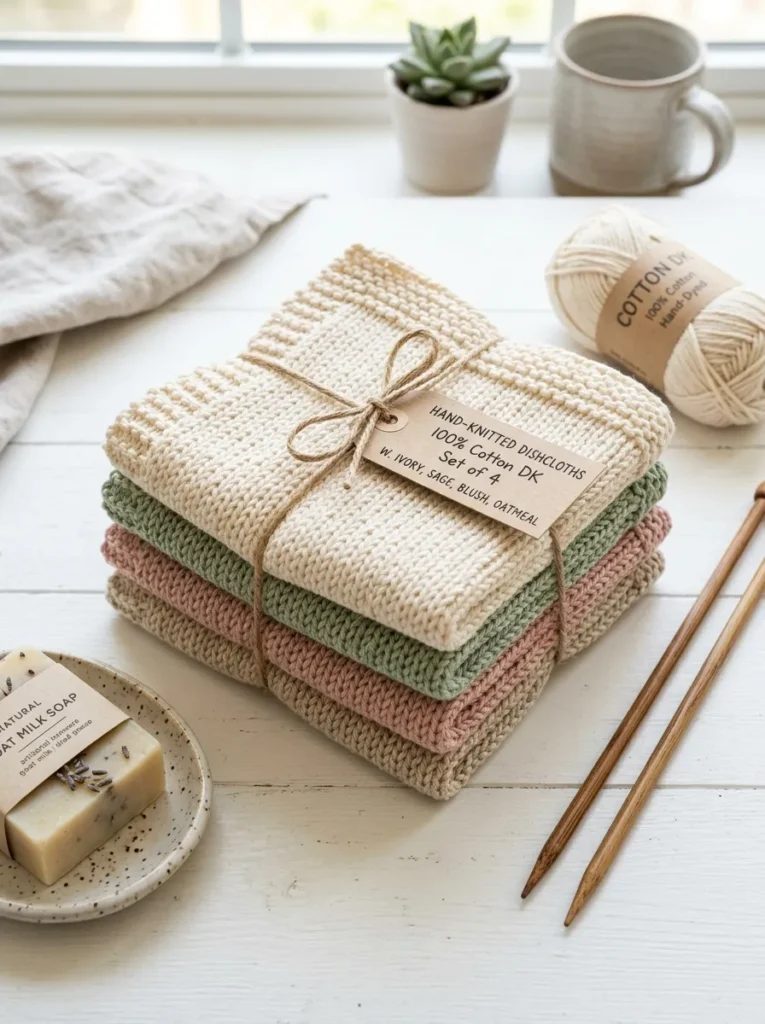
Vibe: Warm and domestic — the handmade gift that makes washing up feel like the most considered part of the day.
Why it works: The hand-knitted dishcloth set is the handmade gift that most gracefully navigates the practical-versus-beautiful tension in gift giving — it is entirely practical (a dishcloth serves a daily function that every household needs) and entirely beautiful (a hand-knitted cotton cloth in a natural tonal palette is a more beautiful object than any commercially produced dishcloth), making it a gift that the recipient can accept without guilt about it being “too nice to use” while genuinely enjoying its elevated aesthetic quality in daily use. The luxury yarn dishcloth also communicates the highest volume of maker time per recipient dollar of any knitted gift — a single dishcloth takes approximately 1.5–2 hours to knit, and a four-cloth set represents 6–8 hours of concentrated making — which is the perceived-effort basis that makes knitted gifts feel particularly meaningful.
How to get it: Use 100% cotton DK-weight yarn (Lion Brand 24/7 Cotton or Paintbox Simply DK Cotton are both reliable choices for dishcloth knitting) in 4.0mm bamboo needles. Cast on 38 stitches for a 25cm × 25cm finished cloth. Knit in a simple seed stitch (alternating knit and purl stitches in each row) for the textured pattern that is both visually interesting and practically effective as a scrubbing surface — seed stitch creates a nubbled texture that is more effective for cleaning than stockinette. Work until the piece measures 25cm, bind off, and weave in ends with a darning needle. Wash and block before gifting — a blocked cotton cloth is noticeably more beautiful and more square than an unblocked one, and the wash removes any residual spinning oil from the yarn that affects the cloth’s absorbency.
Quick Win: A set of four dishcloths in graduated tones of the same color family — ivory, blush, dusty rose, and rose — reads as a more designed, more considered set than four cloths in four unrelated colors, and requires no additional effort beyond the yarn selection decision.
Shop the Look
| Product |
|---|
| 100 percent cotton DK yarn ivory |
| 100 percent cotton DK yarn sage |
| Bamboo knitting needle set 4.0mm |
| Darning needle set |
| Ceramic soap bar dish |
How to Start Your Handmade Gift Practice
Your single first move is to choose one recipient — the person whose gift is closest in time, or the person for whom you most want to make something genuinely special — and spend 10 minutes listing what you know about their specific aesthetic, sensory preferences, and daily rituals before looking at a single making technique or material. What color palette defines their home? What scents do they reach for? What do they do with the first 30 minutes of every morning? What materials do they surround themselves with? The answers to these questions are the design brief for the gift — they tell you which of the 14 ideas in this list is correct for this person, and they tell you the specific design decisions within the chosen idea (the botanical selection, the glaze color, the fabric print, the recipe subject) that will make the gift feel made for them rather than made for a general recipient.
The most common handmade gift mistake is beginning the making before the design is resolved — starting to pour a candle before the botanical choice has been made with the recipient in mind, beginning to knit before the color has been chosen with the recipient’s home in mind, beginning to paint a mug before the botanical motif has been chosen with the recipient’s garden or aesthetic in mind. The making is the easier part of a handmade gift; the design thinking is the part that makes the difference between a beautiful craft object and a beautiful personal gift, and it costs nothing but 10 minutes of deliberate attention.
Three specific investments under $50 that build an immediately useful handmade gift making kit: (1) A wooden flower press ($15–25) filled with garden flowers on the day of purchase produces pressing material within 2 weeks that provides the material for pressed flower cards, sachet decorations, and botanical art projects for months afterward. (2) A set of watercolor paints in a compact travel format ($18–35) provides the painting medium for pressed flower cards, illustrated recipe cards, ceramic underglaze design planning, and gift tag illustration — it is the most versatile single material investment available across the range of ideas in this list. (3) A roll of natural kraft paper and a ball of jute twine ($8–15 combined) provides the gift wrapping and tying material that makes every handmade gift — regardless of its specific form — read as a considered, cohesive presentation rather than a craft project placed in a bag.
Realistically, the materials for a single handmade gift from this list cost $8–35 depending on the idea chosen, with the first batch of materials typically producing enough surplus for two or three additional gifts of the same type. The time investment ranges from 2 hours for a pressed flower card to 8 hours for a hand-embroidered hoop — with most ideas in the 3–5 hour range that makes a handmade gift genuinely achievable within a single weekend afternoon without dominating the entire weekend. The most sustainable handmade gift practice is the one that begins 4–6 weeks before the gifting occasion rather than the weekend before — this lead time allows for the slow processes (flower pressing, oil infusion, natural dye setting) that produce the highest quality results, and removes the time pressure that causes quality compromises in the making.
Frequently Asked Questions About Handmade Gifts
What makes a handmade gift feel extra special compared to a purchased one?
The research on gift perception consistently identifies two specific qualities that make handmade gifts feel more special than purchased equivalents: perceived effort and perceived specificity. Perceived effort is the recipient’s sense that real time and attention were invested in making the gift — a quality that handmade objects communicate through visible evidence of the making process (brushstrokes, stitch marks, hand-formed irregularity) that manufactured objects deliberately eliminate. Perceived specificity is the recipient’s sense that this gift was made for them in particular — that the maker made decisions (the botanical selection, the glaze color, the recipe subject, the fabric print) with this specific person in mind rather than selecting something with broad appeal. A handmade gift that scores high on both qualities — that shows visible evidence of real making time and that communicates specific knowledge of the recipient — is consistently experienced as more meaningful than any purchased gift at any price point.
What handmade gifts are appropriate for people who prefer minimalism?
The handmade gifts in this list that most naturally suit a minimalist recipient are those with the fewest visible components and the highest material quality per object: a single hand-poured beeswax pillar candle in a natural, unembellished form; a hand-bound journal in a single-tone unbleached linen cover with no embroidery or embellishment; a set of four hand-knitted dishcloths in a single color tonal family (ivory, cream, natural, oatmeal); a small hand-pinched ceramic bowl in a matte single-color glaze; or a hand-dipped pair of tapered candles in natural beeswax ivory. The minimalist aesthetic values objects with genuine material quality and quiet visual presence over decorative complexity — the gift selection for a minimalist should focus on material authenticity (beeswax rather than paraffin, natural linen rather than synthetic, hand-thrown rather than cast ceramic) rather than visual richness.
How far in advance should I start making handmade gifts?
The correct lead time depends on which gift is being made, but the general principle is: start earlier than feels necessary. Gifts requiring slow processes — natural dye sets require 3-hour making plus 2-week setup time, pressed flower cards require 2-week flower pressing before making, infused olive oils require 2-week infusion time — need 3–4 weeks of lead time minimum. Gifts with no slow process — beeswax candles, wax-dipped tapers, embroidered sachets, painted mugs — can be completed in a single weekend afternoon but benefit from a week of buffer to allow for mistakes, refinements, and proper drying time before packaging. The maximum benefit of lead time is the psychological one: making a gift at leisure, without time pressure, produces noticeably better results than making the same gift under deadline stress, because attention to the design decisions and the quality of the making is inversely proportional to the urgency of the occasion.
Can I make handmade gifts with no prior craft experience?
Yes — every idea in this list is designed to be achievable by a first-time maker with no prior craft experience in that specific medium. The ideas that require the least prior skill are the infused olive oil (requires no craft skill beyond sterilizing a bottle and measuring ingredients), the pressed flower greeting card (requires basic watercolor wash and flower arrangement, both of which are genuinely beginner-accessible), the beeswax food wraps (requires following a simple oven-based process with consistent results), and the personalized map art (requires printing, framing, and hand-writing, not drawing or craft skill). The ideas that benefit most from a small amount of prior experience are the hand-embroidered hoop art (a 2-hour YouTube embroidery basics course is sufficient preparation) and the hand-bound journal (a single practice binding attempt on scrap paper before the final gift version produces dramatically better results). In all cases, the specific material quality of the inputs — the quality of the beeswax, the linen, the watercolor paints, the card stock — has a larger effect on the finished gift’s perceived quality than the maker’s skill level.
How do I package handmade gifts to make them feel as special as they are?
The packaging of a handmade gift should use the same principle of material honesty that defines the best handmade gifts themselves — natural, minimal materials that communicate the same values as the handmade object inside them. Natural kraft paper, jute twine, cotton ribbon, dried botanical sprigs tucked under the bow, hand-stamped or hand-written tags, and beeswax or wax seal closures are the packaging materials that frame a handmade gift correctly. The specific packaging decisions that most elevate a handmade gift’s presentation are: a hand-written rather than printed gift tag (the handwriting is the packaging’s equivalent of the fingerprint visible in the clay of a hand-pinched bowl — evidence of the human presence of the maker), natural fiber ribbon rather than synthetic (cotton, linen, or jute reads as the same material language as the gift inside, while synthetic ribbon reads as a generic commercial finishing touch), and a single dried botanical tucked under the ribbon bow (the organic, natural element that provides the same function in gift packaging that a botanical motif provides in gift design — communicating care, specificity, and the maker’s attention to the complete experience of the gift).
Ready to Start Making Your Most Special Handmade Gifts?
These 14 ideas span the full range of what a handmade gift can be and do — from a personally botanicized beeswax candle and a hand-embroidered hoop art piece, to an infused olive oil made for the way someone cooks, an illustrated recipe card set carrying the archive of shared meals, a naturally dyed linen pouch sealed with the recipient’s initial, and a hand-knitted cotton dishcloth set in the exact tonal palette of someone’s kitchen — so whether you are making for a close friend, a parent, a partner, or a colleague, and whether you have 2 hours or 8 hours to invest in the making, there is a genuinely achievable, genuinely personal handmade gift here for the specific person you are thinking about. The making begins not with a material or a technique but with the 10-minute exercise of writing down what you know about that person’s specific daily life, their sensory preferences, their aesthetic world, and the moments they return to again and again — because the gift that is made from that specific knowledge is the gift that makes the recipient feel, with complete certainty, that it was made for them and no one else. Today’s specific action: choose one person, spend 10 minutes writing what you know about their daily rituals and aesthetic world, and identify the one idea from this list that most directly serves those specific qualities. Then order the materials. The making can begin this weekend, and the giving will be remembered far longer than the occasion that prompted it. Save the ideas that matched the specific people you most want to gift this year — those are the ones that will be made, and kept, and used every day with the warmth of knowing exactly who made them.